Photo credit: Theavidoutdoorsman.com
The stop looked like any other springtime check you see around turkey season. A pickup rolling down a two-lane county road, cooler in the bed, a camo jacket tossed over the seat, and that tired-but-happy look a lot of hunters wear when the morning went their way.
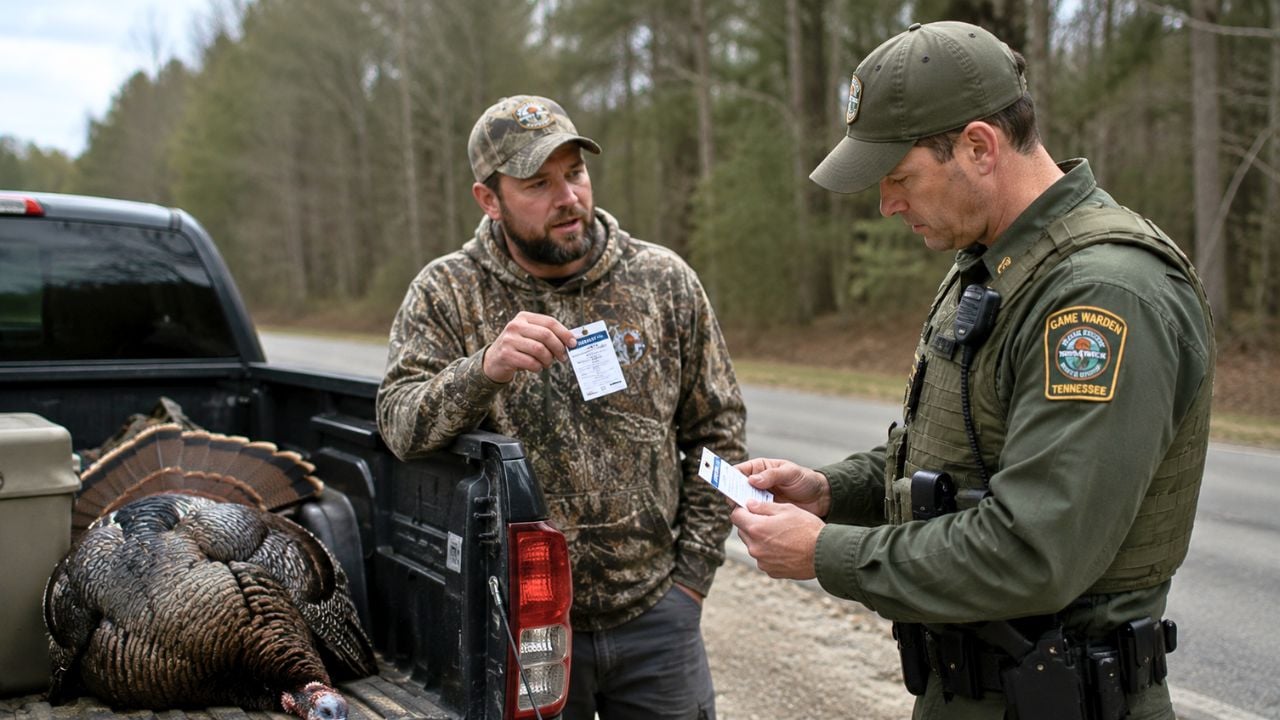
The game warden wasn’t there to play gotcha. It was a routine compliance stop—license, tags, and a quick look to make sure everything matched the regulations. But when the tailgate dropped and the warden spotted a bird in the truck, the tone changed fast.
A routine stop turns into an over-limit problem
The warden’s first look suggested the hunter had one turkey too many for that unit and day. One bird was plainly visible, tagged, and stored like you’d expect. The issue was the second bird the warden noticed tucked farther forward, partly covered by gear and a moving blanket like folks use to keep dust off a pack or decoys.
In turkey season, “over limit” is one of those situations that doesn’t come with a lot of wiggle room. Most states treat it seriously because it’s simple to understand and easy to enforce: if you have more birds than the law allows, you’re wrong. And that’s exactly where this was headed for a few minutes.
The little mistakes that make wardens suspicious
When a warden finds extra game, they start mentally sorting through the common explanations. Sometimes it’s a partner’s bird and the paperwork is in the glove box. Sometimes it’s a bird from a different day that never got processed correctly. Sometimes it’s flat-out poaching.
What makes it worse is how easy it is to look shady without meaning to. Birds rolled up in a blanket. Tags not immediately visible. A license app loading slowly because there’s no service. A hunter fumbling around for documents while the warden is staring at the tailgate. None of that proves wrongdoing, but it raises eyebrows in a hurry.
On this stop, the warden did what they’re supposed to do: asked whose bird it was, when it was taken, and where the tag was. The hunter kept saying the paperwork was good and he could show it, but he wasn’t doing himself any favors by not having it ready to go.
The second tag that got missed
The tension broke when the hunter produced a second valid tag that matched the second bird. It wasn’t a “buddy’s tag,” not a photocopy, not something half-filled-out. It was valid, signed the way the regulation requires, and tied to the right person.
The catch was that the warden had looked quickly and didn’t see it at first. That can happen, especially when tags are small, the bird is tucked behind other gear, and the hunter hasn’t placed the tag where it’s obvious. A lot of states require immediate tagging and specific placement. Even when you follow the rules, if the tag is buried where no one can see it, you’re begging for a misunderstanding on the side of the road.
Once the tag surfaced, the stop shifted from “possible citation” to “let’s verify the details.” The warden checked IDs, compared tag numbers, and made sure the dates and unit information lined up. The hunter still had to answer a few questions, but the big accusation—being over the limit—evaporated.
Why documentation matters as much as the bird
This is one of those situations where hunters learn a boring lesson the hard way: your tag isn’t just a piece of paper, it’s your lifeline when a warden is standing at your truck. If you’ve got a paper tag, it needs to be filled out cleanly and attached exactly how the rules say. If you’re using an electronic system, you need to know what “notched,” “validated,” or “reported” actually means in your state.
Wardens aren’t mind readers. They see what’s in front of them, and their job is to assume nothing until they can confirm it. If your bird is tagged but the tag is folded under a wing, stuffed in a pocket, or floating around loose in the cab, it can look like you didn’t tag it at all.
There’s also the practical side: people get stopped when they’re tired. They’re trying to get home, beat the rain, or make it to work. That’s when little habits matter—keeping tags in the same spot, carrying a pen that works, and making sure the tag is visible on the bird before you load it up with decoys, blinds, and backpacks.
What other hunters focused on: tag placement, apps, and attitude
When hunters talk about stops like this, the comments usually split into two camps. One side says the warden should have taken more time before assuming anything. The other side says the hunter should have had his ducks in a row and made that second tag impossible to miss.
Most folks also zero in on tag placement because it’s the part you control. If your tag is secured and easy to see, it prevents a lot of drama. Hunters who’ve been through a few checks tend to do the same thing every time: bird tagged immediately, tag attached where it’s visible, license ready, and the harvest confirmation pulled up if the state uses an app.
The other hot topic is digital tagging. E-tags are convenient until you’re standing in a dead zone watching a loading screen spin. The best move is to know the offline options your state provides—screenshots, confirmation numbers, or a saved receipt—without trying to skirt any rules. If the regulation says you must validate before moving the bird, you do it before the bird goes in the truck.
And like it or not, attitude gets discussed too. Being respectful doesn’t mean you give up your rights, but it does keep a routine stop from turning into a long afternoon. Calm answers, clear paperwork, and no arguing from the tailgate usually gets you back on the road faster.
The takeaway for turkey season: make “legal” obvious
The hunter in this situation did the important part right—he had the proper tag and could prove it. But the scare came from something simple: the evidence of being legal wasn’t immediately visible when the warden looked in the truck.
If you want to avoid that kind of headache, treat your tag like part of the harvest. Fill it out cleanly, attach it where it can be seen, and keep your license and confirmations easy to produce. In turkey season, the line between a good morning and a bad roadside conversation can be as thin as a folded-up tag you thought was “close enough.”
Like The Avid Outdoorsman’s content? Be sure to follow us.
Here’s more from us: