Photo credit: Theavidoutdoorsman.com
The truck was rolling slow, dust hanging in the sunbeams where the pines opened up, and the two hunters figured they were doing everything right. Rifles cased in the back seat, blaze orange on the dash, licenses in a zipper pouch. They weren’t creeping a gate or slipping across a fence line—they were using an old forest road they’d used for years to get to a chunk of timber ground they had written permission to hunt.
Then a game warden eased in behind them, lit them up, and waved them to the shoulder.
A roadside stop that felt routine—at first
Most of us have been there. A conservation officer pulls up, gives a nod, asks how the morning’s going, and starts working through the basics: licenses, tags, what you’ve got in the cooler, and whether the firearm is legal for the season. On the surface, it’s not personal. It’s part of hunting in 2026.
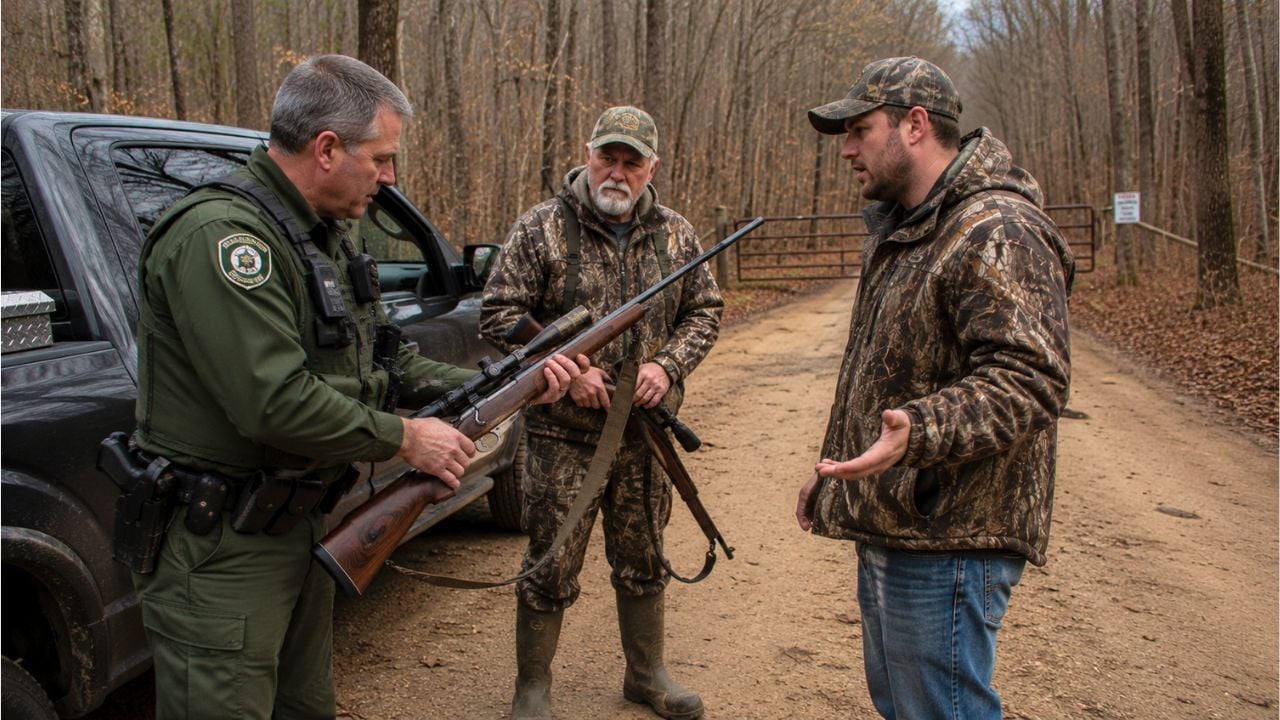
This stop started that way. The warden asked the two hunters to step out, show IDs and hunting privileges, and then said he wanted to look over their rifles. The hunters didn’t argue. They handed over cased bolt guns—typical deer rifles wearing mid-range scopes, the kind of setup you see in a thousand pickups every fall.
The tone changed when the inspection got more involved than the usual glance at action open/empty. The warden started checking details hunters don’t always expect at a roadside: magazine capacity, chambering, and whether anything about the rifles suggested they’d been used already that morning. One of the hunters asked a simple question: “What’s the issue?”
Why the warden thought he could dig deeper
From the warden’s perspective, the forest road looked public. No mailbox, no posted sign right where he made contact, no obvious “private drive” markings—just a gravel cut through trees with a few spurs disappearing into the timber. That kind of terrain is where wardens catch real violations: road hunting complaints, shots fired too close to homes, trespassers slipping into leased ground, and guys taking shortcuts during closed seasons.
Wardens also hear the same calls every year: “There’s a truck creeping that road,” “Somebody’s spotlighting,” “I heard shooting behind my barn.” When that happens, it’s common for an officer to make contact, check compliance, and figure out who belongs where.
The problem is that the authority to stop and inspect isn’t a blank check everywhere a gravel road exists. In many states, wardens have broad powers related to hunting and fishing enforcement on public land and waters, and sometimes on private land when there’s probable cause or an active investigation tied to wildlife violations. But a general “I want to check your rifles” doesn’t automatically travel onto any piece of dirt that happens to look like state ground.
That’s where this stop started to unravel.
The private-land detail that flipped the whole situation
One of the hunters, trying to keep the conversation calm, pointed down the road and mentioned the landowner by name. He explained they were headed to a specific tract, had permission in writing, and that the road itself wasn’t a county road—it was a private access lane that cut through several parcels. The hunters weren’t guessing. They had a map printout with property boundaries highlighted and a GPS app open that matched it.
The warden pushed back at first, saying the area was patrolled as public access and he’d never heard it described as private. The hunters didn’t get loud, but they didn’t fold either. They offered to show the permission slip and the parcel number, and they suggested calling the landowner to confirm.
That phone call is where things got real. The landowner confirmed the road was private, explained he maintained it, and told the warden he had not granted the state any easement for public travel. The landowner also made it clear the two hunters were allowed to be there.
Once the warden understood he was standing on private land with two permitted hunters—and not in the middle of a trespass or poaching complaint—his leverage changed. The hunters hadn’t refused lawful orders. They’d simply asserted, politely, that this wasn’t public ground and asked what gave him authority to inspect their firearms at that location.
At that point, the warden ended the inspection, returned the rifles, and cleared the stop.
How it got tense without anybody “doing anything wrong”
Encounters like this get heated because both sides are operating off different assumptions. Hunters assume, “I’m legal, I’ve got permission, I’m on a private road—this should be simple.” Officers assume, “You’re armed, you’re in hunting country, and I’m responsible for checking compliance.”
Most of the time, those assumptions overlap and everybody goes home. But when the location is misunderstood, the stop can turn from routine into a rights argument in about thirty seconds.
The other thing that raises blood pressure is the rifle handling itself. A roadside firearm inspection should always be safe and controlled—actions open, muzzle awareness, no sweeping people, no casual chamber checks with fingers near triggers. Even competent officers can get hurried on the side of a road, and hunters notice. That’s part of why some hunters get protective of their gear and their space, especially when they feel the officer is overreaching.
From the hunter’s side, there’s also the worry of “What if he decides my rifle isn’t compliant?” Maybe you’re running a straight-walled cartridge rule you had to study twice. Maybe your muzzle device is legal but looks questionable to someone who doesn’t see it often. Maybe you’ve got a magazine in your pack you use at the range, not in the field. None of that makes you a criminal, but it can turn into a long morning if the stop goes sideways.
What other hunters focused on: maps, paperwork, and how to handle the stop
When outdoorsmen talk about situations like this, the same themes come up every time, and they’re worth paying attention to.
First: property boundaries. Old logging roads and “forest roads” are the worst for confusion because they look public even when they aren’t. If you hunt private timber, keep more than one way to prove where you are—offline maps, a printed plat, and the landowner’s contact info. Phone service can be spotty, and a dead battery turns a simple conversation into a standoff.
Second: permission documentation. A text message from the landowner might be enough for you, but it’s not always enough to settle an argument quickly. A short written permission note with dates and names, even a photo of it saved on your phone, can take the heat out of a stop fast.
Third: demeanor. Hunters who “win” these encounters usually do it the boring way—calm voice, hands visible, no sudden moves, no sarcasm. You don’t have to surrender your rights to be respectful, and you don’t have to be disrespectful to assert your rights. That middle ground is where most of us want to live.
Finally: don’t try to turn the roadside into a courtroom. If you believe an officer is out of bounds, the smart play is to document what you can safely, comply with lawful orders, and handle disputes through proper channels later. Nobody needs a gravel-road argument with guns in the mix.
The practical takeaway for hunters and landowners
This is one of those cases where a simple boundary misunderstanding turns into an authority issue fast. The hunters did the right things: they had permission, they had documentation, and they stayed steady when the stop got pushy. The landowner did his part, too, by answering the phone and clearly stating the status of the road and the permission.
If you hunt private ground that’s accessed by roads that look public, do yourself a favor before season: mark your maps, save the landowner’s number, and keep your paperwork where you can grab it without digging around a truck full of gear. It won’t stop every uncomfortable encounter, but it can keep a routine morning from turning into a long one on the shoulder of a forest road.
Like The Avid Outdoorsman’s content? Be sure to follow us.
Here’s more from us: