Photo credit: Theavidoutdoorsman.com
They pulled in like they always did—cool air, damp leaves, and that familiar two-track that led to the back gate. The plan was simple: swap cards in the trail cameras, freshen a couple mineral-free mock scrapes, and make sure the stands were ready before the next cold front. Instead, every tree they’d hung a stand in had something new on it.
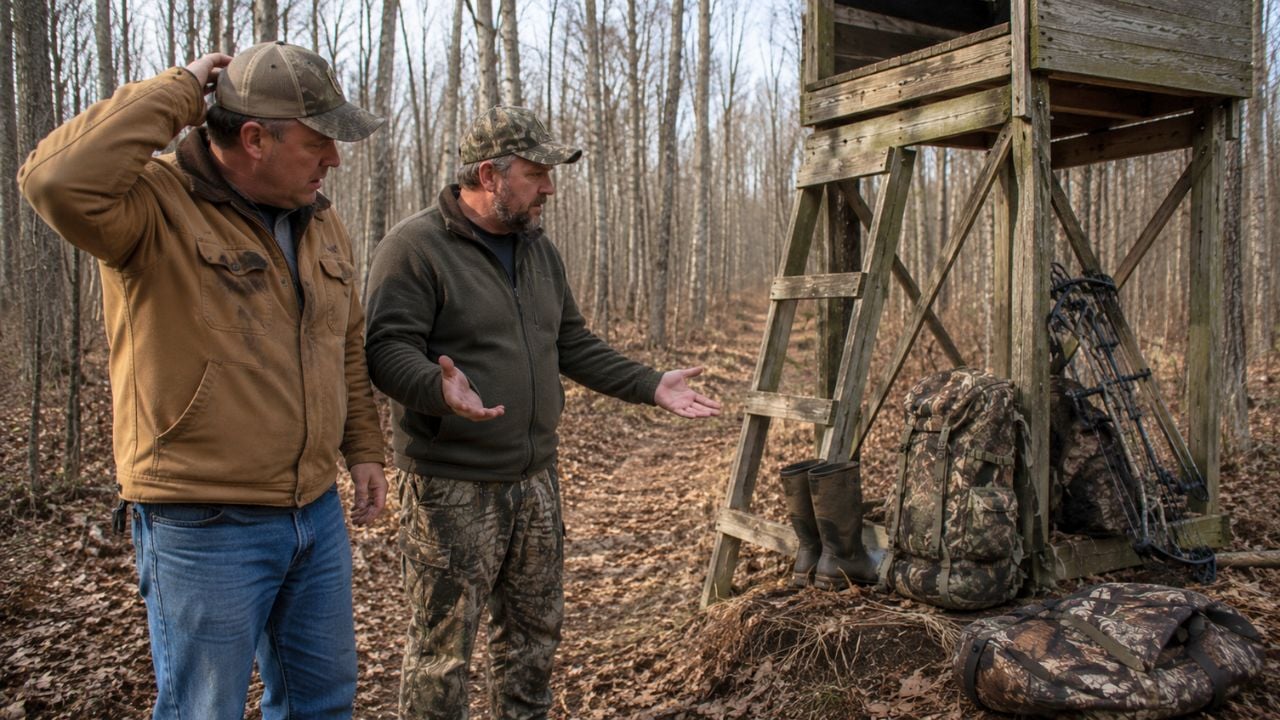
Not “new” as in upgraded straps or a better ratchet job. New as in someone else’s pack hanging from the platform, a different brand of lifeline clipped in, and one stand that now had a bow hanger and a set of shooting sticks tucked into the corner like it had been hunted last weekend.
The first red flag was gear that didn’t match any of theirs
The group had leased the same chunk of timber and cutover for a couple seasons. They had their spots: a ladder stand on a creek crossing, a hang-on overlooking a thick bedding edge, and a box blind that covered a long, narrow lane where deer liked to step out right at last light.
When they started finding unfamiliar gear, the confusion turned to anger fast. One stand had a brand-new climbing rope tied off at the base. Another had a small dry bag clipped to the seat. The biggest gut-punch was a trail camera they didn’t recognize aimed right at the ladder stand, watching anyone who walked in.
In the hunting world, “somebody made a mistake” is one thing. “Somebody is setting up to hunt where you hunt” is another. And it gets dangerous in a hurry, because nobody wants two groups thinking they have the right to sit the same oak tree on the same morning.
The lease paperwork looked solid—until the landowner got involved
The guys did what most level-headed hunters do when things smell off: they left the stuff alone and backed out. No cutting straps, no tossing gear in the brush, no “teaching a lesson.” They took photos, marked GPS points, and started going through their own paperwork that night.
Their lease agreement had the right parcel description, dates, and payment history. They had texts about gate codes and access routes. It wasn’t a handshake deal, either. The problem was that the land had changed hands recently, and the new owner used a different person to handle leasing.
When they called, the response wasn’t a clean “you’re the only lease.” It was more like, “I need to look into that.” That’s when the story took a turn from simple trespass to a legitimate access dispute.
Then they learned another lease had been filed on the same ground
Within a day or two, the landowner’s leasing contact called back with the kind of explanation nobody wants to hear: another hunting group had paperwork too, and their agreement had been submitted through a different channel. Same property. Same season dates. Different names.
That’s how you end up with strangers’ gear in every stand—because from their perspective, they weren’t sneaking around. They thought they were improving “their” lease, prepping it like any serious group would before prime time.
Most hunters have heard versions of this. A farm gets sold and the old lease doesn’t get carried over. A relative thinks they still have rights. A leasing agent promises access before the ink is dry. The end result is always the same: two groups show up with rifles, bows, and expectations.
And in the woods, expectations can get people hurt.
The safety issue became the main issue
The moment you realize another group is actively hunting the same ground, the priority changes. This isn’t about who hung the first stand or who knows the best pinch point. It’s about making sure nobody walks into a line of fire or gets mistaken for a deer slipping through thick cover.
The hunters who found the gear made a smart call by not “claiming” the area with confrontation. They paused their hunts, at least temporarily, because the worst-case scenario is two parties sitting opposite ends of the same funnel on a foggy morning, both thinking they’re alone.
It also raises ugly questions: Are there trail cameras watching the access trail? Are there bait sites set up in places you didn’t expect? Are there stands placed along property edges that could encourage risky shots? When land boundaries are being argued, people push closer to the line than they should.
This is where game wardens, local deputies, or whatever your area uses for enforcement can be helpful—not to “win” the lease, but to document the situation and keep it from becoming a parking-lot showdown at daylight.
Commenters would focus on cameras, boundaries, and not touching someone else’s stuff
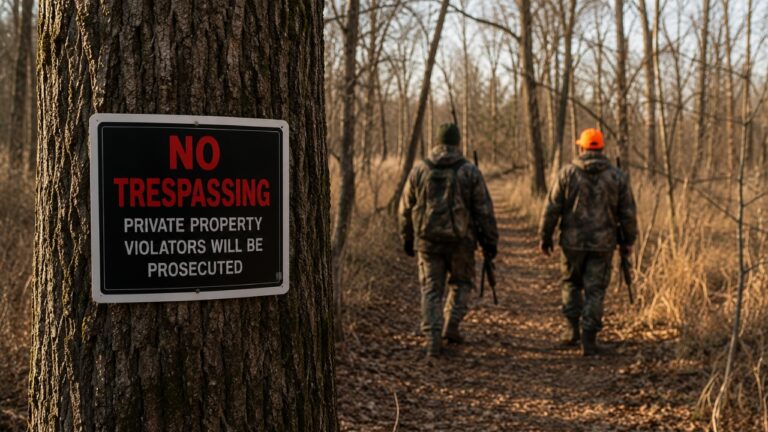
If you’ve spent any time around hunting conversations, you already know the advice that starts flying. Put locks on your gates. Run cellular cameras. Post signs. Paint trees. Take pictures of everything. Don’t remove gear that isn’t yours. Call the landowner. Call the warden.
Most of that advice has a solid core. Photos and timestamps matter when everyone’s emotions are running hot. Marked boundaries help when a neighboring club claims they “didn’t know.” And leaving other people’s gear alone keeps you from catching a theft accusation when the situation is already messy.
But there’s a hard truth that comes up too: a camera doesn’t stop a bad lease situation. It just records it. You can have the best surveillance in the world and still be stuck if the person who controls access hasn’t clearly granted it to one party.
The most useful thing hunters can do in this situation is create a paper trail. Save the lease, receipts, texts, and any written permissions. Photograph any posted signage at entry points. Drop pins on stand locations. You’re not building a court case; you’re protecting yourself from being the guy accused of being somewhere you weren’t supposed to be.
The resolution usually comes down to one thing: who actually has the right to be there
When competing agreements exist, the landowner (or their legal representative) is the only one who can cleanly settle it. Sometimes it’s a simple mistake—an old lease template got reused, or a leasing agent promised the same ground twice. Other times the landowner honors one contract and refunds the other party.
In the meantime, the best move for everyone is to avoid hunting it until access is clarified in writing. That’s not what any hunter wants to hear, especially when you’ve paid and put in summer work. But it beats a confrontation in the dark or a “he said, she said” trespass complaint that ends with both groups losing access.
If you lease ground, this is also a reminder to tighten up your own process. Ask who else has keys. Get the exact parcel numbers. Make sure the person signing has authority to lease it. Clarify whether sub-leases are allowed. Confirm the start and end dates and whether the lease survives a sale of the property. A lot of heartburn gets avoided with one extra phone call before season.
Finding another hunter’s gear in your stand feels personal. But the smart play is boring: document, back out, and force the decision back onto the landowner. In the long run, that’s the only way to keep it safe—and keep yourself on the right side of the law when everyone’s convinced they’re the one who belongs there.
Like The Avid Outdoorsman’s content? Be sure to follow us.
Here’s more from us: