Photo credit: The Avid Outdoorsman
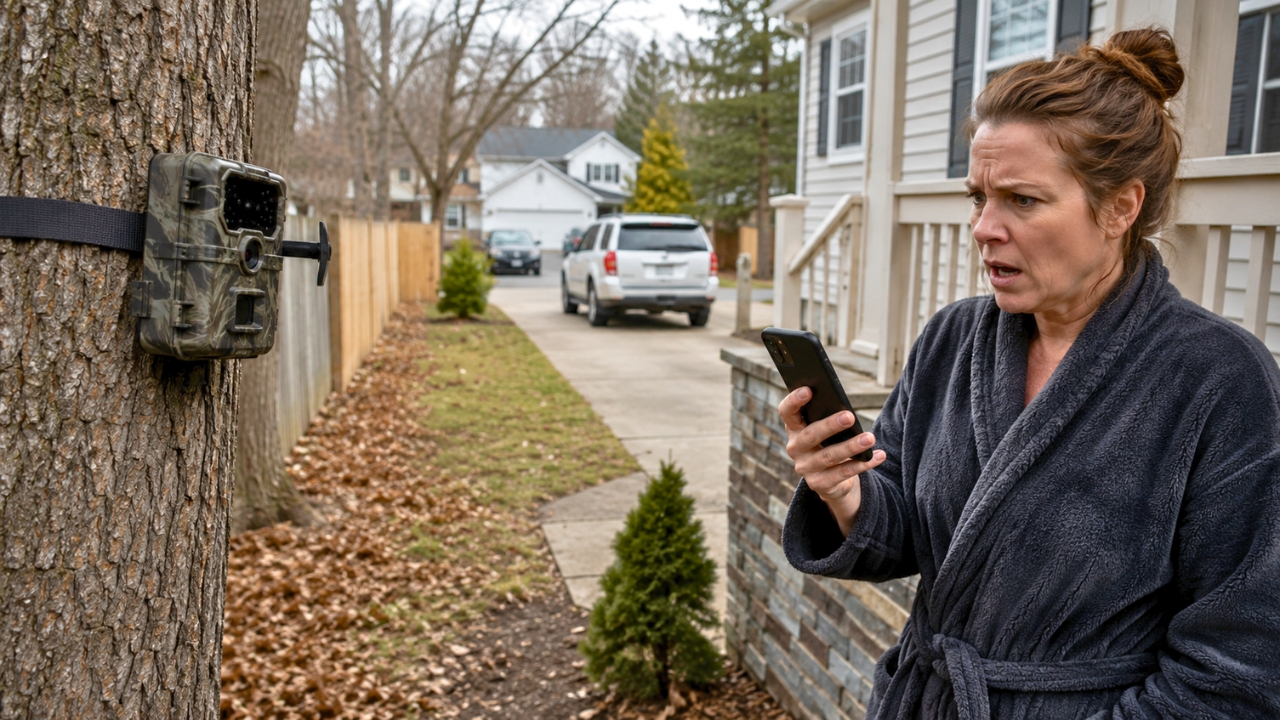
A homeowner said a neighbor’s trail camera had turned into more than a normal property-line annoyance.
According to the Reddit post, the neighbor allegedly had a trail camera aimed in a way that captured the homeowner’s driveway and activity around the house. Every time someone came or went, the camera appeared to pick it up.
That made the homeowner wonder whether the setup was legal or whether the neighbor had crossed a line by using an outdoor camera to monitor another person’s movements.
They explained the situation in a Reddit thread and asked if anything could be done about a neighbor’s trail camera aimed toward their property: https://www.reddit.com/r/legaladvice/comments/1hbwk4b/is_it_legal_for_neighbors_to_aim_their_trail/
The camera made normal routines feel watched
A trail camera is usually associated with deer, hogs, trespassers, or rural property monitoring.
But when it is pointed toward a neighbor’s driveway or house, it can feel very different. The issue is no longer just wildlife. It becomes a question of whether someone is tracking when people leave, when they come home, who visits, and what the family does outside.
That was the unsettling part for the homeowner.
A driveway is not the most private place on earth, but it is still part of daily life. Nobody wants to feel like a neighbor gets an alert every time they pull in, step outside, or walk across their own property.
Commenters focused on where the camera was located
One of the biggest legal questions was where the camera was actually placed.
If the trail camera was on the neighbor’s property and pointed toward an area visible from outside, commenters said the homeowner may have limited options. In many places, people are allowed to use cameras on their own property, even if those cameras capture some activity happening in public view.
But if the camera was physically placed on the homeowner’s property, that would be a very different issue.
That is why commenters asked about the property line, the angle, and whether the camera crossed onto land that did not belong to the neighbor. A camera mounted legally on one side of a boundary is not the same as a camera hidden on someone else’s land.
The expectation of privacy mattered
Commenters also talked about privacy expectations.
A driveway, front yard, or area visible from the street usually has less privacy protection than the inside of a home, a bathroom window, or a fenced backyard used as a private space.
That does not make the camera any less creepy. It just changes the legal analysis.
If the camera was recording ordinary driveway activity that anyone walking by could see, police may not treat it as illegal. If it was angled into windows, private fenced areas, or places where people reasonably expect privacy, the situation could become more serious.
That distinction frustrated the homeowner because something can feel invasive without being easy to stop.
The alert feature made it feel more intentional
A regular camera is one thing. A camera sending alerts every time a neighbor moves around feels more personal.
Trail cameras, especially cellular ones, can send photos or notifications quickly. That means a neighbor may not just be passively recording footage. They may be getting notified whenever someone comes home or leaves.
That was part of what made the story uncomfortable.
Even if the camera’s placement was technically legal, the idea of another person being instantly alerted to your movements around your own house feels like surveillance.
Commenters understood why the homeowner was bothered, even if the law did not offer an easy answer.
The neighbor dispute angle mattered
In many camera disputes, context matters.
If two neighbors have no history and one camera catches a driveway incidentally, that may look like careless placement. If the neighbors have been arguing and the camera is suddenly aimed directly at one family’s movements, it can feel more like harassment.
Commenters wanted to know whether there was a history between the households.
A single camera may be hard to challenge. A pattern of cameras, confrontations, notes, threats, complaints, and targeted monitoring could support a different argument.
That is why documentation mattered. The homeowner needed more than “I do not like the camera.” They needed dates, photos, screenshots, and a record of anything showing the camera was part of a broader pattern.
Commenters suggested asking once, calmly
Some commenters said the simplest first move might be to ask the neighbor to adjust the camera.
That kind of conversation can work if the issue is accidental. A neighbor may not realize how much of the driveway the camera is capturing. They might be watching their own gate, a shared access road, or an area where they have had trespassing problems.
But that only works if the relationship is safe enough for a conversation.
The homeowner would need to keep it calm and specific: the camera appears to be aimed at our driveway, it makes us uncomfortable, and we would like it adjusted so it only captures your property.
If the neighbor refuses or reacts badly, that response becomes part of the record.
Blocking the view may be easier than forcing removal
Several commenters suggested practical fixes.
A fence, privacy screen, shrubs, shade cloth, or even repositioning vehicles could block the camera’s view. That may feel unfair because the homeowner should not have to change their property to avoid being watched, but it can be more effective than fighting over a camera that may be legal.
In neighbor disputes, the legal answer is not always the fastest answer.
If the camera is lawful but irritating, blocking its view may solve the daily problem. It also avoids escalating the conflict into a bigger fight unless the neighbor responds by moving or adding cameras.
If that happens, the situation starts to look more intentional.
Police may not act unless there is more
Commenters generally warned that police may not do much if the camera is on the neighbor’s property and pointed at areas visible from outside.
That does not mean the homeowner should never call. If the camera is aimed into windows, accompanied by threats, part of stalking behavior, or placed on the homeowner’s property, law enforcement may be more interested.
But for a camera catching a driveway, the legal response may be limited.
That is why the homeowner needed to think in terms of pattern, placement, and privacy. Those are the details that turn a creepy setup into something more actionable.
The homeowner should document the camera from their own side
The smartest move was to document what could be seen without trespassing.
That means taking photos from the homeowner’s property showing where the camera is, what direction it appears to face, and what part of the home or driveway it captures.
If the homeowner later talks to police, an attorney, an HOA, or a landlord, those photos would help explain the concern.
It is much better than trying to remove the camera, damage it, or step onto the neighbor’s property to inspect it. Touching the camera could create a separate problem and make the homeowner look like the one escalating.
The issue was not just the camera
The real problem was the feeling of being monitored at home.
Most people accept that security cameras are everywhere now. Doorbell cameras, driveway cameras, trail cameras, and wireless cameras are common. But there is still a difference between protecting your own property and aiming a device so that your neighbor feels watched every time they leave the house.
That line is not always clear legally, but it is very clear socially.
A good neighbor points cameras at their own yard, gate, vehicles, livestock, or driveway. A bad neighbor uses cameras to make someone else feel uncomfortable.
For this homeowner, the Reddit advice was practical but not especially satisfying: document the camera, avoid touching it, ask once if it feels safe, block the view if needed, and watch for any pattern that turns a creepy camera into harassment.
Check out more from The Avid Outdoorsman here.