Photo credit: Theavidoutdoorsman.com
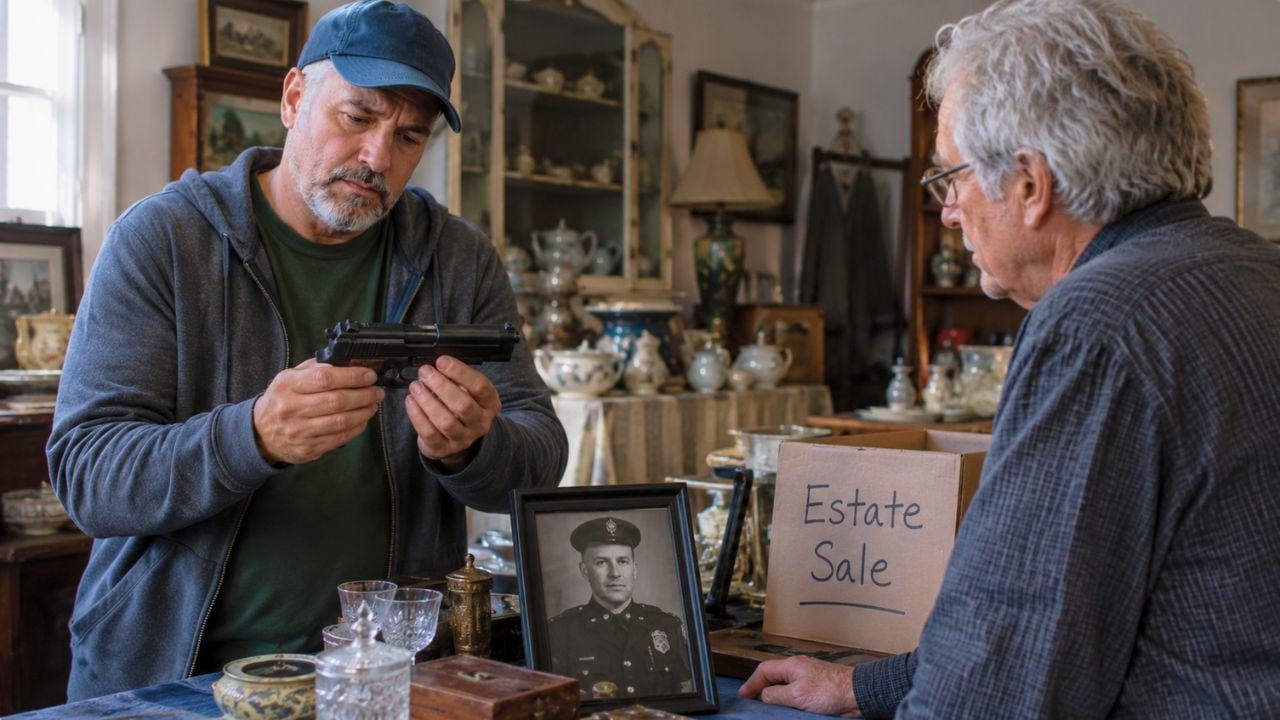
It’s easy to get lured in by an old pistol sitting in a foam-less hard case at an estate sale. The bluing has honest wear, the grips are smoothed down from years of carry, and the price tag says “make offer.” For one buyer, that kind of find turned into something a whole lot heavier than a range toy or a safe queen.
He laid cash on the table for a used .45 and did what plenty of folks do—took it home, field-stripped it, wiped out the old oil, and started poking around for a maker’s mark and a serial number. That’s when he noticed the kind of details you don’t see on your average used gun: an agency-style inventory etch under the dust cover and a faint line of stamping on the inside of the slide that looked like a property tag more than a factory roll mark.
The estate sale felt like a normal score until the details started talking
This wasn’t one of those “guns laid out on a blanket” sales. It was a family-run estate, held in a rural garage with folding tables of tools, tackle boxes, old reloading manuals, and a couple long guns in the corner. The .45 was the only handgun out, sitting beside a leather duty-style holster and a double-mag pouch that looked more professional than personal.
The seller didn’t have much history on it beyond, “It was in the back of the safe.” In a lot of places, private sales like that are treated as routine if both parties are legally allowed to own firearms. The buyer left thinking he’d picked up a solid old .45—maybe a classic 1911-pattern or a duty-era service pistol—something with some soul and a little recoil, the kind you don’t mind running hard on steel plates.
A quick serial-number check turned it from “used gun” into “possible evidence”
Most gun owners I know do a little homework on used guns. Sometimes it’s just curiosity—when it was made, what generation, whether it takes common mags. Other times it’s more serious: checking whether it’s been reported stolen.
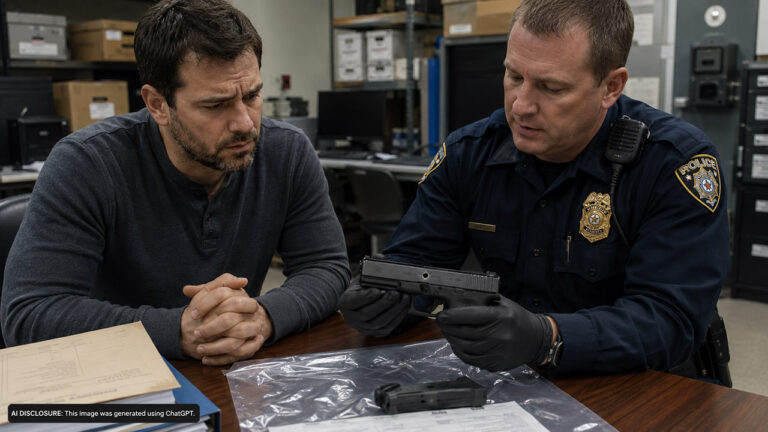
In this case, the buyer’s curiosity led him to call and ask how to confirm the gun wasn’t hot. He didn’t bring it into a station and slap it on a counter—smart move from a safety standpoint—but he did provide identifying information through the proper channel. The answer came back with a chill: the pistol was tied to an old case involving a detective who was killed years ago, and the firearm had been logged as missing property connected to that investigation.
That’s the moment the air changes. The gun in your hand isn’t just a chunk of steel and history anymore. It’s potentially stolen property. It may have chain-of-custody implications. And it carries the kind of emotional weight that doesn’t wash off with solvent.
The family’s claim came fast, and it wasn’t just about money
Once the connection surfaced, word got to the detective’s surviving family. And that’s where this stopped being a simple “turn it in” situation and became a real dispute. The family filed a claim seeking return of the pistol, treating it as personal property that should have never left their orbit in the first place.
From their perspective, it wasn’t a collectible or a shooter. It was part of a life cut short—an object tied to service and loss. Families hold onto strange pieces of a person after something like that. A badge, a watch, an old set of handcuffs, a duty weapon. Even folks who don’t care about guns understand why that particular gun would matter.
From the buyer’s perspective, he’d paid fair value at a public sale, in good faith, without any reason to think it was connected to a crime or a theft. He didn’t go looking for “cop guns.” He went looking for a decent .45. Now he was staring at the possibility of losing the gun and being out the cash, while also trying not to step on the toes of grieving people.
Where gun owners get tripped up: possession, paperwork, and good faith
This is the part that makes folks in the outdoor world nervous, because it can happen without you doing anything shady. In many states, a good-faith purchase doesn’t magically convert stolen property into yours. If a firearm is stolen or considered agency property, it can be seized and returned—sometimes with or without compensation to the buyer.
Estate sales add another layer. Families are often sorting through safes and cabinets without fully understanding what’s what. A gun might have been loaned, traded, or “stored” years earlier. Paperwork might be gone. The person who knew the story might be the person who passed away. That’s how an item with a serious backstory ends up with a masking-tape price tag on it.
And it’s not just a property issue. Once a gun is linked to a homicide investigation—especially involving a law enforcement officer—it can be treated with extra caution. It may still be considered evidence, even decades later, depending on the status of the case and how the firearm was originally recorded. That can mean the buyer can’t simply hand it to the family, even if he wants to. It has to go through official channels.
Commenters latched onto two things: “turn it in” and “get your money back”
Any time a story like this makes the rounds among gun folks, the reactions split into two camps. One side says there’s only one answer: surrender it immediately, don’t argue, don’t try to “hold it for negotiation,” and don’t shoot it. They’re thinking about worst-case scenarios—being accused of knowingly possessing stolen property, or contaminating potential evidence.
The other side focuses on the buyer’s loss. A decent .45 isn’t cheap, and estate-sale deals still cost money. Plenty of folks pointed out that if the gun gets returned, the buyer should be chasing the estate or the seller for reimbursement, not trying to squeeze a grieving family. That’s a practical, clean line most people can live with.
A smaller but loud group always shows up to argue about how private sales “should” work, or to insist that a serial number check is a trap. That’s internet noise. In real life, the best way to stay out of trouble is to keep your purchases documented, your transfers legal, and your ego out of it when something goes sideways.
The most practical lessons for buying guns at estates and auctions
If you buy used firearms—especially older handguns—you can take a few steps to protect yourself without turning it into a paranoid ritual. Get a written bill of sale with the date, the seller’s name, and the gun’s make/model/serial. Take a photo of the estate sale listing or sign. Keep messages if it was arranged online. None of that guarantees you “win” if the gun is later claimed, but it helps show you acted in good faith.
Also, pay attention to red flags. A duty holster setup, property markings, unusual engraving, or a seller who refuses any paperwork should slow you down. It doesn’t mean it’s stolen. It does mean you should ask more questions before cash changes hands.
And if you ever find out a gun you bought is tied to a serious crime or an officer’s death, don’t play backyard detective. Secure it safely, stop handling it more than necessary, and contact an attorney or the appropriate authorities to arrange surrender through the right process. That protects you and it protects the integrity of whatever records or evidence might still exist.
In the end, this wasn’t really a story about a .45. It was about how a routine buy can collide with old tragedy and messy paperwork. The outdoors world runs on handshakes and trust a lot of the time, but every now and then you learn why documentation matters—and why some “deals” come with a cost you didn’t see on the price tag.
Like The Avid Outdoorsman’s content? Be sure to follow us.
Here’s more from us: