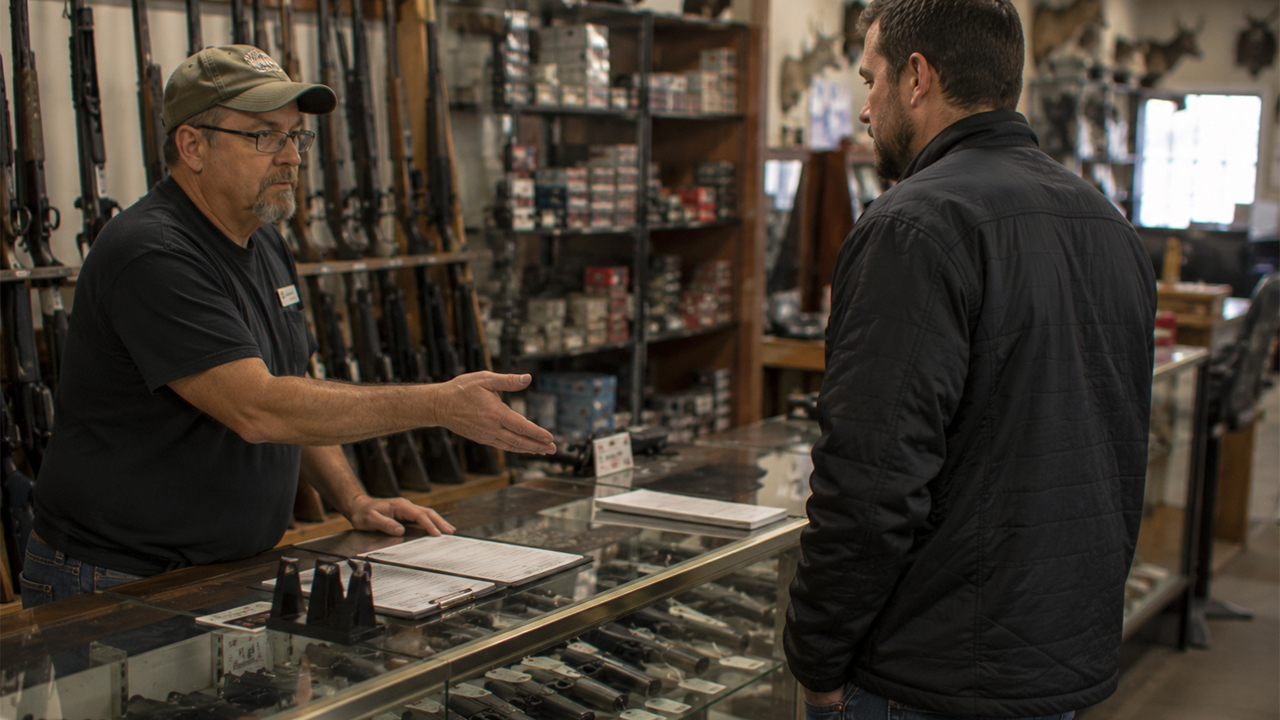
Photo credit: AvidOutdoorsman
Most folks who’ve bought a gun from a local shop know the routine. You browse the case, talk calibers, fill out the paperwork, and wait on the background check. When something goes sideways, it’s usually a simple “delayed” response, a typo, or a clerk who wants a second look at your ID.
In this situation, the buyer didn’t just leave empty-handed. He walked out thinking it was a standard denial at the counter—only to learn later that the dealer had submitted a Suspicious Activity Report (SAR) about him. And that’s the part that’ll make any normal, law-abiding gun owner stop and reread the sentence.
The denial looked ordinary until the follow-up didn’t
The purchase started like a lot of weekday buys: a guy looking for a practical firearm—something he could use for home defense, maybe a truck gun for checking fences, maybe even a deer rifle if the season was close. He picked one, started the paperwork, and waited while the employee punched information into the system.
Instead of a quick approval, he got shut down. Not a “delay,” not a “come back in three days,” but a straight no. The staff kept it businesslike, told him they couldn’t proceed, and that was that. He didn’t argue, didn’t raise his voice, and left the store.
That should’ve been the end of it. But it wasn’t.
How he discovered the report after the fact
It’s not normal for a gun buyer to get a phone call that hints a store reported them as “suspicious.” Most people don’t even know SARs exist outside of banking. In this case, the buyer later learned—through a paper trail that came up during follow-on communications—that the dealer had filed a report describing the attempted purchase as concerning.
That can happen a few ways. Sometimes it shows up when you request records tied to your denial. Sometimes it comes up if you have an attorney send letters asking why you were refused service. And sometimes it pops up because your name ends up in a conversation you never asked to be part of—like when a local officer reaches out with questions you didn’t expect.
The buyer’s frustration wasn’t just being denied. It was the feeling of being quietly labeled as a potential threat for doing something millions of Americans do every year.
What can trigger a SAR at a gun counter
Dealers have their own risk management rules, and they’re allowed to refuse a sale. On top of that, certain situations can prompt a shop to document what happened, especially if the staff thinks something feels off or if they believe the transaction could be unlawful.
Common red flags include talk about buying a gun for someone else, confusion about who will possess it, mismatched ID information, or a buyer who can’t clearly explain basic details like where they live. Another big one is behavior—agitation, intoxication, or making statements about using the gun in a way that suggests harm or illegal activity.
But here’s where it gets messy in the real world: sometimes “red flags” aren’t criminal. A nervous first-time buyer can look suspicious. A guy who drove in from a different county for a specific model can look suspicious. Even paying with cash—perfectly legal—gets treated like a neon sign by some places.
And then there’s the uncomfortable truth nobody likes to say out loud: some employees are poorly trained, and some shops are jumpy because they’ve been burned before. That doesn’t make a bad report fair, but it helps explain how a normal interaction can turn into something bigger.
Why a SAR feels like a bigger deal than a simple “no”
A denied sale is frustrating, but it’s a contained problem. You can appeal a background check result if that’s what happened, or you can choose to spend your money elsewhere if the store simply refuses service.
A suspicious activity report is different. It can create a shadow around an ordinary person, especially if the report is written loosely or with dramatic language. The buyer may worry that buying ammunition later will lead to questions, that another attempt at a purchase will be treated as “patterned behavior,” or that an innocent misunderstanding now lives in a file he’ll never see.
For hunters and rural folks, this hits a nerve because firearms aren’t a hobby-only item. They’re tools. A deer rifle that doesn’t get bought this week can mean scrambling before season. A handgun you wanted for home defense can mean weeks or months of uncertainty if your name gets tied up in a denial and a report you didn’t even know existed.
And it puts a person in an awkward spot: do you push back and risk looking “more suspicious,” or do you keep your head down and hope the whole thing disappears?
Commenters zeroed in on paperwork, demeanor, and the “extra questions” problem
When stories like this make the rounds, gun owners tend to split into a few camps. One group immediately says the buyer must’ve done something to earn it—made a dumb comment, tried to buy for somebody else, or acted strange. Another group points straight at the dealer and says shops are getting spooked and covering themselves by reporting anything that feels remotely unusual.
The more practical voices usually focus on the little details that matter at the counter. Was the buyer’s address current and matching? Was his ID beat up or recently changed? Did he have a carry permit that could’ve smoothed things out depending on the state? Did he say something like “my buddy is picking this up for me” or “I’m buying this for the farm workers,” not realizing how that sounds to a clerk trained to sniff out straw purchases?
People also talk about the “extra questions” some shops ask that go beyond the federal form—questions about what you’re using it for, where you’re storing it, who else lives in the home. Some dealers do it as a safety culture thing. Others do it as a liability shield. Either way, it creates a situation where a normal, short answer can be interpreted as evasive.
And that’s where things can go sideways fast: a buyer thinks he’s being polite and brief; the employee thinks he’s being cagey. The report gets written with the employee’s interpretation, not the buyer’s intent.
The practical options for a regular gun owner in this spot
If you get denied, the first step is to figure out what kind of denial it was. Was it a background check “deny” response, or was it a store-level refusal to proceed? Those are two different animals. One has an appeals process; the other is basically a business decision unless discrimination is involved.
If a report was filed, keep it boring and documented. Save receipts, note dates, and write down what happened while it’s fresh: who you dealt with, what you said, what they said, and what paperwork you completed. If you decide to challenge the background check result, do it through the proper channels and keep your communications calm and factual.
It’s also worth thinking about what you can control next time you’re at a counter. Make sure your ID is current and matches your address. Don’t joke about using a gun for anything other than lawful purposes. Don’t try to explain the law to the clerk. And if you’re buying a gift card or a safe or something for a family member, keep that clear and separate from the firearm purchase itself.
Most importantly, if you feel like a shop is treating you like a problem, leave. Not in a huff—just leave. There are good dealers out there who run a clean, professional counter without turning every customer interaction into an interrogation.
What sticks with me about situations like this is how quickly an ordinary day can turn into a long-term headache. A background check denial is one thing. Being quietly written up as “suspicious” for a routine purchase is another. Gun owners don’t need special treatment, but they do deserve a fair shake—and dealers owe it to their customers to treat “suspicious” like a serious label, not a catch-all for discomfort or guesswork.