Photo credit: guruXOX/Shutterstock.com
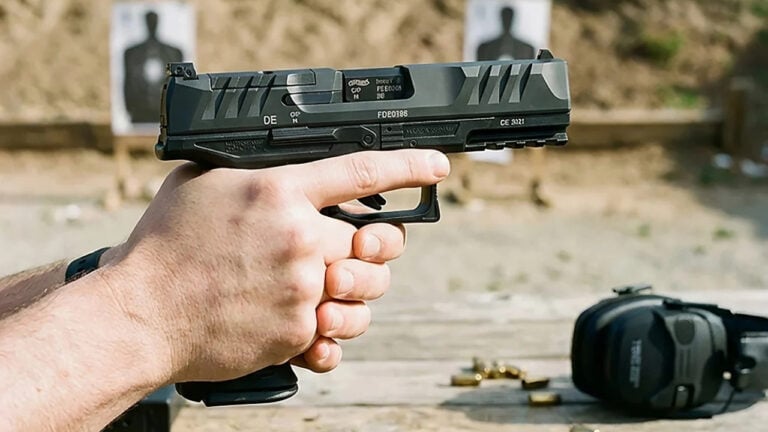
At close distance, you’re not shooting groups—you’re trying to stop a problem that’s already too close. The gun might be pressed into clothing, you might be off-balance, and you probably won’t see your sights. Caliber doesn’t replace shot placement, but some rounds are simply more forgiving in that mess: enough penetration, enough diameter, and enough recoil control to put more than one round where it needs to go.
Here are the handgun calibers that stack the odds in your favor inside arm’s length, along with what they actually bring to the table.
9mm Luger

If you want the best mix of control, capacity, and real-world performance up close, 9mm is still hard to beat. Modern defensive loads are built around the FBI’s 12–18″ penetration standard in gel, even when they go through clothing, and there’s a long track record of them working in actual shootings. You get manageable recoil in compact guns and full-sized pistols, which matters when you’re firing from awkward positions or one-handed.
The other big advantage at contact distance is capacity. A 9mm double-stack gives you a lot of chances to solve a problem before slide-lock, and the recoil impulse is soft enough that most shooters can put fast follow-ups on target without losing control. At “grab and go” distances, it’s less about raw energy and more about how many solid hits you can deliver before the other guy finishes what he started—9mm does that job very well.
.38 Special +P

Snub-nose revolvers still live in a lot of pockets, and .38 Special +P is what makes them worth carrying. It’s not a powerhouse on paper, but the better defensive loads hit the FBI’s preferred penetration window and expand reasonably well from short barrels. In a close tangle, a small revolver has one big advantage: you can jam the muzzle into something—clothing, a rib cage, a door frame—without worrying about knocking the slide out of battery.
Recoil is snappy in lightweight guns, but it’s still something normal people can train with. At contact distance, that matters more than trying to stuff magnum levels of blast into a 15-ounce frame. You’re trading capacity for absolute simplicity: press the trigger, it goes bang, repeat. Inside a couple feet, that simplicity can be worth more than another five rounds.
.45 ACP

.45 ACP has been ending fights at close range for a very long time. It drives heavy bullets at moderate speeds, which gives you decent penetration and a big permanent hole without the violent muzzle blast and flip of the high-pressure rounds. In full-size steel guns, the recoil is more of a shove than a snap, which a lot of people handle well under stress.
The downside is capacity and gun size—everything’s bigger and heavier. But if you can manage that, .45 ACP gives you a forgiving round at contact distance. It tends to do good work from short barrels, it’s less likely to be deflected by heavy clothing than the internet fearmongering suggests, and it doesn’t punish your ears and eyes quite as hard as the hot 9s and .357s when the muzzle is almost in your own workspace.
.357 Magnum

.357 Magnum is a beast on both ends, but if you’re carrying a mid-weight K-frame or similar-sized revolver, it brings nasty close-range performance. High-pressure loads push medium-weight bullets fast, giving you deep penetration and violent expansion—more than enough to break heavy bone or push through barriers at in-your-face distances.
The catch is recoil. In very light snubs, full-power .357 is hard to control even on a calm range. In a slightly heavier revolver with good grips, it’s more manageable, and at contact distance you’re often talking about one to three shots, not mag dumps. If you can genuinely handle it in practice, .357 Magnum is one of the strongest options in a belt-sized revolver when things get intimate and ugly.
.380 ACP
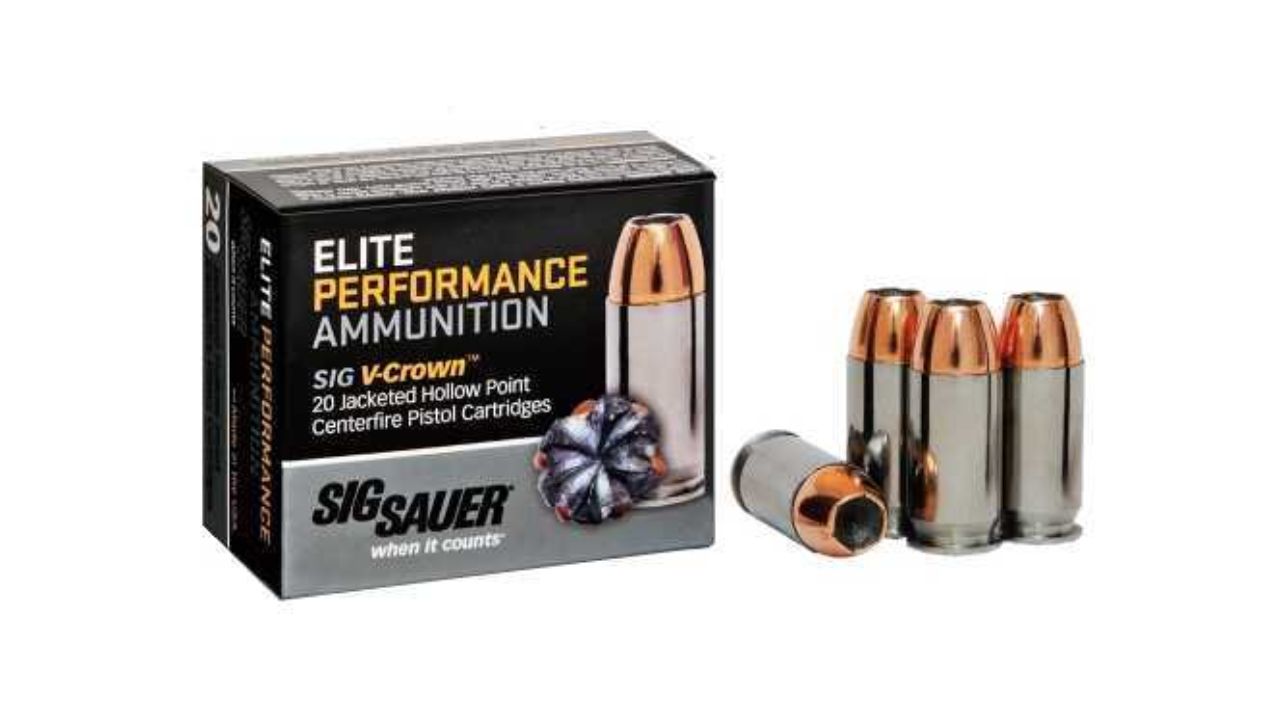
.380 ACP is nobody’s idea of ideal, but here’s the reality: tiny guns get carried when bigger guns stay home. At bad-breath range, a .380 in your pocket beats the perfect pistol in your nightstand every time. Modern .380 defensive ammo is built to squeeze as much penetration and expansion as possible from short barrels, and while it doesn’t match 9mm, it’s still far better than bare hands.
The real strength of .380 up close is controllability. In a slightly larger .380—not the absolute micro stuff—most shooters can keep the gun flat and running during rapid fire. That matters when you’re shoving the gun out of a clinch, shooting from retention, or indexing shots off your body without a clean sight picture. It won’t bail you out of bad hits, but it’s easier for most people to keep on target in pure panic.
10mm Auto

If “bad-breath distance” for you means bears and big predators instead of humans, 10mm jumps way up the list. Full-power 10mm loads with hardcast or deep-penetrating bullets will drive through heavy bone, dense muscle, and thick hair better than most common service calibers. That’s why so many backcountry sidearm setups in bear country have shifted from .44s to 10mm pistols.
The tradeoff is recoil and blast, especially in lighter polymer guns. But for folks who actually train with it, 10mm gives you semi-auto capacity plus serious penetration when an animal is on top of you. It’s overkill for human defense in town; it starts to make a lot more sense when close range involves claws and teeth.
.44 Magnum

Full-tilt .44 Magnum from a mountain revolver is miserable to shoot in any kind of hurry—and that’s on a sunny range. In a fight, it can be too much of a good thing. Where it starts to make sense is with slightly tamed hunting or defensive loads in a mid-to-heavy gun. Even at reduced power, you’re still throwing big, heavy bullets that punch deep and keep going.
At bad-breath distance on big animals, a .44 that you can actually run is better than a hand-burning monster you avoid practicing with. You’re betting on one or two very authoritative shots at contact distance, and you want them going straight through bone and muscle, not blowing up on the surface or yanking the sights into the sky with every pull.
.327 Federal Magnum
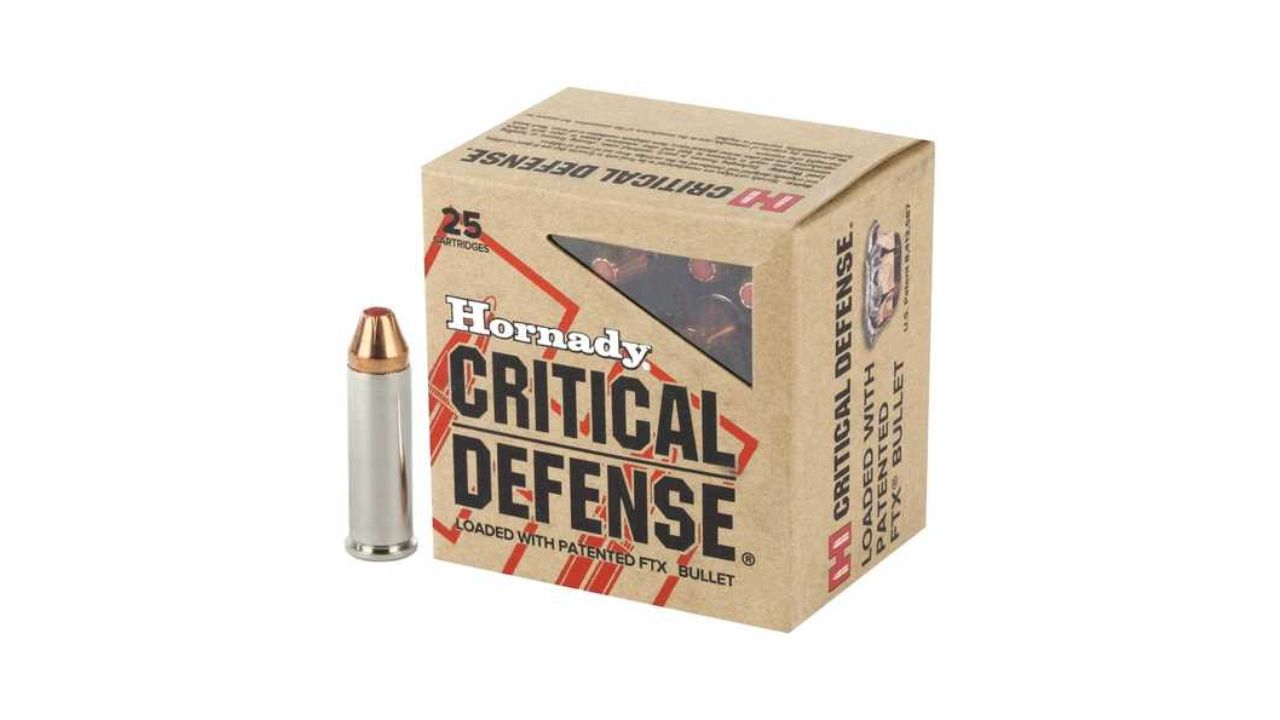
.327 Federal Magnum doesn’t get nearly as much attention as it deserves. You get high-pressure performance out of a small case, with more speed and energy than .38 +P and the ability to run multiple cartridges (.32 H&R, .32 Long) in the same gun. The big trick is capacity: a small-frame revolver can often hold six rounds of .327 where it would only carry five .38s.
For up-close work, that means one extra chance without making the gun larger. Recoil is sharp but manageable with defensive loads, and penetration is usually solid because the bullets are built with magnum speeds in mind. In a compact revolver, it’s a surprisingly strong option for people who want more oomph than .38 but aren’t thrilled about .357 levels of punishment.
.45 Colt

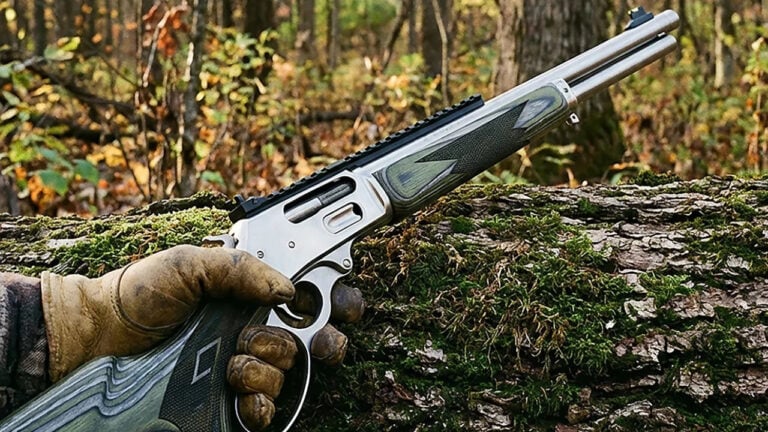
In a modern revolver that can handle higher pressures, .45 Colt can be tuned into a very serious close-range round. Big bore, heavy bullets, and modest speeds add up to straight-line penetration and large wound channels on both two- and four-legged threats. It has a long track record in the field, and modern bullets just make it better.
The trick is matching ammo to your gun. Some .45 Colt revolvers are only meant for soft “cowboy” loads; others can run +P-style hunting ammo. If you’re in the latter camp, you get .44-level authority at bad-breath distances with a slightly different recoil feel—more of a shove than a snap. It’s not for everyone, but in the right setup it’s a legitimate “up close and personal” hammer.
.357 SIG

.357 SIG is built around the idea of duplicating classic .357 Magnum performance in a duty auto. High velocity, good barrier performance, and aggressive expansion from modern bullets give it a real edge in stopping fights at close-to-medium range. Some agencies stuck with it specifically because it hits hard and tends to feed well in duty-size pistols.
The downside is blast and noise, which are no joke inside a vehicle or house. But if you can handle the recoil and you’re running a full-sized pistol, .357 SIG gives you serious “punch-through” and energy at contact distances. It’s not a finesse caliber; it’s for people who prioritize immediate disruption when things have already gone off the rails.
.40 S&W

.40 S&W lives in that middle ground between 9mm and .45. A lot of departments left it, but the caliber itself still does solid work at close range. It throws heavier bullets than 9mm with more diameter and similar penetration in many loads, and there’s a ton of real-world shooting data on how it behaves.
The tradeoff is recoil in smaller guns—it’s snappier, and that can slow down average shooters in a fight. In a duty-size pistol, though, it’s completely manageable. If you already shoot .40 well, it’s still a perfectly viable “get off me” round. It just isn’t doing anything at bad-breath distance that 9mm and .45 can’t handle with better ammo availability and usually better shooter performance.
.357 Magnum “mid-range” loads

Full-power magnums are a handful. Mid-range .357 loads—some of the defensive offerings that sit between .38 +P and nuclear magnums—are a good sweet spot for close work. You get more speed, more energy, and often better expansion than .38, without completely destroying your ability to shoot doubles and triples in a hurry.
In a mid-size revolver, that balance matters. At arm’s length, you don’t need every last fps; you need controllable power you can bring to the fight right now. Those mid-range .357 loads are underrated for exactly that job: big enough to matter, mild enough that you don’t instantly regret your life choices after the first shot.
.22 LR and .22 Magnum

Let’s be honest: .22 LR and .22 Mag are not what you want in a fight. Underpowered rimfire isn’t anyone’s first choice. But the ugly truth is that a lot of people do end up defending themselves with them, simply because that’s what they own and can handle. At contact distance, multiple .22 hits in the right place can still end a fight—just not as decisively or as reliably as centerfire pistol calibers.
The real upside is that people actually shoot them. Low recoil and cheap ammo mean more reps, and in a close scramble, hits matter more than caliber debates. If you’re physically limited and .22 is all you can truly control, it’s better than nothing—but if you can work up to 9mm or .38, you’ll buy yourself a lot more margin when the distance is measured in inches instead of yards.
Like The Avid Outdoorsman’s content? Subscribe to our newsletter so you never miss an article.
Here’s more from us: