Photo credit: PRO Visual Solutions/Shutterstock.com
Handgun calibers get argued like sports teams, but real-world carry and field use tend to narrow the conversation fast. You want something you can practice with, something you can actually find on shelves, and something that runs in reliable guns without being finicky. Past the range, you’re dealing with awkward positions, cold hands, sweat, cover garments, and the possibility that you won’t get a perfect stance or a perfect sight picture.
The truth is, a caliber “works” when you can place shots where they need to go, repeat it under pressure, and keep your gun running. Bigger isn’t automatically better if it slows you down, and smaller isn’t automatically smarter if it leaves you wishing for more performance. If you pick a caliber with proven track records, common support, and manageable recoil in guns you’ll actually carry, you’re already ahead of most internet advice.
9mm Luger

If you want one caliber that lives comfortably in the real world, 9mm is it. You can find it anywhere, it’s supported by every major pistol platform, and it offers a practical balance of recoil, capacity, and performance. That matters when you’re training regularly, because reps are what keep you honest.
In carry guns, 9mm gives you options without forcing you into extremes. You can go compact without the recoil getting out of hand, and you can go full-size for softer shooting and easier follow-up shots. It’s also a caliber that tends to run well across a wide spread of modern pistol designs, which keeps your setup less fussy.
.45 ACP

.45 ACP is still around because it does a few things very well, especially in guns built for it. The recoil is more of a push than a snap in many full-size pistols, and a lot of shooters find that rhythm easier to manage than the faster “pop” of lighter calibers.
Where .45 shines is when you’re willing to carry a gun that fits the cartridge. That usually means a bit more weight and a bit less capacity, but you get a controllable, proven option that’s been working for a long time. If you shoot it well, it can be a steady performer. If you don’t, it’ll punish sloppy grip and slow your follow-up shots.
.40 S&W

.40 S&W is the classic middle child that still makes sense when you understand the trade-offs. It was built to bring more energy than 9mm while fitting into duty-size guns, and it does that job. You’ll also often find affordable used pistols and magazines because so many agencies moved away from it.
The downside is real: recoil can feel sharp, especially in lighter guns, and it can beat up small-frame pistols if you run them hard. The upside is that .40 can be very effective in service-sized handguns, and it tends to feed and function well in guns designed around it. If you practice enough to control it, it’s far from outdated.
.357 Magnum

.357 Magnum has a reputation for a reason. In a solid revolver, it brings serious performance, and it can handle a wide range of practical needs, especially if you want a defensive revolver that also has some field utility. It’s a cartridge that has put a lot of animals down cleanly and has been relied on for decades.
The real-world catch is blast and recoil. Out of shorter barrels, it’s loud and sharp, and it will expose weak grip and poor trigger control fast. That doesn’t make it a bad choice—it makes it an honest one. If you can run it well, it’s a hard-hitting, versatile option that still belongs in the conversation.
.38 Special +P

.38 Special +P is one of the most practical defensive revolver choices because it keeps recoil and control in a place most people can live with. You can shoot it faster than magnum loads in small-frame revolvers, and that matters when you’re trying to make accurate hits without getting rattled by blast.
In real carry guns, .38 +P often ends up being the “actually doable” load—enough performance to be taken seriously, without turning a lightweight revolver into a chore. It’s also widely available and supported with plenty of proven bullet designs. If you want a revolver you’ll practice with, not merely own, this is a smart lane to stay in.
10mm Auto
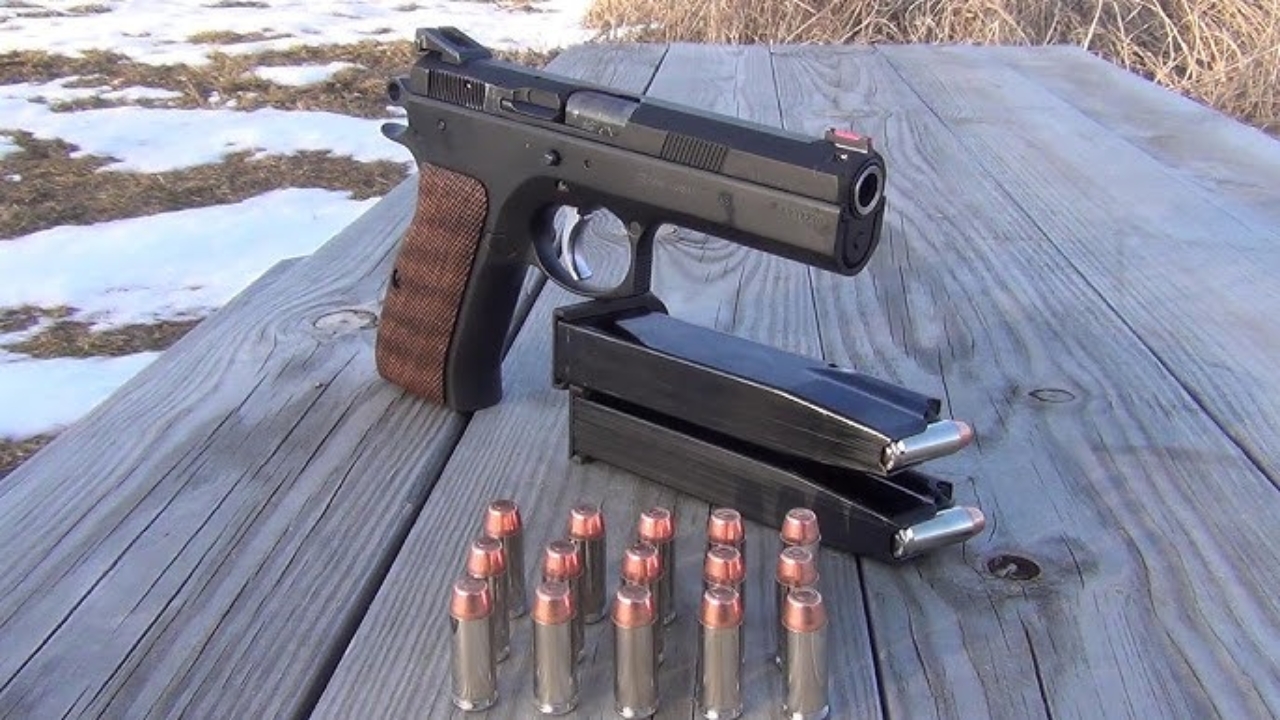
10mm Auto is a field-first handgun cartridge that still carries well if you pick the right pistol. It’s popular for a reason: it can deliver deep penetration and strong performance for backcountry use, and it holds onto that reputation with people who spend real time outside.
The trade-off is recoil and platform size. Full-power 10mm can be demanding, and not every gun handles it gracefully. If you carry it, you owe yourself the time to practice with the loads you actually plan to use, because this cartridge will highlight bad habits. For the right shooter, it’s a serious option that bridges the gap between defensive pistol and woods sidearm.
.380 ACP

.380 ACP earns its place because it lives in pistols you can truly carry every day. When a gun disappears under light clothing and stays comfortable on long days, you’re more likely to have it on you. That matters more than caliber arguments when real life is busy and inconvenient.
The reality is that .380 asks more of you in terms of shot placement and discipline, and the tiny guns chambered for it can be snappy. Still, with a dependable pistol and quality ammunition, it can be a workable carry choice for people who won’t carry larger guns. If .380 is the gun you actually keep with you, it beats leaving a bigger caliber at home.
.22 LR

.22 LR is not a traditional first pick for defense, but it absolutely belongs in a real-world discussion because it’s the caliber many people can shoot well. Low recoil, low cost, and easy practice add up to competence, and competence is the whole game. You can train more, recover faster between shots, and stay accurate when your hands are tired.
Where .22 LR gets tricky is reliability and performance variability, especially in small pocket guns. Rimfire ignition isn’t as consistent as centerfire, and you have to choose a pistol that runs clean and runs often. Still, for hikers, anglers, and folks who want a light kit gun, .22 LR is hard to beat for control and practicality.
.22 WMR

.22 WMR sits in a useful niche when you want more punch than .22 LR while keeping recoil light. In certain pistols and revolvers, it can offer better velocity and penetration than people expect, and it’s still easy to shoot. That combination appeals to folks who value control over raw power.
The real-world limitation is platform choice and consistency. Some semi-autos can be picky, and revolvers often make the most sense here. Ammunition can vary a lot, too, so you want to test what you carry. For trail use, pest control, and light defensive roles where recoil must stay low, .22 WMR can be a practical step up.
.32 ACP

.32 ACP is an old cartridge that keeps finding new fans because it shoots flatter and softer than many small-caliber alternatives. In compact pistols, it can feel more controllable than .380, which can surprise people who assume “bigger is easier.” If you care about quick follow-up shots in a small gun, .32 deserves a look.
The downside is availability and platform support compared to 9mm or .380. You may not find as many modern choices on shelves, and prices can vary. Still, .32 ACP has a long history in small carry pistols, and it can be a comfortable option for shooters who want a light gun without harsh recoil and muzzle flip.
.327 Federal Magnum

.327 Federal Magnum is a smart revolver cartridge when you want more capability without jumping to heavy recoil. It can deliver impressive performance for its size, and it often allows an extra round in certain small-frame revolvers compared to .38/.357. That extra capacity can matter in a platform that usually feels limited.
The real-world drawback is blast and noise in short barrels. It can be sharp, and some shooters find it more unpleasant than the recoil suggests. Ammunition availability can also be hit or miss. Still, if you want a compact revolver that carries well and performs above its weight class, .327 is a serious option worth understanding.
.44 Magnum

.44 Magnum is not a casual carry caliber, but it remains relevant in the backcountry because it can deliver deep penetration and heavy impact with the right loads. If you spend time where large animals are a realistic concern, this cartridge has a track record that’s hard to ignore.
The price you pay is recoil and shootability. In lightweight revolvers, it can be punishing, and that can lead to flinching and poor hits. A heavy gun tames it, but a heavy gun is harder to carry all day. Real-world success with .44 Magnum means being honest about what you can control, and choosing a setup you’ll practice with.
.44 Special

.44 Special is the calmer, more shootable cousin that many people overlook. It offers a bigger bullet with more manageable recoil than full-house .44 Magnum, especially in revolvers that still have enough weight to keep things under control. For practical field carry, it can be easier to shoot well than you’d expect.
The real-world advantage is balance. You can carry a revolver that feels substantial without it turning into a bruiser, and you can keep your accuracy and speed in a better place. Ammunition can be less common than mainstream calibers, but it’s out there. If you want a big-bore revolver feel without big-bore punishment, .44 Special deserves respect.
.45 Colt

.45 Colt has been doing real work for a long time, and it still makes sense in strong modern revolvers. It can be loaded across a wide performance spectrum depending on the gun, which gives it unusual flexibility for a handgun cartridge. In the right setup, it’s capable and confidence-inspiring.
The real-world challenge is that not every .45 Colt load is the same, and not every gun is built for heavy loads. You need to match the ammunition to the revolver, and you need to practice enough to handle the recoil if you choose hotter options. Carried with sensible loads, it can be a very practical field cartridge with a lot of history behind it.
5.7×28mm

5.7×28mm is a modern option that earns attention because it offers low recoil, high capacity, and very flat shooting in certain pistols. For shooters who value speed and control, it can feel remarkably easy to run well, especially during long practice sessions. That matters when you’re trying to stay accurate and fast without fatigue.
The real-world catch is cost and logistics. Ammunition is typically more expensive than mainstream calibers, and not every shop stocks it. You’re also tied to fewer gun choices. Still, if you want a controllable pistol that stays easy to shoot while offering solid practical handling, 5.7 can be a legitimate choice for the shooter who’s willing to support it.
Like The Avid Outdoorsman’s content? Subscribe to our newsletter so you never miss an article.
Here’s more from us: