Photo credit: Wise Men Company/YouTube
A handgun can feel expensive before you ever see a target. The slide feels slick. The controls are crisp. The grip texture looks like it came off a “pro” build, and the trigger seems decent during dry fire. Then you shoot a slow group at 15 yards and the paper doesn’t match the price vibe.
A lot of this comes down to what the gun was built to do. Many “premium” pistols are tuned for reliability, speed, and duty use—not tiny groups off a bench. Short sight radius, heavier springs, combat sights, and triggers built for safety margins can all make your target look average. These handguns can feel like a high-dollar purchase in the hand, then humble you when you check the holes.
SIG Sauer P365 XMacro

The P365 XMacro feels like a slick, modern solution the moment you pick it up. Great capacity for the size, a grip that locks in, and a flat profile that carries well. It can also surprise you on paper when you expect tight groups and get more “service pistol” results.
A lot of shooters start chasing the dot or front sight because the gun is easy to run fast, which doesn’t always translate to slow precision. The longer, slimmer grip can also trick you into a lighter hold than you’d use on a thicker compact. Clamp it harder with your support hand, press straight through the trigger, and you’ll see the group tighten. But if you shoot it casually, the target can look more ordinary than the pistol feels.
Springfield Hellcat Pro

The Hellcat Pro feels premium in a micro-compact world. It’s thin, easy to carry, and it handles like a “real” pistol when you get moving. Where it can disappoint is when you slow down and expect your groups to instantly look like you’re shooting a full-size gun.
The trigger feel and short sight radius can magnify tiny errors. If you’re a little lazy with finger placement or you let the muzzle dip as the shot breaks, your group spreads fast. The Hellcat Pro is accurate enough for practical work all day long, but it’s not forgiving. It rewards a firm grip and a patient press. Treat it like a small gun that needs big-gun fundamentals and it behaves.
Ruger Max-9

The Max-9 can feel like a steal because it carries light and points naturally, with features you used to pay more for. It’s a practical pistol, but many shooters find their paper groups don’t look as pretty as the gun feels in the hand.
Lightweight compacts tend to show every bit of trigger input. If you’re slapping the trigger or relaxing your support hand, the Max-9 will print it on the target. The sights and trigger are built for carry and reliability, not for effortless precision. Slow down and pay attention to follow-through—keep the sights stable through the break and reset—and the Max-9 usually cleans up. Rush it and the target will look like you’re guessing.
Taurus GX4

The GX4 feels surprisingly “nice” for what it costs—good texture, good size, and controls that don’t feel bargain-basement. That can set your expectations high. Then you shoot a careful group and realize the gun still wants you to do your part.
The GX4’s small frame and brisk recoil impulse can make it easy to disturb the sight picture without noticing. Many shooters also try to run it like a bigger pistol, then wonder why the group opens. A tighter support-hand clamp and a deliberate trigger press help a lot. It’s plenty accurate for defensive distances, but it won’t hide sloppy technique. The gun feels more expensive than it is, and the target reminds you it’s still a compact carry pistol.
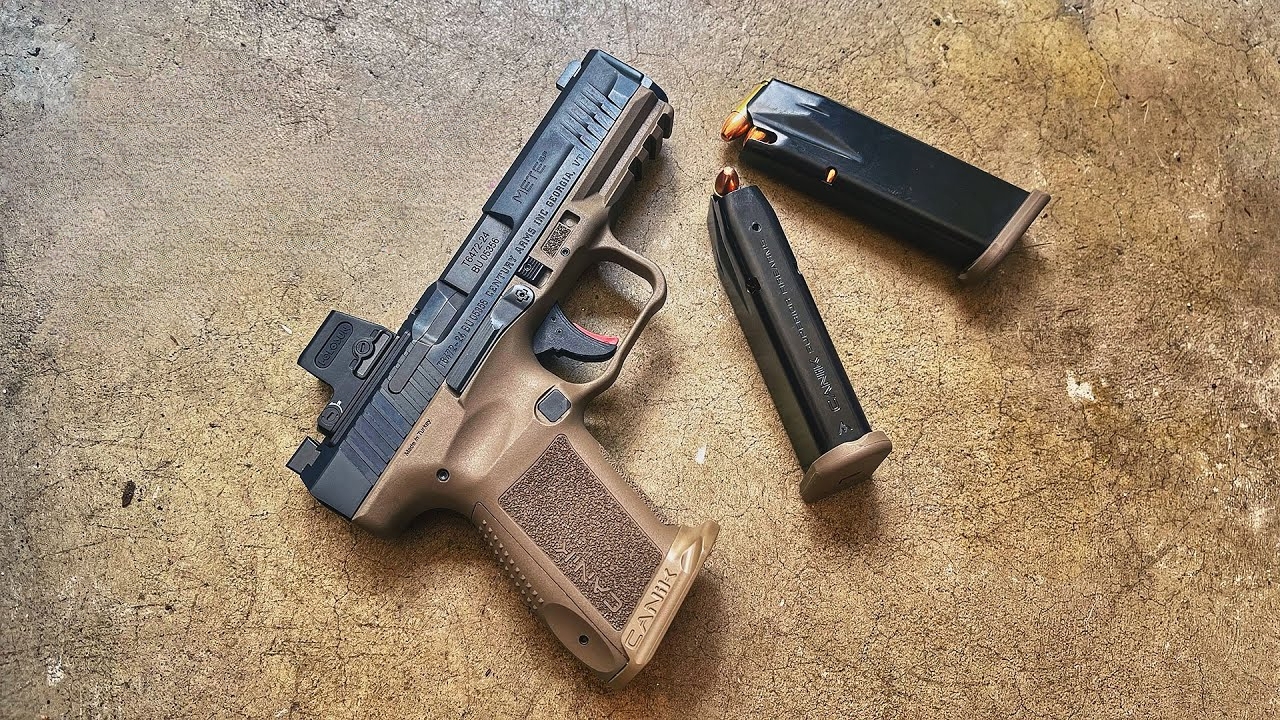
Canik Mete SF

The Mete SF feels like it should punch tight groups because it’s comfortable, controllable, and often comes with a surprisingly good trigger feel. It’s also a pistol that encourages speed, and speed habits can show up on paper when you switch to slow-fire precision.
If you’re used to prepping the trigger quickly and breaking shots as soon as the sights look “good enough,” your group will reflect that. The gun’s grip and recoil behavior can make you feel steadier than you are. Slow your press, keep the support hand firm, and don’t let the gun move during reset. When you’re disciplined, the Mete SF can shoot very well. When you’re casual, the target can look like any other service-style pistol.
Beretta APX A1 Carry

The APX A1 Carry looks modern and feels like a serious carry gun, but it can be one of those pistols that makes you work harder for pretty targets. The compact dimensions and lighter weight mean your grip and trigger control matter more than you’d like.
A lot of shooters see groups spread because they’re reacting to recoil instead of riding it. The gun can feel snappy, and that can lead to anticipation—little dips and pushes you don’t notice until you look at the holes. Keep your grip high, clamp the support hand, and focus on a straight trigger press without trying to “time” the shot. It’s practical and reliable in its lane, but it’s not a pistol that hands you easy benchrest-style groups.
Smith & Wesson Shield Plus

The Shield Plus feels like a refined carry pistol—slim, comfortable, and easy to live with. It also has the classic carry-gun problem: it’s accurate enough, but it can make you earn tight groups because there’s less gun to hang onto.
Most misses and wide groups come from inconsistent grip pressure and trigger press, especially as you fatigue. The shorter sight radius means tiny errors show up big on paper. If you shoot it like a “little gun,” you’ll often get little-gun groups. If you shoot it like a full-size—locked wrists, firm support hand, smooth press—you can print surprisingly well. But it won’t flatter you the way a heavier, longer pistol will. The Shield Plus is honest.
Glock 43X

The 43X feels expensive in the sense that it’s clean, simple, and confidence-inspiring. It carries well, points naturally, and a lot of people shoot it fast. Then they try to shoot tiny groups and discover it’s easy to drift off line if you aren’t consistent.
The slim grip can make your hands do slightly different things from shot to shot, especially if your support hand placement changes. The trigger also rewards a straight press and steady follow-through. When you rush it or get lazy, the group spreads in a way that feels out of proportion to how “good” the gun feels. The 43X is very capable, but it’s not a target pistol. It’s a practical pistol that rewards consistency and punishes shortcuts.
CZ P-10 C

The P-10 C feels like a premium shooter’s choice—great ergonomics, controllable recoil, and a crisp enough trigger to make you expect tight groups. It can still disappoint on paper when you assume the gun will do all the work for you.
The trigger is good, but it’s still a striker trigger. If you start pinning and releasing inconsistently or you slap through the break, your hits spread. The grip angle can also encourage different wrist tension depending on how you present the gun, which shows up as vertical stringing. Get your grip locked in, keep your wrists firm, and press straight back. When you do, the P-10 C often shoots better than people think. When you don’t, it prints “average” fast.
HK P30

The HK P30 feels like quality the moment you handle it—fit, finish, and ergonomics that make sense. If you get it in DA/SA, though, your target can look messy until you master the trigger transition.
The first double-action shot is where groups often fall apart. If you rush that heavy press or steer it, you’re starting your string with a flyer, then trying to “fix” it with lighter single-action shots. That’s how groups get weird. The P30 will reward you when you slow down and press the DA smoothly, then keep the same grip pressure for SA. It’s a pistol built for reliability and duty use, and it demands real trigger discipline before it looks impressive on paper.
Ruger LCP Max

The LCP Max feels expensive for its size because it gives you real capacity and real sights in a pocketable package. But it’s still a tiny pistol, and tiny pistols rarely print beautiful groups without work.
The short grip and light weight make recoil feel sharp, which can lead to anticipation. The trigger press also requires more care because there’s less mass to steady the gun. If you’re even a little sloppy, the target shows it. Shoot it slowly, grip it harder than you think you should, and focus on keeping the sights steady through the break and reset. The LCP Max can be accurate enough for what it is, but it’s not built to impress at 15 yards. It’s built to be there.
Desert Eagle .50 AE

A Desert Eagle feels expensive because it’s huge, iconic, and built like nothing else. You expect it to shoot like a laser because it costs real money and looks like it should. Then you realize it’s a heavy, hard-recoiling specialty pistol that can be surprisingly tricky to shoot tight groups with.
The grip is large, the trigger press can be more demanding than you expect, and the recoil impulse makes many shooters flinch early. Even when you’re not “scared” of it, the gun can make you tense up and steer shots. It’s also sensitive to how you hold it compared to typical pistols. When you slow down, lock your wrists, and press cleanly, it can shoot well. But most targets tell the truth: it’s more about experience and control than price.
Magnum Research BFR (revolver)

The BFR looks like a high-end hammer, and it feels like one too. Big steel, serious fit, and the kind of revolver that makes people step back on the firing line. It can still disappoint on paper if you expect the size and cost to automatically produce tight groups.
Heavy-recoiling revolvers magnify flinch, grip inconsistency, and sight wobble. The trigger can be excellent, but only if you press it straight without tightening your whole hand at the last moment. That “last moment” is where shots drift. The long sight radius helps, but it doesn’t fix anticipation. If you do your part—steady front sight, smooth press, follow-through—the BFR can shoot beautifully. If you don’t, the target will look like you spent big money to get humbled.
Kahr CM9

Kahr pistols feel refined in a quiet way. Smooth edges, compact lines, and a trigger that feels different from most striker guns. They carry like they cost more than they do. On targets, though, the long, smooth trigger stroke can trip people up.
If you’re used to a short wall and crisp break, you may start “helping” the shot right as the trigger finally releases. That’s how groups spread without you realizing why. The small sight radius and light weight add to it. The CM9 can shoot fine, but it rewards a steady, uninterrupted press—no staging, no snatching. Once you adapt, it becomes consistent. Until then, it’s a pistol that feels higher-end than the holes suggest.
Kel-Tec P32

The P32 can feel surprisingly “premium” for a tiny pocket gun because it’s clever, light, and easy to carry anywhere. Then you shoot it and remember what ultra-small pistols do: they make precision harder than it has any right to be.
The sights are small, the gun is extremely light, and your grip is mostly fingertips. That’s a recipe for wandering groups. The trigger and recoil impulse can also encourage you to slap and recover, which keeps the gun moving during the break. At realistic distances, it does what it’s designed to do. But if you hang a target at 15 yards and expect tidy clusters, the paper will disappoint you. It’s not a knock on the gun. It’s the reality of tiny pistols.
IWI Masada

The Masada feels like a solid, duty-style pistol with clean lines and comfortable ergonomics. It points well, and many shooters like how it handles. On paper, though, it can look “fine” instead of impressive, which can surprise you if the gun felt like a sleeper premium pick.
Most of the time, it’s fundamentals. The Masada will show you if your trigger finger is pushing or if your grip pressure changes through the press. It’s also easy to get complacent because it feels easy to shoot. Complacency is what opens groups. When you tighten your support hand and press the trigger straight back with a steady pace, it usually cleans up. But it won’t fake it for you. It’s a practical pistol, not a target gun wearing a duty costume.
Like The Avid Outdoorsman’s content? Be sure to follow us.
Here’s more from us: