Photo credit: EbersonImages/Shutterstock.com
When selecting a home-defense gun, it’s easy to get caught up in the specifications and advice floating around. On paper, a firearm might check all the right boxes—powerful, reliable, easy to handle, and with good capacity. However, once you start using these guns in the confined, high-stress environment of your home, you can find they’re not quite as practical as they seemed. Things like recoil, barrel length, and ergonomics start to reveal themselves as more of a hindrance than an asset in tight quarters.
The problem often lies in how these guns perform under pressure, in low light, or in the panic of a real-life situation. Some firearms that sound smart initially can leave you struggling with speed, accuracy, or ease of use indoors. Here are a few guns that may look good on paper but fall short when tested under the real-world pressures of home defense.
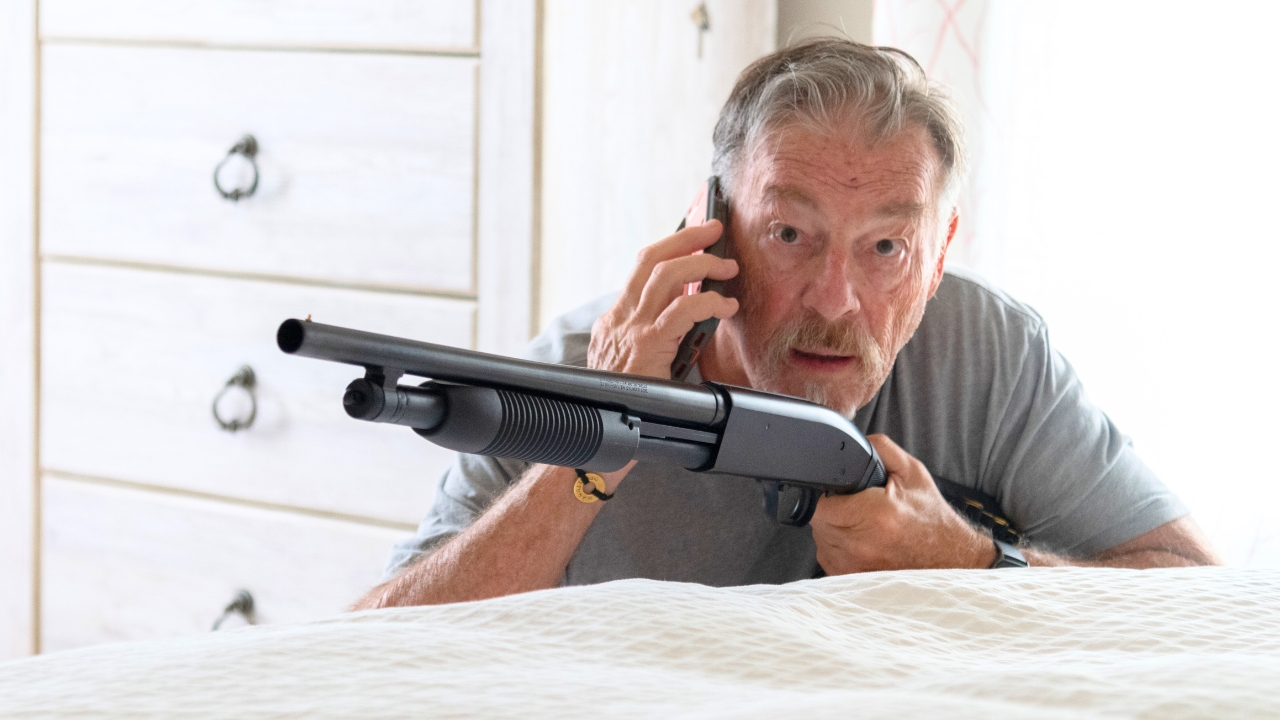
Remington 870

The Remington 870 is often the go-to shotgun for home defense, praised for its reliability and stopping power. In theory, it’s a solid choice for clearing rooms and stopping threats, and its reputation for ruggedness is hard to argue with. However, when used indoors, the 870’s full-length barrel becomes more cumbersome than you might expect.
In tight spaces, handling a shotgun with a long barrel can be tricky, especially during a stressful encounter where every second counts. You need to be able to maneuver quickly and efficiently, and a full-length barrel often makes that more difficult. The recoil, though manageable, is also noticeable, and that can make follow-up shots a bit more challenging in a fast-paced, high-stress situation. While the 870 is a solid firearm, its size and handling limitations may surprise some in an indoor defensive scenario.
Glock 17

The Glock 17 is often hailed as the “perfect” handgun for home defense. With its high capacity, solid accuracy, and the reliability Glock is known for, it sounds great for any situation. However, when used in close quarters, its full-sized frame can feel a bit unwieldy, especially for those not accustomed to larger handguns.
In an indoor situation, where you need to move quickly and potentially in tight spaces, the size of the Glock 17 can become more of a burden than an asset. The recoil, although not extreme, can also be harder to manage when trying to make fast, accurate follow-up shots. If you’re moving from room to room, the size of the Glock 17 might be more difficult to maneuver than a more compact option. While the Glock 17 is fantastic for range shooting and tactical scenarios, it may not be the best choice for confined indoor spaces.
SIG Sauer P320

The SIG Sauer P320 has gained popularity due to its modular design and military use, making it a popular home-defense handgun. On paper, the P320 offers a great balance of power, accuracy, and reliability. However, once you test it under real-world conditions, especially indoors, it can feel less than ideal.
The P320’s grip is comfortable, but when it’s time for rapid, accurate follow-up shots in close quarters, the full-size grip and the gun’s weight can start to work against you. The trigger pull, though smooth, can be less than ideal for quick shooting, and the relatively larger frame might be cumbersome for someone trying to engage in close-quarters combat. While the P320 shines in many scenarios, in tight spaces, it might not be as responsive as a more compact firearm.
Walther P99

The Walther P99 is another pistol that sounds great for home defense, with its ergonomic design, smooth trigger, and reliable performance. It’s a popular choice for people who want a semi-automatic handgun that’s easy to use and effective in defense situations. But when it comes to shooting in a confined space, its size and recoil can create challenges.
Although the P99 is comfortable to hold, the larger grip and relatively high recoil for a 9mm pistol can make rapid follow-up shots harder to execute. This is especially true in a stressful, indoor environment where accuracy and speed are crucial. The P99 may be well-suited for range shooting, but in a home-defense situation, its size and recoil might make it less than ideal.
Beretta 92FS

The Beretta 92FS is a classic pistol with a long history of military and law enforcement use, often touted as a reliable choice for home defense. Its full-size frame, high capacity, and smooth action make it a popular option for many. However, in indoor scenarios where quick, fluid movements are essential, the 92FS starts to feel bulky.
The size of the Beretta 92FS can be a hindrance in confined spaces. The large grip, combined with the full-length barrel, makes it less maneuverable than a more compact handgun. The recoil, while manageable, can also make follow-up shots a bit slower, especially for those not accustomed to larger pistols. While it is a reliable gun, its size and handling quirks make it less ideal for home defense when compared to more compact, agile handguns.
Smith & Wesson M&P Shield .40

The M&P Shield in .40 S&W is a favorite for concealed carry due to its slim profile and decent capacity. Many people also consider it a viable option for home defense. While the Shield is easy to conceal and carry, the .40 S&W version can quickly become uncomfortable when put to the test in a defensive situation.
The recoil from the .40 caliber in such a small frame is sharper than many expect, making rapid follow-up shots more difficult. While it’s fine for slower, deliberate shooting, the Shield .40 can feel snappy and harder to control when shooting at speed. In an indoor scenario, where you need to move and shoot quickly, the Shield may leave you wanting more stability and control than the smaller, more compact frame can provide.
Kel-Tec KSG

The Kel-Tec KSG is often touted as a high-capacity, compact shotgun ideal for home defense. Its unique design offers up to 15 rounds of 12-gauge power in a short, bullpup-style shotgun. On paper, it sounds perfect: more rounds, compact size, and enough power to stop an intruder. But in reality, the KSG presents challenges that many buyers don’t anticipate.
In a high-stress, indoor home-defense situation, the KSG’s bullpup design can be awkward to handle. The short stock and limited control space can make quick aiming and follow-up shots more difficult. The shotgun is also heavier than it appears, which can lead to fatigue after repeated use. While the KSG is an interesting option, it can feel cumbersome in tight spaces, making it harder to maneuver and engage targets quickly.
FN Herstal F2000

The FN Herstal F2000 is an unconventional choice for home defense, often touted for its futuristic look and high capacity. Its bullpup design keeps the overall length short while offering a full-length barrel. However, despite its cool factor, the F2000 can feel awkward when used in confined spaces, which is the exact opposite of what you want for home defense.
The bullpup design, while space-saving, makes the F2000 harder to handle in tight rooms. The placement of the controls and the overall weight distribution can make it difficult to quickly engage targets. Additionally, the complexity of operating a bullpup-style rifle under stress can be a significant disadvantage in high-pressure scenarios. While it’s an interesting rifle with great features, it’s not the ideal choice for navigating the tight quarters of your home.
Mossberg 500

The Mossberg 500 is one of the most popular pump-action shotguns for home defense, thanks to its reliability and versatility. However, when used indoors, its long barrel can quickly become unwieldy, especially in tight hallways or rooms. A shorter barrel would make it more maneuverable, but the standard Mossberg 500 can feel cumbersome when you’re trying to move quickly.
The recoil from a 12-gauge shell is also more pronounced than many buyers expect, and under stress, it can make follow-up shots more difficult. While the Mossberg 500 is undoubtedly an excellent shotgun for stopping power, its size, weight, and recoil make it a less than ideal choice when you need something fast, accurate, and easy to handle indoors. A more compact shotgun or handgun might prove more efficient in a defensive situation.
Ruger SR1911

The Ruger SR1911 is praised for its classic design, powerful .45 ACP chambering, and overall accuracy. It’s often considered a top choice for home defense due to its solid feel and stopping power. However, when pushed to shoot quickly in close quarters, the SR1911’s full-size frame and heavy recoil can become harder to control.
While the 1911 design is renowned for its accuracy, its recoil can be more challenging to manage in rapid-fire situations. When shooting fast indoors, the recoil impulse can make follow-up shots slower than expected. The full-size grip, although comfortable, can feel a bit bulky when you’re trying to move quickly through tight spaces. While the SR1911 is certainly a reliable and powerful handgun, it may not be the best choice for high-stress situations where speed and ease of handling are essential.
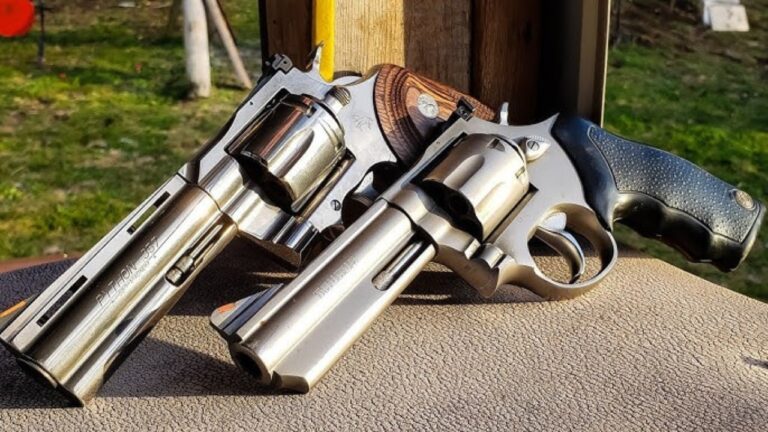
Taurus 856

The Taurus 856 is a revolver that is often praised for its simplicity and reliability, making it a popular choice for home defense. While the revolver format eliminates some of the complications of semi-auto pistols, the 856’s recoil and relatively low capacity make it harder to manage in high-pressure situations.
The six-round capacity of the 856, while adequate for some scenarios, is lower than what you might expect from a semi-automatic handgun, which could put you at a disadvantage in a defensive encounter. The recoil, especially with .38 Special or .357 Magnum loads, can also be challenging for some shooters, making follow-up shots more difficult. Although the Taurus 856 has its place in home defense, it is far from “perfect” when you factor in the limitations of the revolver design.
Walther P22

The Walther P22 is an entry-level handgun that many buyers initially consider for home defense due to its small size, low recoil, and ease of use. It’s a great option for new shooters, but when tested in an indoor, high-stress environment, its small frame and lighter construction can make rapid, accurate shooting more difficult than expected.
With its short barrel and smaller grip, the P22 is harder to control when firing quickly, especially for shooters with larger hands. The recoil, though manageable with slower shooting, can become more noticeable during rapid fire, making follow-up shots a challenge. While the P22 is a great range gun for beginners, it lacks the reliability and control needed for fast, defensive shooting in the home.
Sig Sauer P226

The Sig Sauer P226 is often considered one of the best service pistols in the world. It’s highly respected for its accuracy, reliability, and performance, making it a popular choice for both military and law enforcement. However, when used for home defense, especially in confined spaces, its size and weight can become a disadvantage.
While the P226 is a great option for target shooting and law enforcement, its larger frame and relatively heavy recoil can make it harder to handle when speed and maneuverability are crucial. When moving through tight spaces and trying to quickly engage targets, the P226 may feel more cumbersome than a more compact firearm. It’s certainly a dependable gun, but in the heat of a real defensive situation, its size and weight can get in the way.
CZ 75

The CZ 75 is a highly regarded pistol known for its accuracy, ergonomics, and overall performance. It’s often considered a top choice for those looking for a full-sized handgun for home defense. However, when you need to move quickly indoors, the CZ 75 can feel a bit large and unwieldy.
The CZ 75’s full-size frame, while offering excellent recoil management, can become cumbersome in tight spaces. Its weight, although helping with recoil control, makes it a bit more difficult to maneuver rapidly. In high-stress situations, when every second counts, the CZ 75 may not be the most efficient choice for quick target acquisition or follow-up shots. Despite its excellent overall performance, its size can make it less practical than some other handguns in a home-defense scenario.
Like The Avid Outdoorsman’s content? Subscribe to our newsletter so you never miss an article.
Here’s more from us: