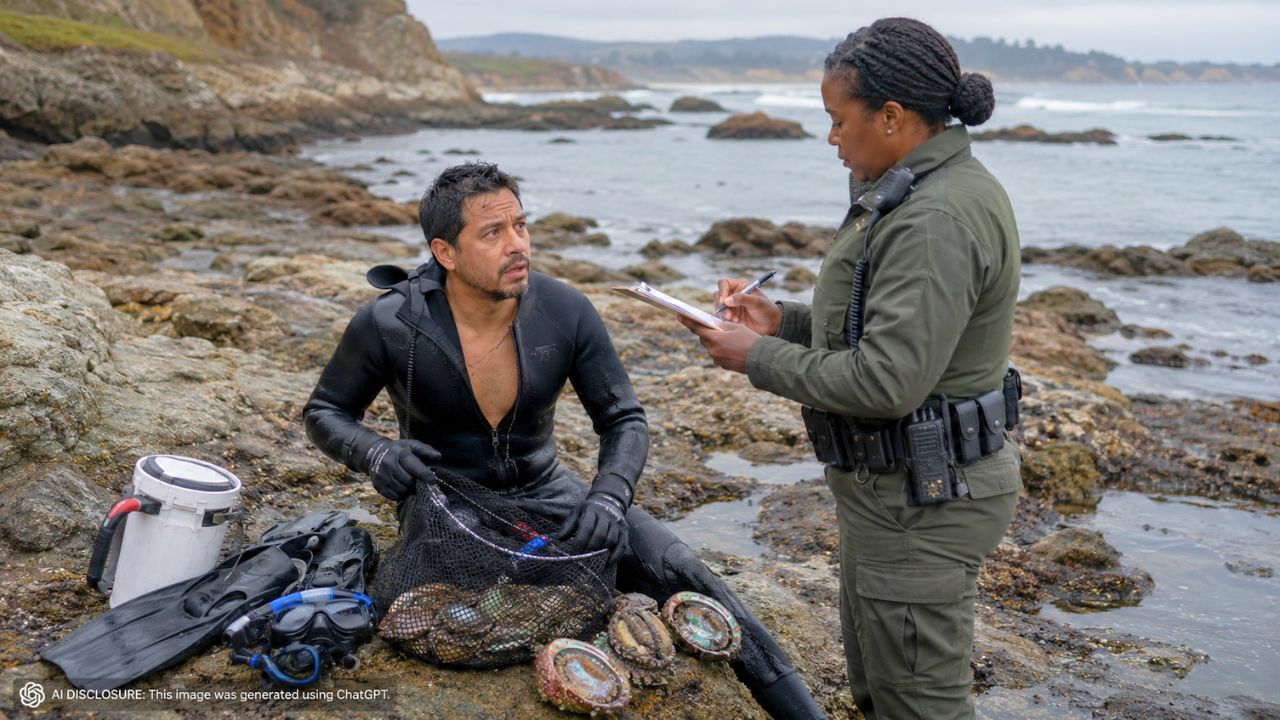
Photo credit: AI-generated image created using ChatGPT. Illustrative only.
Anyone who’s spent time on California’s north coast knows abalone rules aren’t the kind you “sort of” follow. The limits are tight, the paperwork matters, and wardens work popular access points hard. One diver found that out the painful way after a day that started legal, ended with a citation, and opened the door to a fine big enough to make a guy rethink ever putting on a wetsuit again.
Abalone country comes with a rulebook
The diver explained that California’s abalone regulations are strict by design, with tight boundaries on where you can even dive. In Northern California, he noted there’s no abalone diving south of Fort Ross. On top of area restrictions, possession rules are clear: a diver can only have three abalone at a time, and those need to be tagged.
He also pointed out something many traveling anglers and divers don’t appreciate until they see it—checkpoints and compliance checks around popular ab sites are common. That’s not paranoia; it’s enforcement. If you play in a fishery that’s been hammered for years, expect the state to watch it like a hawk.
How a legal trip turned into a poaching citation
According to the diver’s account, he and a few friends went out with licenses and tags and planned to do it by the book. The difference was experience: abalone diving is tough, and he said he was more skilled than his buddies. They didn’t take any abalone, and he did.
The mistake came when he took more than his personal limit of three and then handed the extra abalone to his friends, who tagged them as if they were the takers. In his mind, everyone had licenses and tags, and the abalone would be properly tagged for transport. He figured if they hit a checkpoint, the group would look compliant.
But the rule he “didn’t know he didn’t know” was simple: you can’t exceed your own limit and transfer abalone to other licensed divers to make the numbers work. As he later learned, the person whose tag goes on it is expected to be the person who actually took it.
Binoculars on the bluff and a warden at the car
What makes this one feel like a gut punch is how it unfolded. The diver said someone was watching from above—on the bluff—with binoculars. That observer reportedly saw him take more than his limit and then hand off the surplus.
When the group got back to the vehicle and started packing up, Fish and Game officers rolled in. The diver said he was cited for poaching based on what the observer witnessed. It’s a good reminder that on heavily used stretches of coastline, you may not be alone even when it feels like you are. Someone is often watching—other divers, locals, and sometimes plain old concerned citizens who know the regulations and know what “doesn’t look right.”
The diver’s write-up of the situation appears in the original post, including the specific detail that the violation wasn’t about missing licenses or untagged catch—it was about who actually harvested the abalone.
Why this kind of violation gets expensive fast
This wasn’t described as a minor “fix-it ticket.” The diver understood it could turn into a misdemeanor and “multiple thousand dollar” penalties. That’s where the shock sets in for a lot of outdoorsmen: you can do 90% of the day right—buy the license, carry the tags, stay in the right zone—and still step on the landmine that brings the heavy consequences.
He also acknowledged the bigger stakes: a poaching-related offense can put your privileges at risk. In his own words, he feared potentially losing his fishing license for life—an outcome that would end far more than one weekend hobby.
And while he didn’t list every possible penalty, cases like this commonly get talked about in the same breath as gear loss. When wildlife officers treat a situation as poaching rather than paperwork error, the conversation can shift from “pay the fine” to “what else gets taken,” including equipment used in the violation. Even the possibility is enough to make a $5,000 fine feel like the start of the pain, not the end of it.
What other outdoorsmen zeroed in on: intent doesn’t erase the violation
The diver wasn’t trying to argue that abalone regulations are pointless. In an edit, he made it clear he supports strict rules for overfished species and understands sustainability is the point. He also admitted he messed up and that “ignorance of the law is no excuse.”
Where he wanted help was limiting exposure—what he might realistically be facing and what steps to take next. Some people pushed moral lessons, but he wasn’t asking for a scolding. He was asking what a similar offense can look like in California when it’s written as poaching, not as a simple over-limit citation.
That’s an important divide for hunters and anglers to understand. Wildlife violations aren’t judged the way campfire logic judges them. “But everyone had tags” sounds reasonable until the regulation says the tag is tied to the person who harvested it. Once the state believes you knowingly exceeded your own limit, you can be treated like someone who intended to skirt the system—even if you thought you were just helping friends have a successful day.
The only smart next move: get counsel and tighten up your own habits
The diver said he was already contacting attorneys and working on hiring one. That’s about as practical as it gets when you’re staring at a charge that could be criminal and could threaten your privileges. Outdoor folks sometimes try to “talk it out” with a warden after the fact. That’s not a plan. If the citation is written as poaching and you’re worried about misdemeanor territory, you need someone who understands the process and the local courts.
For everyone else reading this, the field lesson is simple and uncomfortable: don’t “average out” limits across a group, even if everybody has a license and even if everybody is standing right there. In fisheries with tags, punch cards, or report cards, the state usually wants a clean chain from harvester to tag to possession. If your buddy didn’t take it, your buddy shouldn’t be tagging it.
Abalone diving already demands planning—tides, swell, visibility, access, and safety. Add one more item to that checklist: each person catches their own limit, tags their own take, and nobody plays shell games at the tailgate. In places like California, that’s the difference between a good story and a very expensive lesson.
Like The Avid Outdoorsman’s content? Be sure to follow us.
Here’s more from us: