Photo credit: Theavidoutdoorsman.com
The first time the pickup rolled in, it didn’t look like much—just another dusty truck nosing down a two-track like it owned the place. But the guy watching from the edge of the timber knew better. It was private ground, posted, and the driver wasn’t headed to any neighbor’s house. He was headed for the back corner where deer liked to cross and where folks who don’t play by the rules like to hide.
By mid-morning, the truck hadn’t moved. Then came the part that makes a landowner’s stomach tighten: a single shot, followed by the long pause you only hear when someone’s waiting to see if anything runs.
The problem started with a truck where it didn’t belong
The landowner had dealt with little stuff before—beer cans at the gate, tire tracks after a rain, a missing “No Trespassing” sign that somehow ended up in the ditch. This was different. The truck was tucked into brush just off the trail, angled like the driver didn’t want it seen from the county road.
He didn’t go marching in. That’s the part a lot of people get wrong. He stayed back, used binoculars, and watched the pattern. Eventually the driver stepped out, moved toward the creek bottom, and disappeared into the cover with a rifle slung low.
That’s when it clicked that this wasn’t a “lost hunter” looking for a boundary line. The way the truck was parked and the way the shooter moved said one thing: he expected to get away with it.
He did the smart thing: documented first, then called
Instead of trying to handle it himself, the landowner pulled out his phone and started gathering what game wardens always ask for—clear photos, a plate number, and a time stamp. He took a wide shot that showed the truck and the posted signage along the access, then moved his camera in for a clean picture of the plate.
He also snapped photos of the bed and the cab area, not to play detective, but because those little details can matter later. Unusual decals, a toolbox, a distinctive dent in the bumper—anything that helps an officer ID the vehicle if it’s gone by the time they arrive.
Then he called the game warden hotline. Not 911. Not the sheriff’s office unless there was an immediate threat. A warden can move fast in season, and they know the right questions to ask: location, direction of travel, how many shots, and whether anyone is in danger.
When the same truck came back, it turned into a pattern
A week later, the same pickup showed up again. Same two-track. Same back corner. That’s the part that tends to surprise folks: once a poacher finds a spot they think is “safe,” they’ll return until something makes them stop. They count on landowners being at work, on neighbors minding their own business, and on nobody wanting to tangle with a stranger carrying a gun.
This time, the landowner already had a plan. He didn’t need to scramble for photos or second-guess what he saw. He took fresh pictures anyway—because plates can be swapped and stories can change—and he called it in immediately with the new date and time.
And he didn’t try to block the truck in, lay spikes, or get cute at the gate. Those ideas float around in deer camp talk, but they’re a good way to turn a wildlife violation into a confrontation or a civil mess. Let the wardens work. Your job is to be a good witness, not a one-man task force.
The real issue wasn’t just a deer—it was safety and escalation
Poaching gets talked about like it’s only about a tag. On the ground, the bigger problem is what it does to safety. A stranger shooting on land where they don’t have permission means nobody knows where the bullets are going. It could be a house down the ridge. It could be a neighbor’s kid riding a four-wheeler. It could be someone’s cattle in the wrong place at the wrong time.
It also changes how people feel on their own property. If you’ve ever walked out to check a trail camera and found fresh boot tracks that aren’t yours, you know the feeling. When there are gunshots involved, that uneasiness isn’t imaginary—it’s practical.
This landowner also had to think about his own family. A lot of rural folks hunt their own place. Kids ride bikes. Dogs run the field edge. A poacher doesn’t know the routines, and they don’t care enough to find out.
What other outdoorsmen focused on: cameras, plates, and not playing hero
When stories like this make the rounds at the feed store or online, the advice tends to split into two camps. One side wants immediate action—meet them at the gate, take the rifle, drag them to the road. The other side, usually folks who’ve actually dealt with it, keeps coming back to the same basics: document, report, and keep your distance.
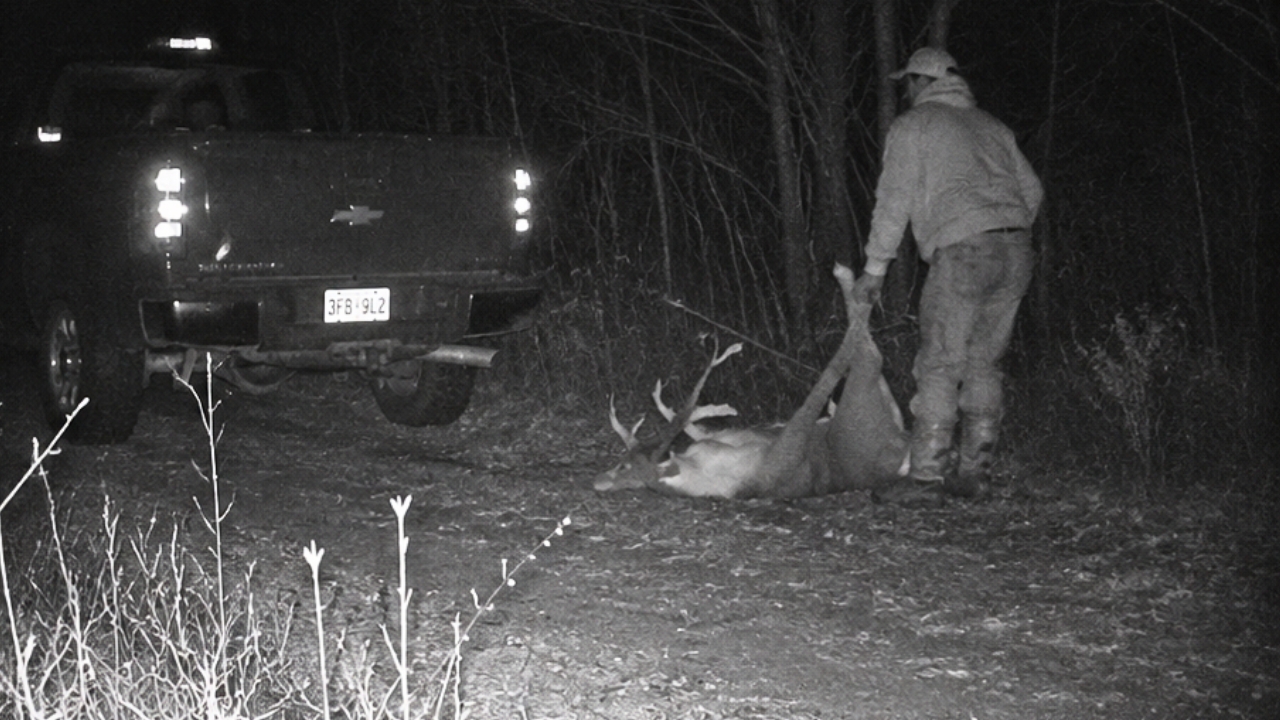
Trail cameras came up a lot, and for good reason. A camera watching an access point does two things. It gives you ID when you’re not home, and it removes the temptation to go out there yourself. A basic setup aimed at the gate, mounted high and angled down, can catch plates and faces without being obvious from the road.
Folks also talked about signage and boundaries—not because a sign magically stops a criminal, but because it removes the “I didn’t know” excuse. Fresh paint on trees, visible postings at common entry points, and a clear map on file with whoever leases or hunts neighboring tracts can tighten things up.
The most practical voices kept saying the same thing: don’t turn a wildlife call into a gunfight. If someone is bold enough to trespass and shoot, you don’t know what else they’re willing to do when confronted.
The part landowners hate: it can take time, and you still have to live there
Even with good photos and a plate, enforcement doesn’t always happen instantly. Wardens cover big districts. Sometimes they can’t intercept the vehicle in the act. Sometimes it takes building a case—especially if the person is a repeat offender and the goal is to make the charges stick.
Meanwhile, the landowner still has to lock gates, check cattle, and live normal life while wondering if that truck is going to show up again. That’s why the second report matters so much. One incident can be written off as confusion. Two, with the same vehicle and the same behavior, starts to look like a habit.
In situations like this, the best move is usually boring and steady: keep calling it in, keep collecting clean documentation, and don’t advertise what you know. The moment the poacher realizes they’ve been identified, they’ll either vanish or get unpredictable. Neither outcome is improved by a face-to-face argument on a lonely trail.
If you’ve got private ground, you work hard for it—taxes, maintenance, time, and sweat. Nobody should have to babysit it because someone else wants to skip tags, skip permission, and treat your place like a free-for-all. The right play is the same every time: stay safe, get the info, and let the warden handle the rest. That’s how you stop a repeat visitor without becoming part of the problem.
Like The Avid Outdoorsman’s content? Be sure to follow us.
Here’s more from us: