Photo credit: AI-generated image created using ChatGPT. Illustrative only
It only takes one bad moment at the edge of a property line to turn a normal hunting season into a safety problem. In Pennsylvania, one homeowner found that out the hard way when his dog chased a deer into the woods and he followed, only to step into a heated confrontation with a nearby hunter.
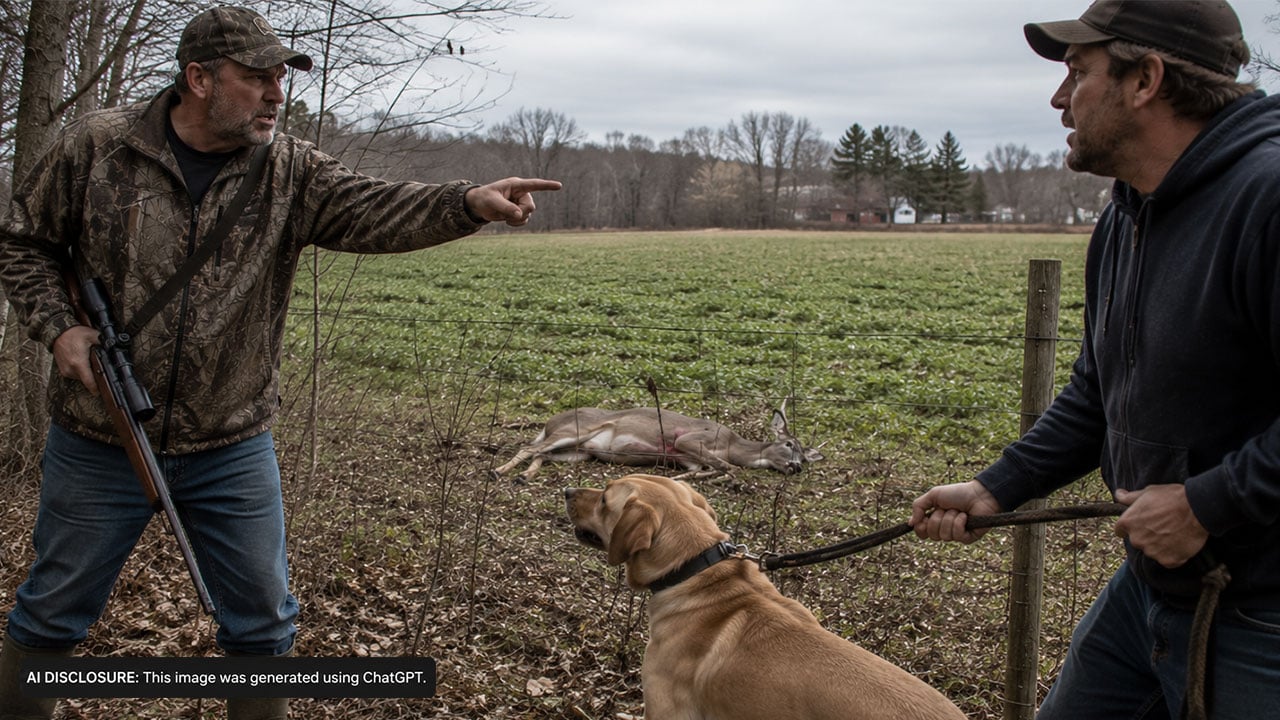
In the original post, the homeowner said a hunter was using the neighboring property with what he claimed was the landowner’s permission. The trouble started when the dog got on a wounded deer that had been shot with a crossbow—just off the poster’s property line—and the hunter responded by threatening to shoot the dog and then threatening the homeowner.
How a wounded deer and a roaming dog lit the fuse
The setup is familiar to anyone who lives in the country: woods behind the house, a neighbor’s parcel that doesn’t see the owner much, and hunters who come and go during season. The homeowner said the hunter wasn’t on his own land, but on the property next door, and claimed he had permission from the actual owner.
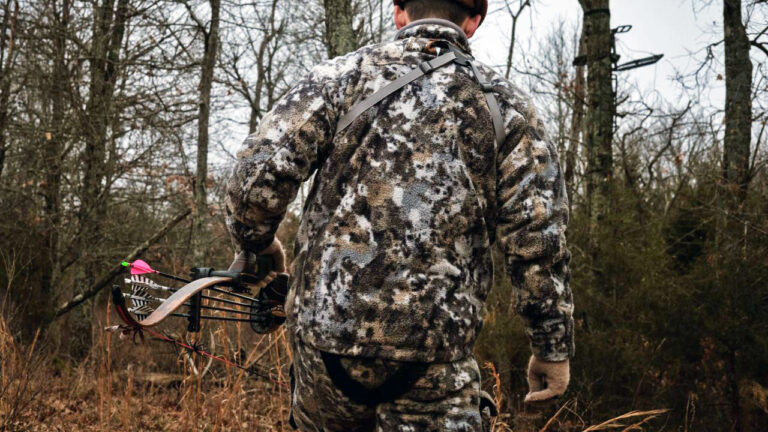
Then the dog took off after a deer. The homeowner followed and caught up to find his dog biting down on a deer the hunter had shot with a crossbow. The deer was down but still alive, and the homeowner estimated it was about ten feet off his property.
When the hunter showed up, it stopped being about the deer
Plenty of hunters would be angry in that moment. A wounded deer on the ground is already a stressful situation, and a dog on it can mean spoiled meat, a lost animal, or a prolonged finish. But anger is one thing; threats are another.
According to the homeowner, the hunter was “quite livid” and the situation escalated fast. He said the hunter threatened to shoot the dog and then threatened to come to the homeowner’s house and beat him up. That’s not “hard feelings.” That’s a neighbor problem with teeth, especially when it happens close to home where family lives.
Property lines don’t prevent conflict—especially during hunting season
This is where rural reality collides with legal reality. The deer was described as being about ten feet off the homeowner’s property line. That’s close enough that, in the moment, it probably felt like “basically my woods.” But close doesn’t always mean you’re in the clear.
From a practical outdoorsman standpoint, there are two separate issues that got tangled up: a dog running at large and interfering with a wounded animal, and a hunter who may or may not have lawful permission to be where he was. Neither one justifies threats of violence. And neither one gets solved by chest-thumping in the timber.
If you’ve ever had a dog that’s deer-crazy, you already know the hard truth: the time to fix it is before the chase happens. A dog that runs deer can end up shot, hit by a vehicle, lost for days, or tangled up with a wounded animal and a furious hunter. It’s a predictable recipe, even if the outcome isn’t.
The permission question: who gets to say who can hunt there?
The homeowner’s big question was whether there’s a “legal route” to stop the hunter from hunting that neighboring land, or at least to discourage the threats. Based on what was shared, the hunter claimed permission from the owner, and the owner doesn’t live on the property and may be reluctant to tell hunters they can’t hunt there.
That’s an important detail. If the hunter truly has permission, the homeowner likely can’t just “ban” him from the adjacent property. The person who can shut hunting down there is the landowner (or someone legally in control of the property), not the neighbor next door.
But permission claims are cheap talk until they’re real. This is where landowners can help themselves by putting it in writing—who can hunt, when, where they can park, what weapons are allowed, where the safe zones are, and what happens if rules get broken. If the owner is hands-off, the property becomes a magnet for misunderstandings and bad behavior.
Threats near home change the playbook
Out in the woods, people say dumb things. Most of it is hot air. But when someone threatens to shoot a dog and threatens to come to your house and beat you up, that’s not a normal hunting dispute anymore.
The homeowner’s instinct—wanting that person “not so close by” to his family—is a sound one. A threat tied to a specific person, a specific place (your house), and a specific act (violence) is the kind of thing you take seriously, document, and report through the proper channels.
There’s also a safety layer here that hunters understand: if a person is willing to talk that way while worked up, you don’t want to meet them again in the woods for “round two.” The smart move is to create distance, stop direct contact, and handle it through the landowner and law enforcement/game authorities as needed—calmly and factually.
What outdoorsmen tend to focus on in situations like this
Even without a pile of commentary included in the source material, the usual, practical advice from experienced hunters and rural folks is pretty consistent.
First, control the dog. That’s not a judgment; it’s just reality. If your dog can get to a wounded deer that close to a property line, it can get into plenty of other trouble too—porcupines, coyotes, traps, posted ground, roads. A leash, a reliable recall, and not letting the dog run during peak deer movement can prevent the whole chain of events.
Second, document what happened while it’s fresh: where everyone was standing, roughly how far off the property line, what was said, and when it occurred. Third, contact the landowner directly and put them on notice that a hunter using their property made threats. A lot of absentee owners don’t like hassle, but they like liability even less. If they don’t know what’s going on, they can’t fix it.
Finally, when threats come into it, many outdoorsmen will tell you to stop treating it as “a hunting thing.” It becomes a safety and harassment issue. That means involving the appropriate authorities rather than trying to negotiate at the fence line with someone who already escalated once.
In the end, this Pennsylvania dispute wasn’t really about a crossbow deer or a dog doing what dogs do. It was about two people meeting at the worst possible moment, right on the edge of “my place” and “your place,” and one of them taking it to threats. The best outcome now is the boring one: dogs under control, hunting permissions clarified by the landowner, and any future contact handled with distance, documentation, and a focus on keeping families—and tempers—safe.
Like The Avid Outdoorsman’s content? Be sure to follow us.
Here’s more from us: