Photo credit: Theavidoutdoorsman.com
Most hunters have a routine when they pull up to a public-land access: slide the truck to the shoulder, lock it up, shoulder a pack, and get moving before daylight burns off. That routine breaks down fast when you hike back out and your vehicle is simply gone.
That’s exactly what happened to one hunter after parking along a public access road that serves a chunk of walk-in ground. He came out hours later expecting to load up and head home, only to find tire tracks, a few scattered bits of gravel, and an empty spot where his truck had been.
The access road looked public—until the tow bill showed up
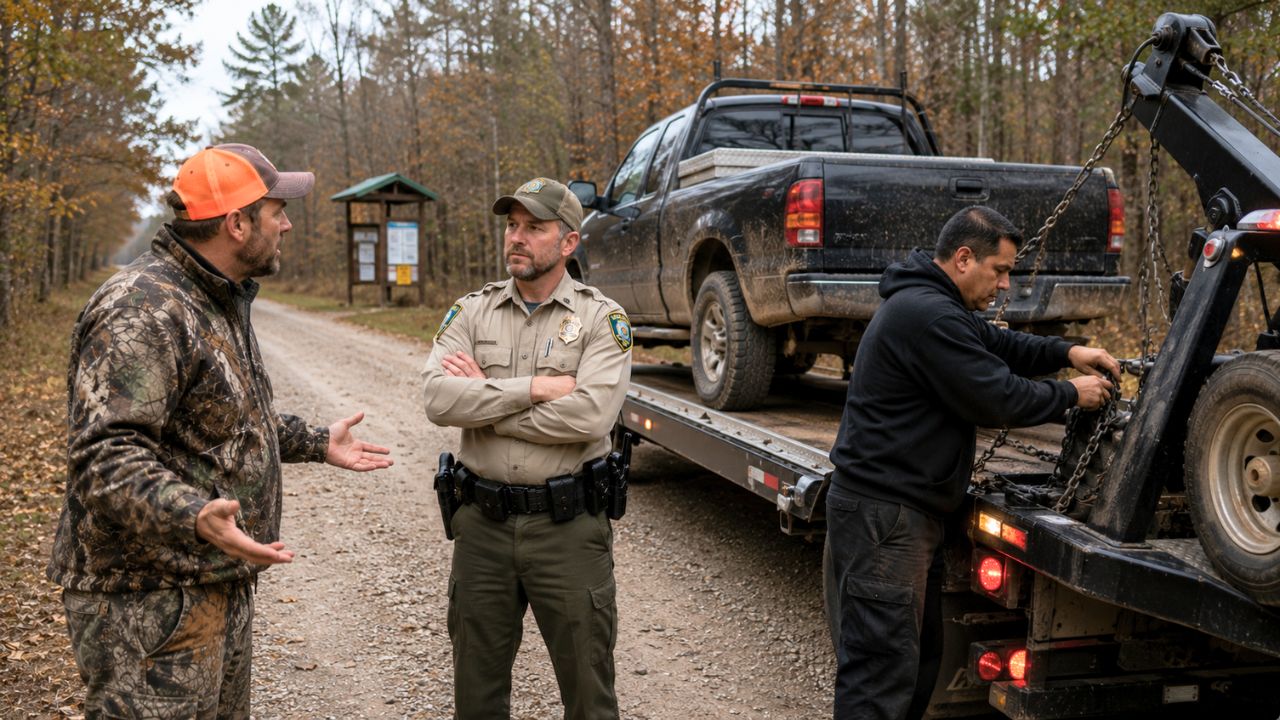
The hunter did what most of us would do: called the sheriff’s office first, thinking it might be stolen. Before long, he learned it had been towed. Not for evidence, not for a crime—just towed.
When he tracked down the towing outfit, the price wasn’t a couple hundred bucks and a lecture about parking. The company wanted roughly $800 to release the truck, citing towing, mileage, storage, and administrative fees that piled up quickly. Then came the part that really lit the fuse: the tow company claimed a game warden had authorized the tow.
How “no parking” turns into a mess on public land
Access roads are where public land and private land arguments like to start. You’ll have a two-track that’s been used for decades, a gate or a cattle guard, maybe a faded sign that’s half-hidden in brush. Hunters roll in at 4:30 a.m., park where they’ve always parked, and don’t think twice.
The problem is that “public land access” doesn’t always mean “park anywhere you can fit a truck.” Some of these roads have narrow rights-of-way, seasonal restrictions, or strict rules about blocking travel lanes. In farm and ranch country, a vehicle parked a little too far into the shoulder can pin a trailer, a combine, or even an ambulance in a bad moment.
But towing is a serious escalation, especially when the truck isn’t blocking a gate or sitting in the middle of the road. That’s why the claim about a warden’s involvement matters. Most hunters will swallow a parking ticket. A tow and an $800 hit feels personal.
Dragging a game warden into it raises the stakes
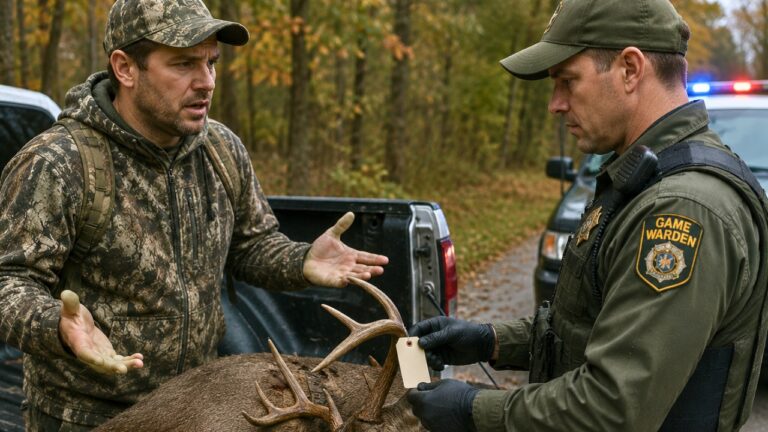
Game wardens have authority, and they use it for good reasons—poaching cases, unsafe gun handling, DUI stops near boat ramps, and true access violations. But in most places, wardens aren’t the default “parking enforcement” on a random access road unless there’s a safety issue or a specific complaint.
So when a tow company says, “A warden authorized it,” it puts the hunter in a bind. If it’s true, the hunter wants to know what law he violated and why towing was necessary instead of a warning or citation. If it isn’t true, then someone is using a warden’s badge as leverage to get paid, and that’s a whole different problem.
The hunter reportedly started making calls—first to confirm whether a warden actually ordered the tow, and second to figure out what steps he had to take to get his truck back without turning it into a multi-day storage fee disaster.
The $800 reality: fees stack fast and hunters get squeezed
Tow bills get ugly in a hurry. The initial hook-up fee is one thing. Add mileage, “after-hours” charges, weekend storage rates, and administrative fees, and you can hit numbers that don’t feel connected to reality—especially if you’re standing there in hunting boots trying to get home.
And here’s the part that makes it worse: you often have to pay first to get your vehicle out, then fight later if you believe the tow was improper. That’s tough medicine for a working guy who just spent money on tags, fuel, and gear, and now has to come up with a big chunk of cash on the spot.
It also creates a time trap. Many hunters have firearms, optics, tree stands, coolers, and other valuables in the vehicle. Even if everything is legal and properly stored, nobody likes the idea of their truck sitting behind a fence with expensive equipment inside while the meter keeps running.
What hunters said to do: document everything and verify the authorization
When word of situations like this gets around, hunters tend to focus on a few practical moves. First is documentation. Take photos of where you parked (or where you believe you parked), the road width, any signs, any gates, and the general layout. If you have OnX, a GPS track, or a mapping app showing land status and access points, save screenshots. Those details disappear quickly once you’re forced to leave and chase down a tow yard.
Second is verification. If a tow company claims a warden, ranger, or deputy authorized it, hunters want the incident number, the name of the officer, and the agency contact. Not to start a fight on the roadside—but to make sure the story matches the paperwork. A legitimate tow should have a clean chain: who called it in, under what authority, and why.
Third is the simple stuff we all forget in the dark: don’t block gates, don’t park on vegetation if the shoulder is clearly part of a maintained road, and give yourself extra room for ranch traffic. If you’re parking on a narrow access, a reflective triangle or a small magnetic strobe can help with safety, but it won’t fix a spot that’s legally posted as no parking.
The bigger issue: access points are getting pinched, and trust goes with them
This isn’t just about one tow bill. Hunters are feeling squeezed at access points across the country. Subdivisions creep toward old two-tracks. Easements get disputed. “Public” roads turn out to be private with a handshake agreement that changed hands two owners ago. Add a few bad actors who block gates or leave trash, and suddenly everyone pays for it.
When towing enters the mix—especially with a claim that an officer authorized it—trust gets damaged fast. Hunters start wondering if they’re being targeted for being the easiest people to charge. Landowners start assuming every truck at the corner is going to cause trouble. And agencies get caught in the middle, trying to keep access open without becoming the referee for every road-shoulder argument.
If there’s one practical lesson here, it’s that access is fragile. Park like you expect a rancher hauling a trailer to come through at any moment, because sometimes that’s exactly what happens. And if you ever get hit with a tow tied to “warden authorization,” don’t just accept it as a fact—verify it, document it, and handle it calmly through the right channels. That’s how you protect your wallet now and help keep those access points from getting tighter later.