
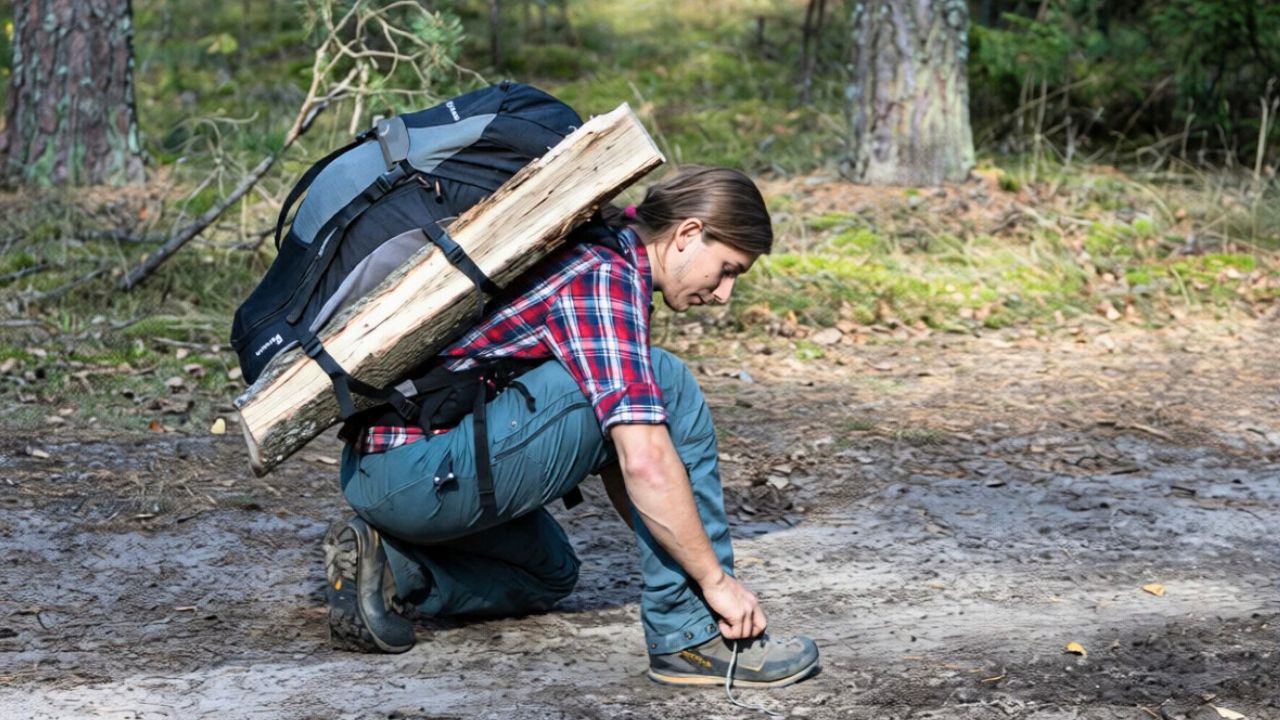
Photo credit: Nms1980/Shutterstock.com
This is the part of survival planning that hurts feelings, so people avoid it. They want to believe they can haul a heavy pack if they have to, and they want to believe the extra gear is “worth it.” But weight has a way of turning confidence into regret fast, especially when you’re moving over uneven ground, in bad weather, with your heart rate up and your patience low. Five miles isn’t some heroic distance. It’s a basic reality check. If your pack feels like a burden by mile two, you’re not going to “tough it out” when it actually matters. You’re going to start dumping gear, and you’re going to dump it in the exact wrong order because you’ll be stressed and tired.
A pack should support movement, not sabotage it. In most real situations where you’re carrying your life on your back, your goal isn’t to be comfortable. It’s to keep moving, stay warm enough, drink safely, and not get injured. Overpacking wrecks all of that. Heavy packs lead to blisters, hot spots, knee pain, back strain, and sloppy decisions. Once you’re injured, your gear won’t matter nearly as much as you thought it would. That’s why I’m opinionated about weight. Most people don’t need more stuff. They need fewer “cool” items and more discipline about what earns a place.
Your pack should be built around outcomes, not equipment
People pack like they’re building a gear catalog. They want a stove, a hatchet, a folding chair, extra clothing, multiple knives, and a dozen little pouches with “just in case” items. But the real question is simple: what problems does your pack solve? Water, shelter, warmth, light, navigation, and basic medical. That’s the core. Everything else has to justify itself against weight and usefulness. If something only helps in a narrow scenario, it better be extremely light or extremely important.
A good pack is also built around your body. Someone who sits at a desk all week can’t pack like a guy who hikes every weekend. That’s not an insult. It’s math. If you don’t train with weight, your body doesn’t magically become a mule in a crisis. That’s why the 5-mile test works. It forces you to pack for reality, not for ego.
The biggest “weight lies” people tell themselves
The first lie is “It’s only a few pounds.” A few pounds here and there turns into ten pounds fast. The second lie is “I’ll need it.” Need is easy to say at home. Need is different when you’re climbing over a downed fence or picking your way through mud. The third lie is “I can always take it out later.” In a real situation, you won’t calmly reorganize your pack like you’re in the garage. You’ll rip stuff out in frustration, and you’ll lose the items you actually should’ve kept because you’re trying to reduce pain quickly.
There’s also a sneaky lie: redundancy that isn’t intentional. Two knives, two flashlights, two water containers, two stoves, multiple fire starters, extra clothing you’ll never wear, and a “backup” for a tool you don’t know how to use well. Redundancy makes sense when it’s planned and light, like having a backup lighter or a simple secondary water method. It doesn’t make sense when it’s just you being afraid to commit to a simple system.
The 5-mile test tells the truth fast
Here’s what happens when you actually do it: you learn what rubs, what bounces, what you can’t access, what you overpacked, and what you forgot. You learn how long your water lasts. You learn how your boots behave when you’re carrying weight. You learn which straps dig in. You learn if your pack is fitted right. You learn if your “grab-and-go” setup is really grab-and-go, or if it’s a pile of gear that only works when it’s laid out on a table.
And most importantly, you learn what you don’t miss. That’s the gold. People are shocked by how little they actually need to get through a short hike comfortably. Once you experience that, it becomes a lot easier to cut the junk.
What actually belongs in the pack most of the time
A pack that passes the 5-mile test usually has a few traits. It’s simple. It has a water plan that’s not complicated. It has a shelter or insulation plan that doesn’t depend on perfect weather. It has one reliable light source and a backup. It has a basic first-aid setup that focuses on the stuff that stops movement, like blisters, cuts, and strains. It has a fire plan that’s realistic. And it has food that doesn’t demand a big cooking routine. Most “extra” items that people swear they need are comfort items, and comfort items are fine as long as they aren’t stealing weight from essentials.
If you want to pack smarter, stop asking “What else should I add?” and start asking “What can I remove without increasing risk?” That mindset flips everything. It leads to fewer gadgets and more capability.
The bottom line is you’re packing for your weakest moment
Everyone imagines the best version of themselves when they build a survival pack. Strong, calm, focused, hiking like a machine. The reality is you might be carrying stress, bad sleep, bad weather, and maybe a sore knee or a kid who’s slowing you down. You’re not packing for your strongest moment. You’re packing for your weakest moment. If your pack is too heavy to carry when you’re tired and irritated, it doesn’t belong in the plan.
Five miles is a simple test, but it’s honest. If you can’t carry your pack for five miles on a normal day, you shouldn’t bet your safety on carrying it farther on a bad one.
Like The Avid Outdoorsman’s content? Subscribe to our newsletter so you never miss an article.
Here’s more from us:


