Photo credit: AI-generated image created using ChatGPT. Illustrative only.
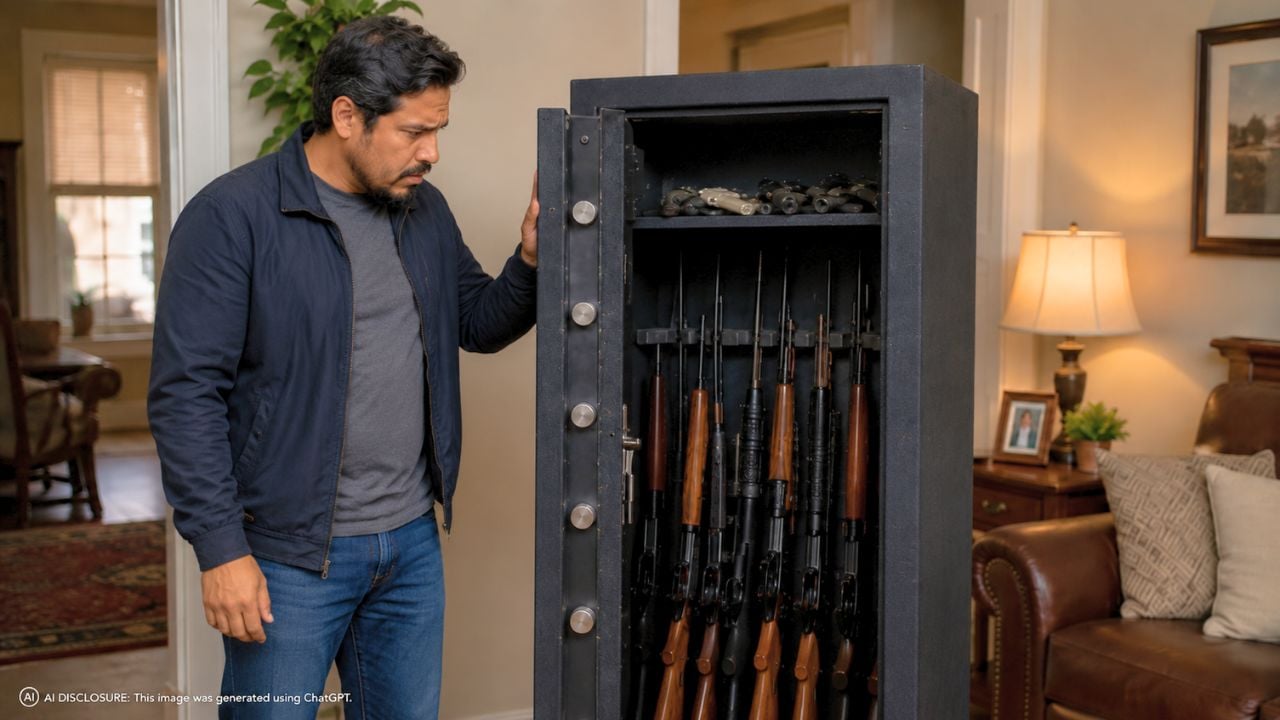
Buying a used safe is usually a pretty simple deal: load it up, get it home, and enjoy the extra peace of mind. But one California buyer found himself staring at a different kind of problem—because when the seller can’t remember the combination, you’re not just buying steel and a dial. You might be buying whatever was left behind inside it.
In the original post, the buyer explained he’d purchased a large safe from an older woman who didn’t remember what was inside. Her husband had moved out of state and left “everything” behind. They’d been married for decades, were no longer in communication, and she needed money for bills—so she sold off items she didn’t use, including the locked safe. The buyer agreed that if he got it open, he’d return any paperwork or photos, but the rest would be his.
A bargain safe with a loaded question inside
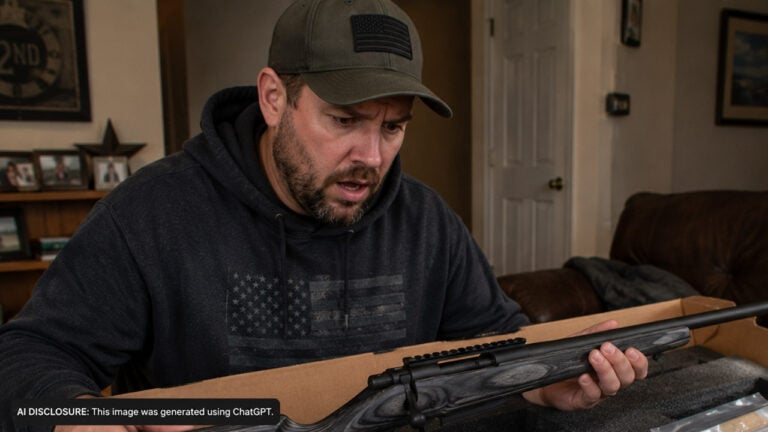
Any outdoorsman who’s spent time around estates, auctions, and old farm places knows how this goes. People stash all kinds of things in safes: deeds, cash, family jewelry, old military papers, and—sometimes—guns. The buyer’s concern wasn’t curiosity; it was the legal and safety risk if firearms were inside.
He asked the right practical questions: If there are guns in there, does he get to keep them? Does he have to surrender them? Does he have to give them back? And can he check whether a gun is “clean” without having it confiscated in the process?
Why California makes “found guns” complicated fast
In a lot of states, a person might treat unexpected firearms like any other personal property that came with a safe purchase—especially if there’s a clear bill of sale and the seller told you it’s yours. California isn’t that simple. The state has some of the tightest rules in the country around transfers, registration records, and what kinds of firearms are even allowed to be possessed.
That’s where the “felon under federal law” fear creeps in for gun owners. Folks hear about prohibited persons, interstate issues, stolen guns, and paperwork problems, and they start wondering if merely taking possession could put them on the wrong side of a serious charge. Even if the buyer is a lawful gun owner, a locked safe with unknown contents can turn into a legal mess if it contains firearms that shouldn’t be transferred privately, magazines that are restricted, or items that fall into heavily regulated categories.
The marriage wrinkle: whose property is it, really?
The backstory matters here. The seller said her husband left, moved out of state, and left behind his things. They were still married, but weren’t communicating. She also provided a receipt showing she bought the safe with her husband, and she verified it belonged to her.
Out in the real world, that detail is the difference between “I bought it fair and square” and “I may be holding someone else’s property.” A safe can be owned by one spouse, both spouses, or treated as marital property depending on how it was purchased and handled. If the husband is still alive and simply gone, the contents might not be hers alone to give away—especially if the contents are clearly personal to him.
That’s why this isn’t just a gun question. It’s a property question first, and then a firearms-transfer question right behind it.
Safety first: treat it like it’s loaded, because it might be
Before anybody worries about paperwork, there’s the physical reality: if there are firearms inside, they could be loaded. The buyer even framed the scenario that way in his own mind. That’s a good instinct, because a locked safe doesn’t magically make a gun safe to handle once it’s opened.
When a safe has been untouched for a long time, you also have unknowns like a chambered round, a gun stored with a round in the cylinder, or a firearm tucked into a holster with the trigger covered—until it isn’t. And depending on how the safe is opened (drilling, prying, or a locksmith), you don’t want a sudden jolt or drop to create a dangerous moment.
That’s the outdoorsman side of this story: slow down, keep the muzzle direction controlled once the door swings open, and don’t let the excitement of “what’s inside?” override basic handling.
What he promised the seller—and what that implies
The buyer said he agreed to return any paperwork and/or pictures that might be inside, and keep the rest. That’s a decent handshake agreement in most rural communities, but it also shows he’s already thinking about doing right by the woman who sold it to him.
Practically, if the safe contains personal documents, IDs, military records, photos, or anything that looks like it belongs to the husband, that agreement creates an expectation: you don’t just toss it in a box and call it “loot.” You separate personal items out, document what was found, and give the seller a chance to reclaim what she needs.
And if firearms are inside, that same “do the right thing” mindset matters. Even if a person could legally end up owning them, the smart move is to avoid acting like you just scored a jackpot—because the quickest path to trouble is acting casual with something the law treats as serious.
The question everyone fixates on: can you check if a gun is stolen without losing it?
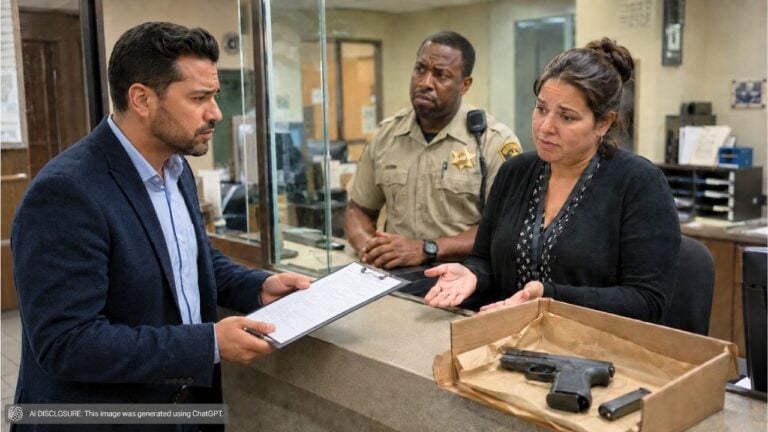
The buyer asked if there’s a way to check whether a firearm has a “clean record” without getting it confiscated. That’s the kind of question gun owners ask when they’re trying to stay out of trouble, not get away with something.
Here’s the hard truth from a common-sense standpoint: if a firearm turns out to be stolen, nobody should expect to keep it just because it came out of a safe they bought. Stolen property is stolen property. And if it’s tied to a crime, the priority becomes evidence and rightful ownership, not the buyer’s deal at an estate-style sale.
The other reality is that “running” a gun’s serial number isn’t like checking a used truck’s Carfax. Law enforcement and certain licensed entities can check numbers, but the process and outcomes aren’t designed around protecting a bargain-hunter’s expectations. If it flags, it can create a chain of events that’s inconvenient at best.
A few practical, outdoorsman-minded takeaways
This whole situation is a good reminder that “used safe” can mean “used safe with consequences.” If you’re buying a locked safe where the seller can’t open it, treat it like you’re buying an unknown contents container, not a guaranteed storage upgrade.
If you ever find yourself in the same spot, the smartest path is usually the least exciting one: get the ownership details squared away with the seller in writing, open it in a controlled way, and if firearms show up, don’t start passing them around like camp trophies. In a state like California, especially, it’s worth slowing down and getting real guidance before you assume you can keep, sell, or even transport what you just uncovered.
There’s a time to celebrate a good find at an auction. And there’s a time to put the tailgate down, take a breath, and handle it like a grown adult who wants to keep hunting, keep shooting, and keep his name out of a courtroom.