Photo credit: The Avid Outdoorsman
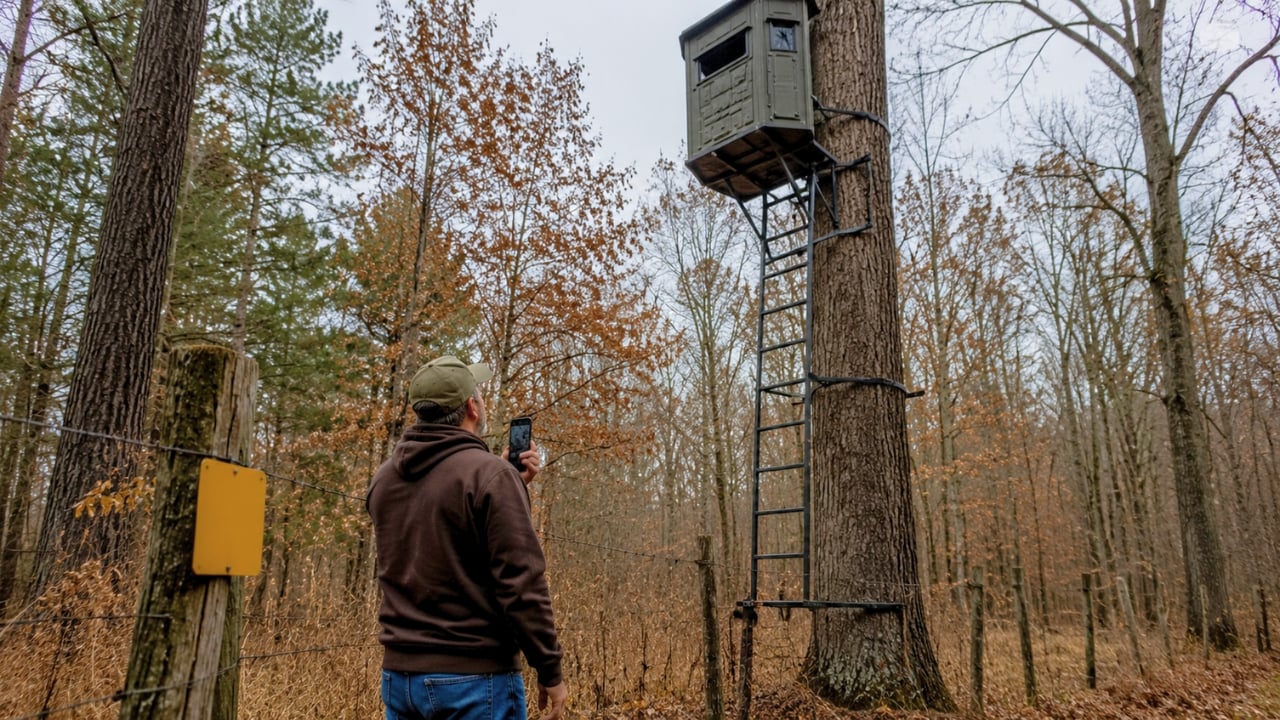
A property owner who found deer stands on his land thought the situation looked pretty obvious at first.
Someone had put hunting equipment on property that did not belong to them. The landowner had not given permission. From his point of view, the stands should not have been there in the first place.
But when he asked Reddit whether he could simply destroy the free-standing deer stands, the answers were more complicated than a lot of landowners might expect.
He explained the situation in a Reddit post and asked what he could legally do with the stands: https://www.reddit.com/r/legaladvice/comments/q5xerv/can_i_destroy_free_standing_deer_stands_on_my/
Finding the stand was only part of the problem
A deer stand on private land is not just a piece of gear sitting in the woods.
It usually means someone has been scouting the property, planning to hunt there, or already hunting there. That is what makes the discovery so frustrating for landowners.
The stand itself is evidence that somebody got comfortable. They did not just cross a line by accident. They hauled equipment in, picked a tree or location, and treated private land like their own setup.
That was why the poster wanted to know whether he could destroy it. From a common-sense perspective, a lot of people would be tempted to tear it apart or haul it to the dump.
But commenters warned that doing so could create a separate issue.
Commenters said not to destroy someone else’s property
The strongest advice was simple: do not destroy the stand.
Even if the stand was placed somewhere it did not belong, it may still be considered someone else’s property. Destroying it could turn the landowner from the person with a trespassing complaint into someone accused of damaging or taking property.
That does not mean the landowner has to leave it there forever. It means he should be careful about how he handles it.
Several commenters suggested removing the stand from the hunting location and storing it somewhere safe, rather than smashing it. Others suggested contacting law enforcement or a game warden before touching it, especially if there was an ongoing trespassing problem.
That advice may feel unfair to landowners, but it is practical. The person who put the stand there may be wrong. That does not make every reaction legally safe.
The stand could help identify the trespasser
One reason not to destroy the stand is that it may be useful.
If the landowner removes it carefully and leaves a note, the person who placed it may come looking for it. That could reveal who has been hunting on the property.
Commenters suggested using the stand as leverage in a smart way. Take photos of it where it was found. Document its location. If possible, mark the date. Then either contact authorities or move it somewhere secure.
A trail camera pointed at the location could also catch whoever comes back for it. That may provide the evidence needed to prove the same person was trespassing.
A destroyed stand solves the immediate annoyance. A documented stand may help stop the bigger problem.
A game warden could take it more seriously
Many commenters pointed toward a game warden or conservation officer.
That makes sense because the issue was tied to hunting. A random deer stand on private land may be part of a broader violation, especially if the person using it is hunting without permission.
Game wardens deal with this kind of thing constantly. They know how to handle stands, trespassing hunters, posted land, baiting complaints, and illegal harvests.
The landowner may also get better advice from a game warden than from local police, depending on the area. Police can handle trespassing, but wildlife officers often understand the hunting side in more detail.
If the stand is active and the season is open, the warden may be interested in catching the person actually using it.
Posting the property still matters
The Reddit discussion also turned toward the basics: make the property boundaries obvious.
No-trespassing signs do not magically stop people, but they help remove excuses. A hunter who claims he did not know he was on private land has a weaker argument when the area is clearly posted.
For a landowner dealing with stands, cameras, or repeated access, signs should be placed where people are likely to enter. That means gates, field edges, old logging roads, creek crossings, fence gaps, and obvious trails.
The signs should also be maintained. A faded sign buried in brush is not as useful as a fresh sign at eye level on a common entry route.
If the same person keeps coming back, every sign and every photo helps show that the trespass was not innocent.
Trail cameras were an obvious next move
Commenters also suggested cameras.
A camera near the stand location could show whether someone returns to hunt from it. A camera near the access point could catch a vehicle, an ATV, or a person carrying gear.
That kind of evidence is especially useful because landowners often know something is happening but cannot prove who is doing it.
A stand without a person attached to it creates suspicion. A photo of someone climbing into that stand with a rifle or bow creates a much stronger case.
The landowner would need to be thoughtful about camera placement. A camera that is too obvious may disappear. A camera aimed only at the stand may miss the vehicle. The best setup may involve more than one camera.
Direct confrontation was the risky option
One thing the thread did not need was a dramatic showdown in the woods.
A person using a deer stand may be armed. If the landowner walks up during a hunt and starts an argument, the situation can become dangerous quickly.
That is why the practical advice leaned toward documentation and authorities.
Take photos. Call the game warden. Put up cameras. Report trespassing. Store the stand carefully if advised to do so. Do not ambush someone in the woods or damage their gear in anger.
It may not feel satisfying in the moment, but it keeps the landowner from making the situation worse.
The real issue was not the stand
The deer stand was the visible problem. The bigger issue was that someone had decided the land was available to them.
That is what bothers landowners most. A stranger did not just walk through. They selected a spot, set up equipment, and probably planned to return during hunting season.
Once that happens, ignoring it is not a good option. The landowner has to assume the person may come back, possibly before daylight, possibly armed, and possibly with the belief that the stand is still theirs to use.
That is why the answer was not as simple as tearing it down. The smarter move was to turn the stand into evidence, involve the right authority, and make it harder for the trespasser to keep pretending the property is open.
For anyone who finds a stand on their land, the urge to destroy it is understandable. But the Reddit thread showed why the better move is slower, cleaner, and much harder for the trespasser to explain.
Like The Avid Outdoorsman’s content? Subscribe to our newsletter so you never miss an article.
Here’s more from us: