Photo credit: Theavidoutdoorsman.com
It started the way a lot of neighborhood problems start in the country—one loud crack that didn’t sound like a nail gun, followed by that uneasy quiet where you’re trying to decide if you really heard what you think you heard.
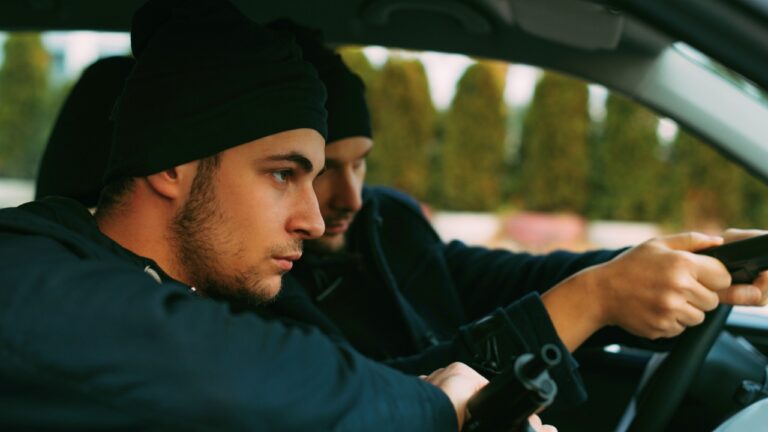
A woman in a semi-rural subdivision stepped out on her porch after dark and saw a neighbor in the street with a handgun. A second later, a round popped off and skipped down the pavement. No target, no backstop, no reason that made any sense from a safety standpoint. She did what plenty of folks say they’d do in that moment: she called 911.
One shot into the street changes the whole conversation
There’s a big difference between someone shooting on their own place with a safe berm and a clear line of fire, and someone firing into a road where houses, mailboxes, and parked vehicles sit in the line of travel. Roads don’t stop bullets. Asphalt can make things worse by turning a bad decision into a ricochet lottery.
From the woman’s side of it, the concern wasn’t politics or being “anti-gun.” It was basic direction-of-fire stuff. In hunting camp you learn quick: you don’t shoot at sound, you don’t shoot at movement, and you sure don’t send a round where you can’t account for what’s beyond it. A neighborhood street at night is about the worst “backstop” you can pick.
When the response feels slow, people start calling again
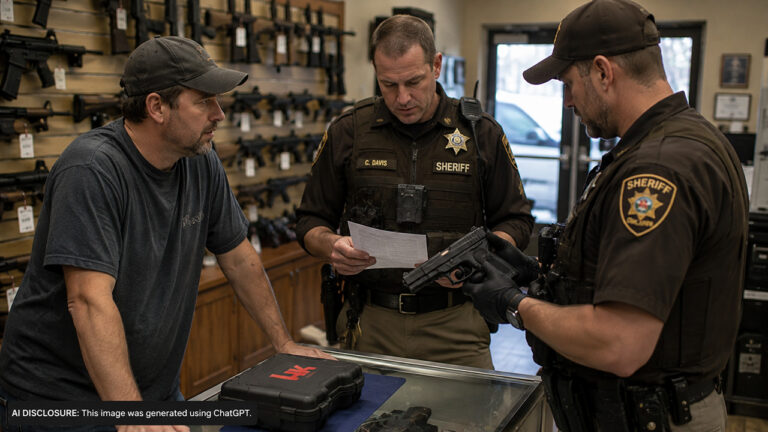
The first call brought a patrol unit through the area, but by the time a cruiser rolled in, the street looked normal. That’s how it goes a lot of times—by the time law enforcement arrives, the moment has passed, and all that’s left is a “he said, she said” without a visible threat.
Except the woman kept seeing the same neighbor out there on different nights, hanging around the curb line with the pistol. Sometimes it was loud music and arguing. Sometimes it was just the guy posturing like he wanted people to notice. She called again. And again.
In her mind, she wasn’t “calling too much.” She was reporting what she believed was ongoing dangerous behavior until someone did something meaningful about it. That’s a hard spot, because calling repeatedly can look like nuisance behavior to dispatch if the responding officer isn’t personally witnessing a crime.
Police can treat repeated calls like harassment, even when the fear is real
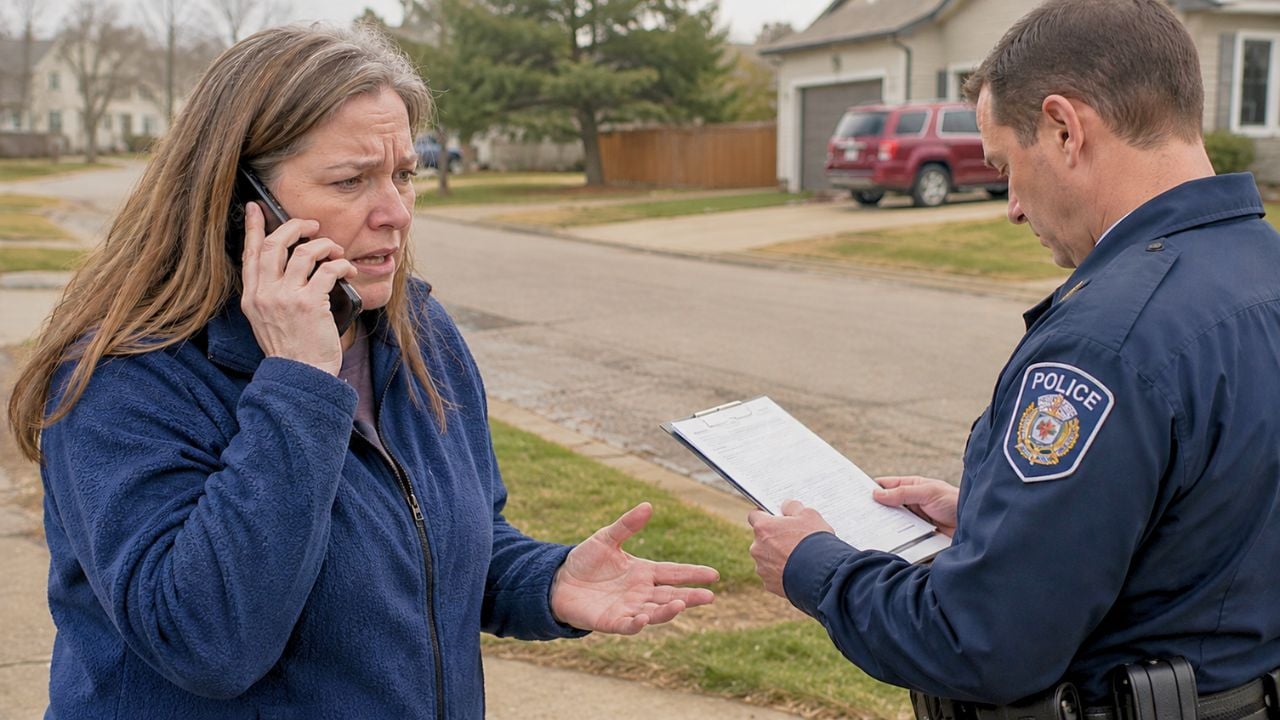
Eventually, instead of the situation ending with a citation for careless discharge or a disorderly conduct arrest, the woman was the one who got a warning—specifically about harassment and misuse of emergency services if she kept calling.
That sounds backwards on paper, but it happens. If officers respond multiple times and can’t corroborate the complaint, they sometimes shift into “neighbor dispute” mode. And once something gets categorized that way, the person making the calls can become the problem in the eyes of the system, even if the original issue was serious.
There’s also the plain truth that “a guy fired a shot earlier” is hard to prove after the fact unless somebody finds a casing, a bullet impact, or has clear video. Without evidence, it becomes another report added to a stack, and dispatchers can get impatient when the same address keeps popping up.
What outdoorsmen noticed: proof beats passion every time
Hunters and rural landowners tend to have a healthy respect for law enforcement, but they also know the limits. A responding deputy can’t write a strong case off vibes. People following the story were quick to point out the same thing most game wardens will tell you about trespassing complaints: document it.
A simple doorbell camera pointed toward the street, or a fixed camera from inside the window facing the roadway, can make the difference between “no one saw it” and a clean piece of evidence. Even a phone video is better than nothing, as long as you’re filming from a safe place and not escalating the contact.
Some folks also keyed in on the importance of calling the right number. If it’s an active shooting incident or you believe someone is firing right now, 911 makes sense. If it’s a pattern that happens “every weekend around 10 p.m.” and the danger isn’t immediate, many agencies handle that better through a non-emergency line where it’s logged differently and you can request extra patrols.
The part nobody likes: you can be right and still end up stuck
This is the reality of living close to people: your safety depends on their judgment more than it should. If a neighbor is careless with a pistol, you can’t build a fence tall enough to stop stupidity. But you also can’t control how seriously your calls are taken once the situation gets labeled a feud.
In a lot of places, discharging a firearm within certain distances of homes or roadways is already restricted, and firing from or across a public road is typically a bad idea even where shooting is otherwise legal. The problem is that enforcement often relies on immediate observation or clear evidence, and by the time an officer arrives, the firearm is back inside and the suspect is suddenly “just standing in his yard.”
The woman’s warning didn’t mean she had to live with it. It did mean she needed to tighten up how she reported it. Date, time, what direction the muzzle was pointed, whether there were cars or people nearby, whether she heard impacts, and whether any physical evidence was found afterward. That kind of detail turns a repeating complaint into a pattern an agency can actually work with.
What a practical path forward looks like in a situation like this
If you’re the one making the calls, the best move is to stay boring and consistent: report only what you directly witness, keep it short, and don’t drift into personal history with the neighbor. “One shot fired into the roadway, shooter standing near the curb, handgun visible” is stronger than a five-minute rundown of every time they’ve been rude.
It’s also worth thinking about safety first, not winning. Don’t go outside to “confirm.” Don’t confront. Don’t try to film from the street. If you can capture video from inside your home, great. If you can’t, don’t force it. And if you find a casing in your yard or an impact in a mailbox post, photograph it where it sits and report that specifically.
Finally, if an officer gives you a warning about calling too often, ask—politely—what type of reporting they want going forward. Non-emergency line? Online reporting? Extra patrol request? A contact officer you can follow up with? Getting that guidance can keep you from being painted as the problem while still putting the behavior on record.
A gun in the hands of a responsible neighbor is usually a non-issue. A pistol fired into a street is a completely different animal, and it deserves a response that matches the risk. The frustrating part is that the system runs on evidence and categories, not gut feelings—so if you’re trying to protect your family without becoming the next person warned or cited, you’ve got to report smart, document what you can, and never let the situation turn into a face-to-face showdown.
Like The Avid Outdoorsman’s content? Be sure to follow us.
Here’s more from us: