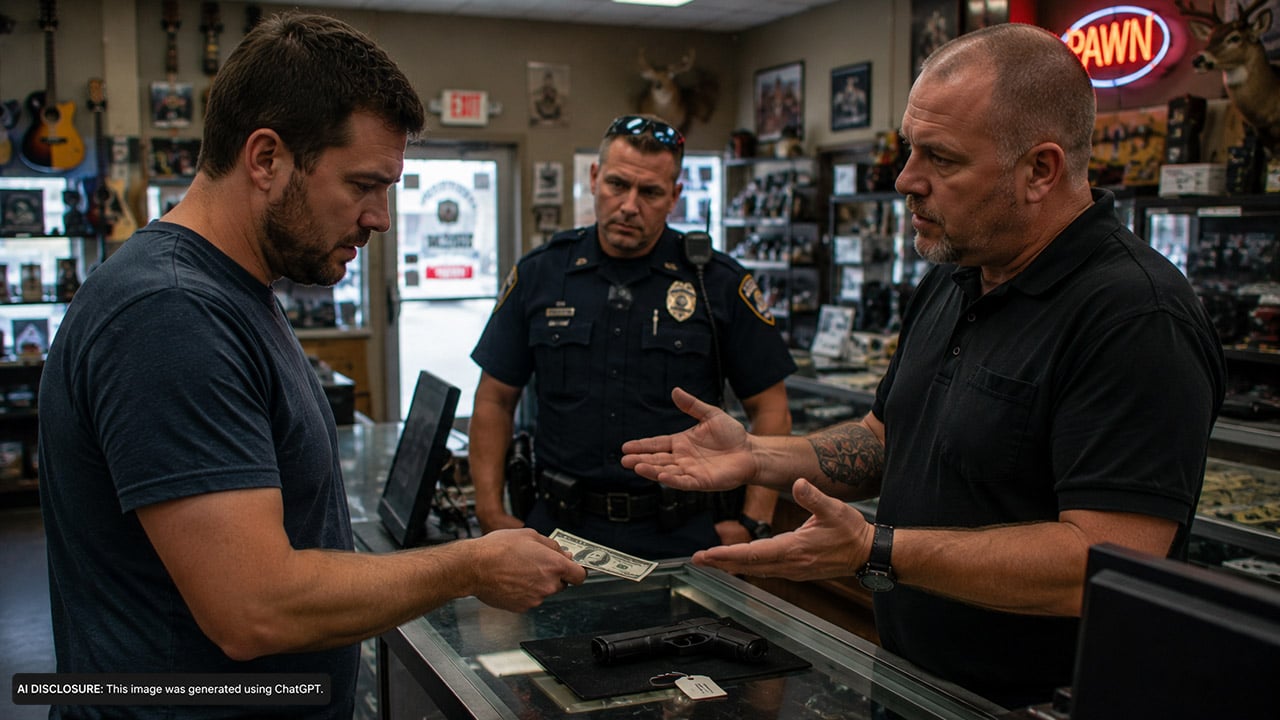
Photo credit: AI-generated image created using ChatGPT. Illustrative only
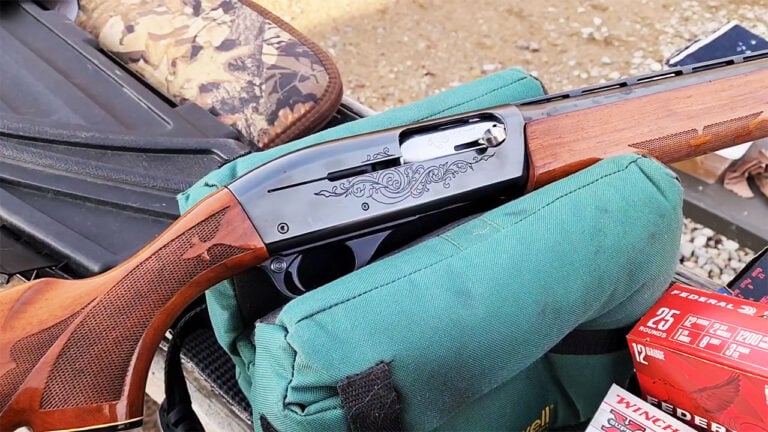
Private-party gun deals are common in a lot of places, especially among hunters and folks who grew up swapping rifles the same way they trade a used chainsaw. But one North Carolina gun owner learned the hard way that “totally legal” doesn’t always mean “totally safe” when it comes to a firearm’s history.
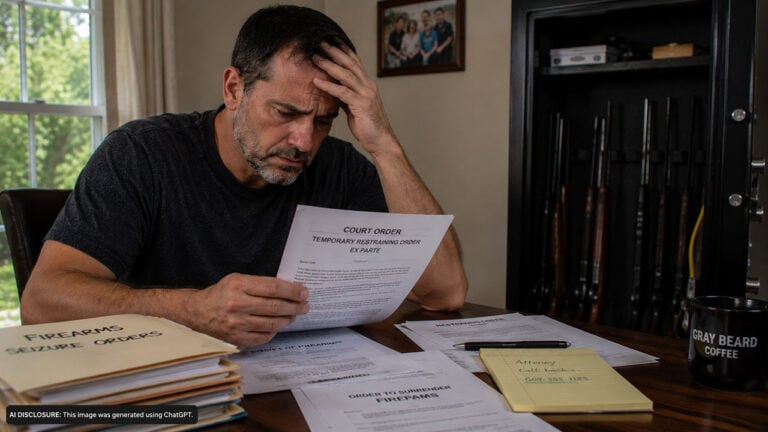
In the original post, the man said he bought a rifle in a private sale and then pawned it about two weeks later. Months after the pawn transaction, a detective contacted him and told him the gun had been reported stolen—seven years earlier. After that call, the pawn shop reached out too, demanding he return the money and hinting at trouble if he didn’t.
The trouble started with a normal private sale
North Carolina allows private firearm sales under certain conditions, and the buyer said the deal was legal. No shady parking-lot meet-up details were provided—just a straightforward “I bought a rifle in a private sale.” Two weeks later, he pawned it.
That timeline matters because a lot of outdoorsmen treat pawn shops like a short-term bridge. You drop a gun off, handle a bill, and pick it back up later. But the second you hand it across the counter, the shop has to log it, run its process, and hold it in a system that can trigger red flags later on.
The detective’s call changed everything
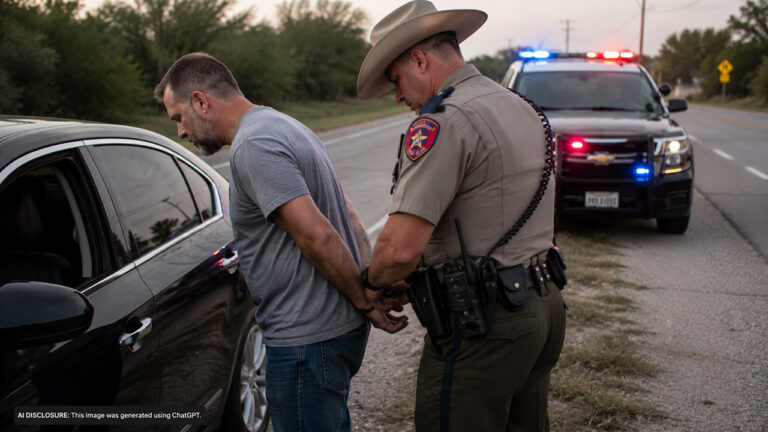
About three months after the pawn, a detective called and informed the man the rifle had been reported stolen seven years ago. That’s a gut-check moment. Even if you bought it in good faith, stolen property is stolen property, and guns are the kind of item law enforcement takes seriously.
The post doesn’t spell out what happened to the rifle after that call, but in many jurisdictions a stolen firearm is seized as evidence and then returned to the rightful owner once things are sorted. Either way, the man was suddenly stuck in the middle—between the original theft report and a pawn shop that had already paid money out on the gun.
The pawn shop wanted its cash back and hinted at “trouble”
The man said the pawn shop called him about three months later and threw out vague threats, including: “I’d hate to make trouble for you.” That kind of language is common when somebody wants leverage without putting anything specific in writing.
From the shop’s perspective, they paid out money on a gun they can’t sell, can’t hold as collateral, and may have to turn over. From the seller’s perspective, he feels like he acted in good faith—and now he’s being pressured to fix a problem he didn’t knowingly create.
The real tension: legal obligation versus personal responsibility
The man framed it as a moral dilemma. He said he felt the right thing might be to pay the shop back because he “didn’t do [his] due diligence in acquiring the firearm.” That’s a fair instinct. Most of us were raised that if you make a mess—whether you meant to or not—you help clean it up.
But he was also told pawn shops “assume the risk,” and that’s the other side of it. Pawn shops are in the business of buying and lending against property that sometimes has a cloudy backstory. That’s why they have recordkeeping requirements and why many of them build risk into what they offer you at the counter.
He also didn’t hide how he felt about the industry, noting that pawn shops can prey on people in bad spots. That doesn’t automatically make the shop wrong here, but it explains why the demand hit him the way it did: he’s trying to be ethical while feeling like he’s getting leaned on.
What people tend to focus on in situations like this
Even without a full comment section included, the usual advice in a stolen-gun pawn situation is predictable and practical: don’t ignore law enforcement, don’t make admissions you don’t have to make, and keep your documentation. A receipt, a bill of sale, pawn paperwork, call logs—anything that helps establish you weren’t knowingly trafficking stolen firearms matters.
There’s also a strong “don’t let yourself get bullied” theme that comes up whenever a business uses vague threats. “I’d hate to make trouble for you” isn’t a legal claim by itself, but it can pressure a person into paying money they may not legally owe just to make the stress stop.
On the flip side, many gun owners will still say, “If it were me, I’d try to make it right,” especially in a small-town culture where relationships and reputation carry weight. That’s where the moral-versus-legal divide gets real: what you can be forced to do isn’t always the same as what you can live with.
Practical takeaways for gun owners buying used firearms
This is exactly why private-sale firearms deserve more caution than a lot of folks give them. A rifle can look clean, function perfectly, and still have a theft report tied to its serial number from years back. The buyer might not be a bad guy at all—just the next link in a chain that started with somebody else’s crime.
If you’re buying used guns, keep a basic paper trail. Write up a simple bill of sale, record the date, and document who you bought it from. If a seller refuses any paperwork or acts weird about identification, that’s a sign to walk away—there will always be another deer rifle for sale.
And if you use pawn shops, understand what you’re doing: you’re placing a firearm into a system that’s heavily tracked. That can work for you if you’re clean, but it also means old problems can resurface fast. If a shop calls later demanding money back, don’t panic-pay. Slow down, review what you signed, and consider getting proper legal guidance before you hand over cash.
At the end of the day, the guy in this situation wasn’t describing some elaborate scheme—just a normal purchase followed by a normal pawn transaction, and then an abnormal phone call that turned his week upside down. The best way to avoid being in that seat is simple: treat every private gun purchase like it might get questioned someday, and make sure you can show you acted like a responsible owner from the start.
Like The Avid Outdoorsman’s content? Subscribe to our newsletter so you never miss an article.
Here’s more from us: