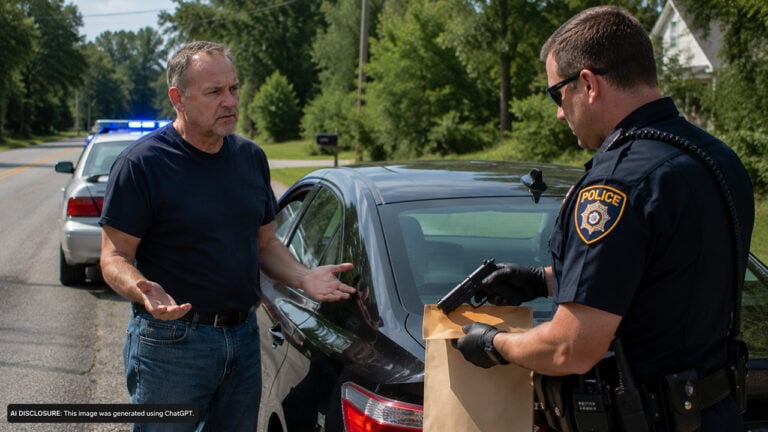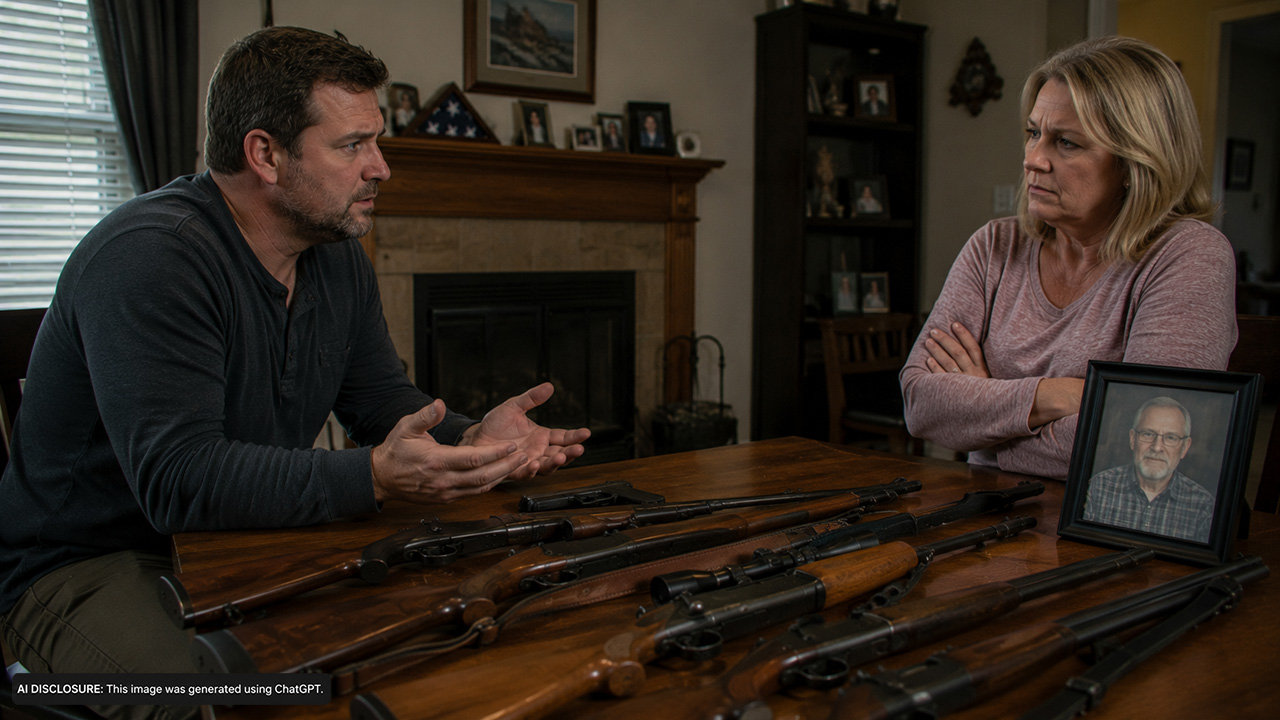
Photo credit: AI-generated image created using ChatGPT. Illustrative only
When a family member passes, there’s plenty to handle that has nothing to do with money—like getting an apartment cleared out and making sure firearms don’t end up unsecured or in the wrong hands. That’s exactly where one man found himself after his dad died in Oklahoma while he was stuck in Tennessee with a brand-new job and two big dogs that made travel tough.
In the original post, he said his father had two handguns at the apartment. His sister, flying in from Florida, planned to go through the place as next of kin. She didn’t want the guns, and he did—but they didn’t even know what make or model they were because their dad kept his business private.
A common gun-owner problem: “They’re in his name… now what?”
The first thing the son asked was something a lot of folks assume works like a vehicle title: how do you “unregister” the guns from the deceased and “register” them to the heir?
That question comes up all the time because it feels like there should be a simple DMV-style process. In many states, especially in much of the South and Plains, handgun “registration” isn’t a routine thing the way people imagine it is. The practical reality is usually less about changing a name in a database and more about transferring lawful possession through the estate and following whatever state and federal rules apply to getting those handguns from Oklahoma to Tennessee without creating a mess.
Why the estate matters more than who wants the guns
Even if everybody’s on good terms, guns in an apartment after a death create a clock you can feel ticking. Landlords want units cleared. Neighbors don’t need to see cases and panic. And no one wants a couple of pistols sitting in a drawer while the family figures things out.
In situations like this, the estate is the “owner” for practical purposes until property is distributed—whether that’s through a will, probate, or whatever simplified process applies. The sister being next of kin and physically on site matters because she’s the one who can secure the guns immediately. Wanting the guns doesn’t automatically make it legal—or smart—to have them shipped across state lines by just anybody or tossed in a suitcase and hoped for the best.
Long-distance logistics: Oklahoma to Tennessee is where people get sideways
The son’s second big question was about transport. His sister originally planned to fly from Oklahoma back to him, and he wanted to know how she could bring the handguns on the flight.
That’s the part that gets people into trouble fast—usually not because they’re criminals, but because airports and firearms have zero tolerance for “I didn’t know.” If you’re used to throwing a hunting rifle in a case for deer camp, handguns and air travel can still surprise you with how strict the procedures are and how badly a small mistake can go.
In an update, he said his sister decided to drive instead, and she’d just pick up the “pea shooters.” That one change cuts out a whole layer of complications, because driving generally gives you more control over keeping the guns secured, out of reach, and handled in a way that doesn’t invite attention.
What people tend to focus on in situations like this
Even without seeing the full comment thread, the questions asked tell you what experienced gun folks and legally-minded folks usually zero in on: the handguns are currently in a deceased person’s possession, nobody knows exactly what they are yet, and the transfer crosses state lines.
That combination typically leads to the same practical checklist: confirm what you’re dealing with (make/model/serial), make sure they aren’t stolen, make sure nobody prohibited is handling them, and figure out whether the cleanest route involves an FFL on one end or the other. People also tend to push for basic documentation—death certificate, proof of relationship, and any estate paperwork—because “family gun” stories go smooth right up until someone questions ownership later.
The outdoorsman’s angle: secure them first, sort details second
Two handguns sitting in an apartment after a death isn’t just a paperwork question—it’s a safety and liability problem. If you’ve spent any time around rural families, you’ve seen how fast “we’ll deal with it later” turns into a cousin stopping by to “help,” a neighbor offering to “hold onto them,” or a landlord’s maintenance guy stumbling onto them. None of that ends well.
The sister going in person to “comb through” the apartment is the right first move, as long as it’s handled carefully: treat every firearm as loaded, keep them pointed in a safe direction, don’t start fiddling with controls you don’t understand, and lock them up for the trip. If nobody even knows what the pistols are yet, that’s another reason to slow down and handle them like they’re unfamiliar—because they are.
And there’s a practical point gun owners understand: a lot of folks who “don’t want guns” still don’t want to be the one driving around with them. That’s where a calm plan matters—secure storage, minimal handling, and a clean handoff once they’re back in Tennessee through whatever legal process fits the situation.
How to keep it from turning into a family fight
When guns are involved, emotions and assumptions can flare up fast. Some relatives see firearms as valuable assets. Others see them as dangerous or shameful. And sometimes someone decides they have a claim simply because they were married to the deceased or because they’re the one physically holding the property.
The cleanest way to keep it from going sideways is to treat the handguns like any other estate property: document them, keep them secured, and don’t let them drift into “possession is nine-tenths of the law” territory. If the heirs agree the son gets the pistols and the sister doesn’t want them, that’s great—but it still needs to be handled in a way that doesn’t create legal exposure during the transfer or open the door for someone else to accuse anyone of taking property prematurely.
In the end, this one sounded like it was heading toward the simplest outcome: sister drives, retrieves the two handguns, and gets them to her brother without the added stress of airline rules. It’s a good reminder for gun owners, too: if you don’t want your family guessing after you’re gone, a basic inventory and clear instructions can save your kids a lot of headaches—especially when distance and time off work make “just go handle it” impossible.
Like The Avid Outdoorsman’s content? Subscribe to our newsletter so you never miss an article.
Here’s more from us: