Photo credit: Ballistik/YouTube
A pistol caliber can make more sense now for reasons that have nothing to do with internet arguments. Sometimes the bullets got better. Sometimes the guns got smaller, easier to shoot, or easier to carry. Sometimes the market finally gave a once-niche round enough real support that you can buy the gun, find the ammo, and actually train with it without treating the whole thing like a scavenger hunt. That is what changes the conversation. A caliber that felt awkward, limited, or hard to justify ten years ago can look a lot smarter once the guns and ammunition around it catch up. Federal’s current personal-defense lineup alone now spans 9mm, .380 Auto, 10mm Auto, .32 H&R Magnum, .22 LR, and .22 WMR, which tells you how much broader today’s support is in several once-niche lanes.
That does not mean every old argument was wrong. It means the practical context changed. Some calibers got better because modern bullet design closed performance gaps. Some became more useful because current handgun design finally gave them a platform that feels worth carrying. Others stayed niche, but now fill that niche more honestly than they used to. If you look at them through that lens instead of through old forum talk, a few handgun rounds are easier to defend today than they were a decade back.
9mm Luger
The 9mm makes more sense now because the argument around it has largely shifted from compromise to default. The old knocks against it centered on terminal performance, especially compared with bigger service calibers. The FBI’s 2014 training-division justification for moving back to 9mm is still one of the clearest summaries of why that changed: better modern bullet performance, less recoil, lower cost, higher capacity, and better shooter performance in real hands. That was already becoming true ten years ago. Today, it is even harder to ignore.
The other reason it makes more sense now is platform design. You can get serious 9mm performance in compact and micro-compact guns that are far easier to carry than the thicker service pistols most people used to associate with the cartridge. Even budget-friendly current options like Ruger’s Security-9 line keep 9mm widely accessible. That makes the caliber more practical today not because it changed on paper, but because everything around it became easier to live with.
.380 ACP
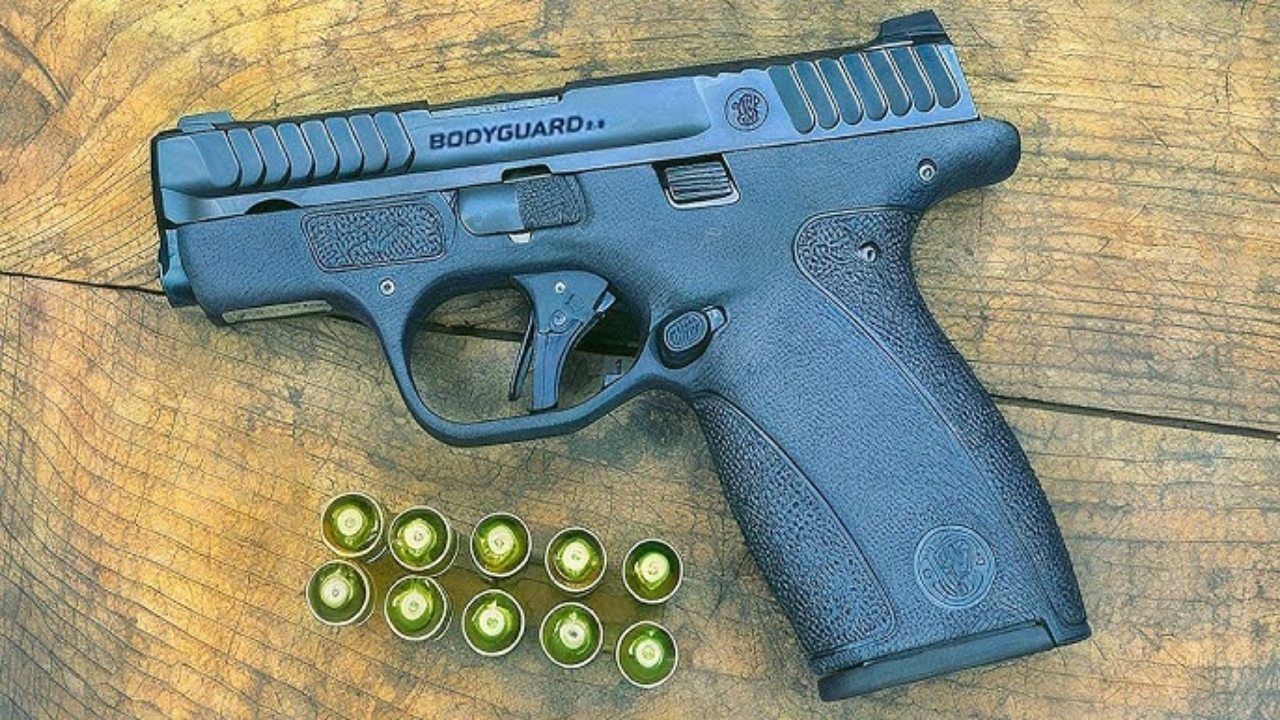
The .380 ACP makes more sense now because the guns finally got good enough, and the ammo finally got more serious. Ten years ago, a lot of .380 pistols were tiny, unpleasant, and often treated as “better than nothing” carry guns. Now you have modern platforms like the Smith & Wesson Bodyguard 2.0 and Ruger Security-380 that are still compact but clearly built to be more shootable and easier to rack than the old pocket-gun standard. That changes the caliber’s usefulness immediately.
Ammo support helps even more. Federal’s current Punch .380 load is explicitly marketed for self-defense and advertised as balanced across different platforms and common barriers, while the HST Micro line keeps .380 in the modern defensive-ammo conversation too. That does not turn .380 into 9mm, and it does not need to. It makes .380 easier to justify for recoil-sensitive shooters and deep-carry users than it was when the guns were harsher and the ammo choices were weaker.
10mm Auto
The 10mm Auto makes more sense now because it is no longer stuck in the old “too much for most people, too niche for everyone else” box. It still is a lot of cartridge, but today it has broader mainstream support than it did in years past. FN’s current 510 series alone shows how serious major makers are about it now, with optics-ready pistols and capacities that would have sounded unusual in factory 10mm handguns a decade ago. Gundigest was not exaggerating when it called 10mm a resurgence story in 2025.
What changed is that 10mm now has a cleaner role. It makes more sense for backcountry carry, hunting-minded sidearm use, and shooters who genuinely want magnum-like semi-auto performance. It also benefits from modern pistol ergonomics and better recoil management in current designs. That does not make it the right choice for everybody, but it makes it easier to justify now because more companies are building around the cartridge instead of treating it like a nostalgic specialty round.
5.7x28mm
The 5.7x28mm makes more sense now because it finally has real competition and broader factory support. Ten years ago, it was still largely associated with FN and a narrow niche. Today, Ruger has the Ruger-57, Smith & Wesson has the M&P 5.7, and even the broader 5.7 ecosystem includes companion long guns like Ruger’s LC Carbine and Smith & Wesson’s M&P FPC 5.7. That is a much healthier place for a caliber to live.
That wider support makes the cartridge easier to take seriously. You are no longer buying into a one-gun novelty with limited options. You are buying into a category with multiple makers, more accessible price points, and more ammunition attention than it once had. It still is not a universal answer, but it makes far more practical sense now for low-recoil, high-capacity range use and certain defensive roles than it did when it was mostly an expensive curiosity with one famous name attached to it.
.22 WMR
The .22 WMR makes more sense now because manufacturers are addressing its short-barrel reality directly instead of leaving handgun shooters to figure it out with rifle-oriented loads. Federal’s Punch Rimfire 22 WMR load is specifically optimized for the deepest penetration through short-barrel handguns, and it even publishes 1,000 fps from a 2-inch barrel. That kind of language matters because it shows the industry is designing around handgun use, not assuming every .22 Magnum shot comes from a rifle.
The guns are there too. Ruger still offers the LCR in .22 Magnum, and Smith & Wesson still offers the lightweight 351 PD. That gives .22 WMR a clearer modern niche as a low-recoil revolver option for shooters who need easier control, lighter carry, or more capacity than larger snub calibers sometimes allow. It is still a compromise, but it is a better-defined and better-supported compromise now than it used to be.
.22 LR
The .22 LR makes more sense now in a defensive conversation than it did ten years ago, not because it became ideal, but because purpose-built defensive loads finally arrived. Federal now offers Punch Rimfire in .22 LR as a self-defense load, and CCI’s Uppercut was built specifically for short-barreled self-defense handguns with an all-new jacketed hollow point designed for expansion and penetration. That is a very different place than the old days of relying on generic bulk rimfire and hoping for the best.
That gives .22 LR a stronger case for people who cannot or will not carry larger calibers comfortably. It still is rimfire, and rimfire still brings limitations. But today, the caliber has more honest support for low-recoil carry and backup-gun use than it used to. When paired with reliable modern rimfire pistols or small revolvers, it fills a role that used to be easier to dismiss than it is now.
.32 ACP
The .32 ACP makes more sense now because the argument for it has become less about power and more about access, control, and realistic concealment. The Beretta 30X Tomcat is a perfect example. Beretta’s current Tomcat family leans hard into the tip-up loading system, specifically highlighting that it eliminates the need to rack the slide and makes operation easier and quieter. That changes who the caliber can work for. For shooters with hand-strength issues, that is not a gimmick. That is a real advantage.
The .32 ACP still is not a mainstream defensive darling, and it does not need to be. It makes more sense today because the people who benefit most from it—deep-concealment users, recoil-sensitive shooters, and those who need easy-loading small pistols—have clearer modern options. A tiny, controllable pistol that is easy to load and easier to shoot than harsher micro calibers is easier to defend now than it was when .32 mostly survived on old reputation alone.
.32 H&R Magnum
The .32 H&R Magnum makes more sense now because it is no longer living only as a forgotten revolver round for people who never moved on. Smith & Wesson is actively leaning back into it with current Model 432 and 632 revolvers, including “Ultimate Carry” variants. That alone says something. A caliber does not become more sensible if nobody builds around it, and right now major support exists again in a way many shooters would not have expected a few years ago.
Ammo support is stronger too. Federal currently lists .32 H&R Magnum across multiple handgun lines, including Personal Defense Revolver, Hydra-Shok Deep, American Eagle, and even HST support by caliber. Hornady also offers Critical Defense in .32 H&R Magnum. That gives the round a much more realistic case today as a softer-shooting carry revolver option with modern defensive ammo behind it. Ten years ago, that argument was a lot harder to make with a straight face.
.327 Federal Magnum
The .327 Federal Magnum makes more sense now because its original selling point still holds up, and current revolver support keeps it alive: more capacity in small revolvers without dropping into low-power territory. Ruger’s current LCR in .327 Federal still gives you six rounds in a compact frame, and the SP101 line continues to offer .327 versions as well. That extra round in a small revolver remains one of the cleanest practical arguments in the caliber’s favor.
It also benefits from continued ammunition support. Federal still lists .327 Federal in HST, American Eagle, and other handgun lines, which matters because this round only makes sense if you can actually buy and practice with it. The cartridge is still niche, but it is a useful niche: strong performance, one more shot than many comparable snubs, and flexibility in guns built for real carry or trail use. That is a better place than many “interesting” calibers ever reach.
Like The Avid Outdoorsman’s content? Subscribe to our newsletter so you never miss an article.
Here’s more from us: