Photo credit: The Avid Outdoorsman
The shooter probably thought the rock was just part of the ground.
That is how bad backstop decisions sneak up on people. You see dirt, brush, a berm, a hillside, or a patch of rocks and assume the bullet has somewhere safe to go. It feels outdoorsy enough. It looks rough enough. It seems far enough from anything important.
Then the bullet hits the wrong thing.
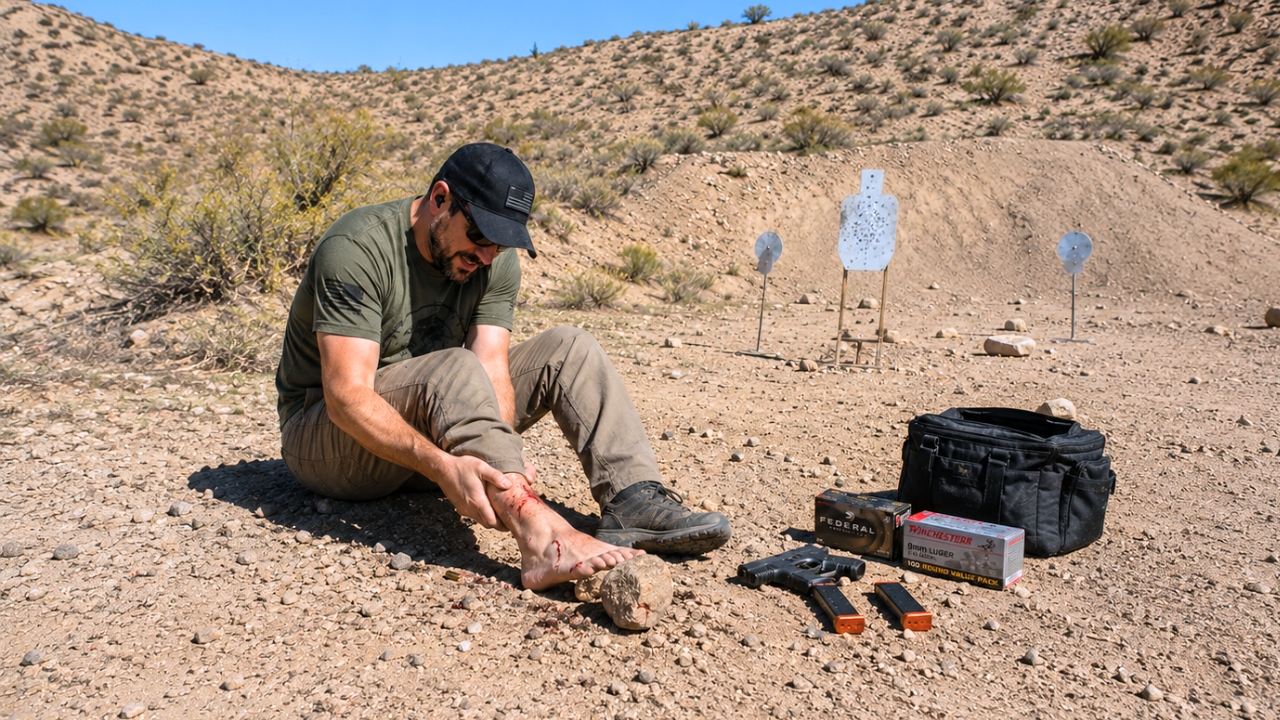
In a Reddit thread, gun owners were talking about the dumbest firearm mistakes they had made, and one story involved a shooter firing at or near a rock only about three feet from his foot. The bullet impact sent shards back hard enough to draw blood.
That is the kind of lesson that arrives fast.
Rocks are not safe backstops. They are hard, irregular, and unpredictable. A bullet that hits rock may fragment, ricochet, splatter, or send pieces of rock and jacket material back toward the shooter. Sometimes the angle sends everything away. Sometimes it does not. The shooter does not get to choose after the trigger is pulled.
That is what happened here.
The shot hit close enough that the flying shards came back and cut him. Three feet is nothing. That is not “somewhere downrange.” That is right by his own body. If the pieces drew blood, they were moving with enough force to make the point clear: shooting hard objects at close range is not harmless.
It is gambling with fragments.
A lot of people think about ricochets as whole bullets bouncing dramatically off steel or rocks. That can happen, but fragments are just as real. Bits of copper jacket, lead, stone, dirt, or debris can come back faster than people expect. Even small pieces can cut skin, damage eyes, or embed themselves where they do not belong.
Eye protection matters for exactly this reason.
But eye protection is not a substitute for a safe target setup.
The mistake was not only that he got unlucky. The mistake was choosing, or allowing, an unsafe impact area in the first place. A safe shooting lane needs a backstop that can absorb rounds, not throw them back. Soft dirt, a proper berm, or a professionally designed range setup is different from random rocks on the ground. If you do not know what the bullet will hit and where fragments may go, you are not ready to shoot.
That sounds basic, but informal shooting spots can make people careless.
Out in the country, it can feel like there is plenty of room. People set up cans, bottles, targets, old appliances, or improvised markers without really thinking through what sits behind them or under them. A rock near the target may not look like a major issue. A dry creek bed may seem fine. A gravel pit may look like a natural range. But hard surfaces can turn a normal shot into a painful surprise.
And the shooter in this story got the surprise up close.
The embarrassing part is obvious. Nobody wants to admit they shot near their own foot and got cut by flying rock. That is the kind of story that sounds ridiculous after the fact because the danger seems so clear once it has already happened. But plenty of gun mistakes look clear only in hindsight.
Before the shot, the shooter may have thought it would be fine.
After the shot, he had blood to prove it was not.
That is why backstop discipline matters even during casual shooting. Especially during casual shooting. A formal range has rules, lanes, berms, and people watching. A casual shooting spot often depends entirely on the shooter’s judgment. If that judgment gets lazy, the environment will not correct you gently.
It may correct you with shrapnel.
The fix is simple but non-negotiable. Do not shoot rocks. Do not shoot steel too close or with the wrong ammo. Do not shoot at hard targets without knowing distance, angle, and rating. Do not put targets where bullets can skip off the ground. Do not assume a hill is safe if the bullet could go over it. Do not shoot at anything unless you know where the bullet is going to stop.
Every bullet needs a safe end point.
Not a hopeful one.
A safe one.
The shooter’s injury could have been worse. A shard to the leg is bad enough. A shard to the eye would be life-changing. A ricochet traveling in a different direction could have hit someone else. The fact that it ended as a painful story instead of a serious injury is luck, and luck should not get a second invitation.
It is easy to laugh at the image of someone learning a hard lesson from a rock three feet away.
But the real lesson is useful for every shooter: the target is only half the decision. The backstop is the other half. If the bullet cannot end safely, the shot does not start.
Commenters treated the story like one of those dumb mistakes that becomes funny only because the injury stayed minor.
Several people focused on the obvious backstop issue. Rocks, gravel, and other hard surfaces can send fragments or ricochets in unpredictable directions. They are not safe impact areas, especially at close distance.
Others pointed out that eye protection is not optional. Flying rock, jacket fragments, and debris can injure a shooter even when the gun functions perfectly.
A lot of commenters said informal shooting spots are where people get sloppy. Without range rules, berms, and clear lanes, the shooter has to be extra careful about what the bullet will hit and what lies beyond it.
Some also said the blood was a useful warning. Painful, embarrassing, but much better than learning the same lesson with an eye injury or a ricochet that hit another person.
The main takeaway was simple: do not shoot rocks, and do not trust hard ground to stop a bullet safely.