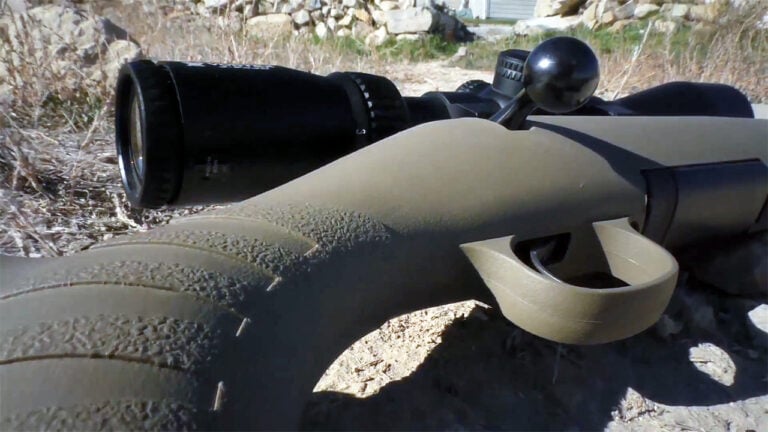
Photo credit: Bass Pro Shops
If you hunt where shots are usually inside 100 yards, a red dot can feel like cheating—in a good way. You shoulder the rifle, the dot is there, and you’re not hunting for an eye box or trying to center up a scope when a deer is moving. That speed matters more than most people admit, especially in thick timber, tight senderos, or when an animal steps out for just a few seconds before hitting the brush. In those moments, anything that slows your sight picture down works against you.
A simple, proven option you’ll actually find at Sportsman’s Guide is the Vortex Crossfire Red Dot, and it’s a good example of what a “basic dot done right” looks like. It uses a 2 MOA dot, which is small enough to stay precise on game but still easy to pick up quickly, and it has multiple brightness settings so you’re not fighting washout in bright daylight or starbursting the dot at dawn and dusk. It also keeps things simple. There’s no magnification ring to bump, no scope shadow to fight, and no guessing whether you’re truly on 1x when an animal appears unexpectedly.
That simplicity is exactly why red dots have become so popular for close-range hunting setups. They don’t make you a better shooter, but they remove a lot of small problems that can add up fast when things happen quickly.
Where a red dot wins
A red dot shines when your hunting distances are short enough that trajectory and holdover barely factor into the shot. Inside 75 to 100 yards, you’re usually holding center mass and breaking the shot based on timing and fundamentals, not dialing or thinking about subtensions. A red dot lets you stay target-focused instead of staring at a reticle, which helps when animals are moving or partially obscured.
This is especially noticeable in thick cover, during drives, or when hunting from a stand where shots tend to be sudden and fast. If you hunt hogs at night where legal, or deal with animals that don’t stop and pose nicely, a dot gives you a clear advantage. You can shoot with both eyes open, track movement naturally, and react without fighting the optic.
The tradeoff shows up as distance increases. A red dot doesn’t add detail, and that matters once you get past about 150 yards. At longer distances, it becomes harder to confirm what you’re aiming at, judge shot placement precisely, or thread a bullet through brush or openings. The dot itself can also start to cover more of the target than you’d like. That’s not a flaw—it’s just the nature of a non-magnified optic.
Where an LPVO wins
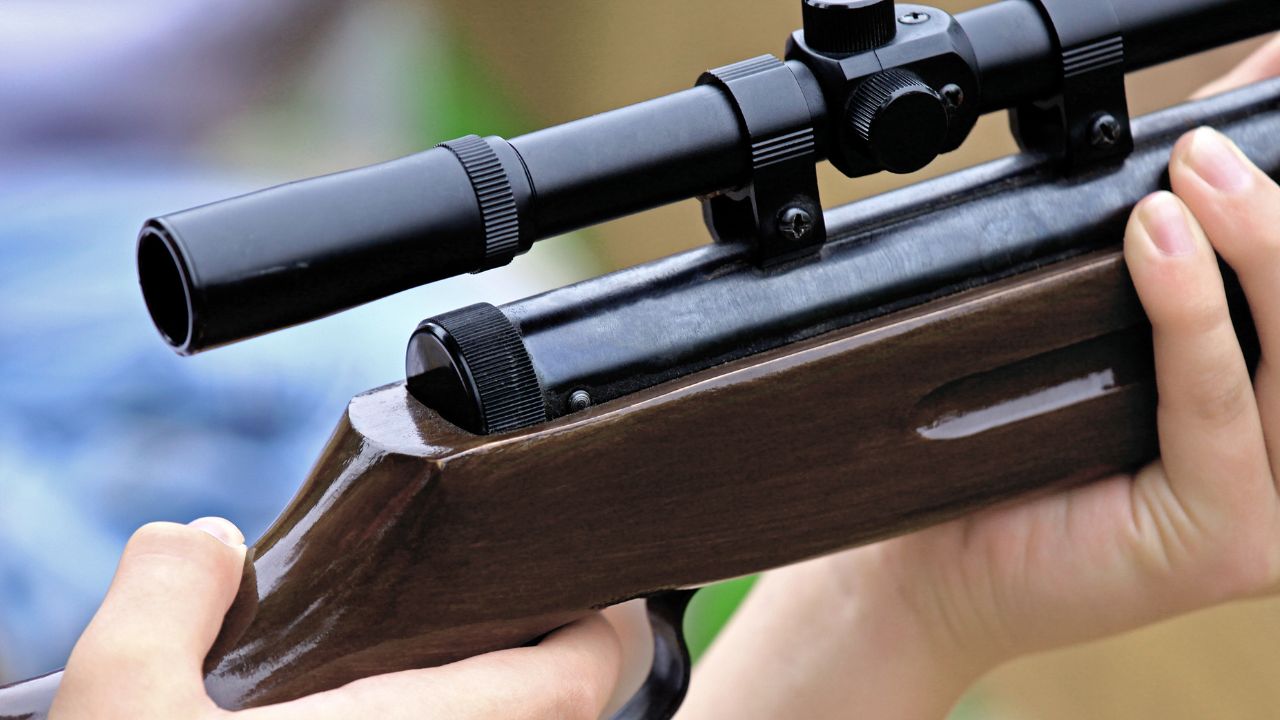
An LPVO, or low power variable optic, earns its keep when your hunting distances aren’t predictable. If your “normal” shot could be 40 yards in the morning and 240 yards in the afternoon, magnification becomes more than a luxury. It becomes information. Being able to dial up power lets you confirm what you’re seeing, pick a precise aiming point, and place shots with more confidence as distance stretches.
At true 1x, a good LPVO can be surprisingly fast. It won’t feel exactly like a red dot, but with practice it’s close enough for most hunting scenarios. When you need more precision, you just roll the magnification ring and suddenly have options that a dot can’t give you. That’s where LPVOs separate themselves—they don’t lock you into one style of shooting.
Bass Pro carries the Vortex Strike Eagle SFP 1–8×24, which is a common entry point into this category because it’s built specifically for short- to mid-range work and includes an illuminated reticle. In hunting terms, the illumination isn’t about tactical use—it’s about keeping the reticle visible against dark animals in poor light. Vortex markets it with holds that extend well past typical hunting distances, but the real benefit is flexibility. You get speed when you need it and magnification when you want it, without changing rifles or optics.
The downside is that LPVOs are heavier and more complex. You’re adding glass, moving parts, and decisions. If you never shoot past 100 yards, you may never actually use what you’re carrying.
Weight, balance, and fatigue (the part people forget)
One thing that doesn’t get talked about enough is how an optic affects rifle balance. A red dot keeps a rifle light and lively, which matters on long days or when you’re carrying the gun more than you’re shooting it. An LPVO adds weight up high, and you’ll feel that over time, especially on lightweight hunting rifles.
Neither option is wrong, but it’s worth being honest about how you hunt. If you’re walking miles, climbing in and out of stands, or carrying the rifle all day, simplicity and balance start to matter just as much as capability.
The honest decision rule
If your hunting is mostly inside 125 yards and speed is your biggest challenge, start with a red dot. It will make fast shots easier and remove unnecessary complications. If your hunting regularly stretches past 150 yards and you want one optic that can handle both close and midrange without feeling like a compromise, an LPVO makes more sense.
Don’t overthink it. Match the optic to the distances you actually shoot, not the distances you talk about at camp. The best optic is the one that helps you make clean shots in the situations you really face.
Like The Avid Outdoorsman’s content? Subscribe to our newsletter so you never miss an article.
Here’s more from us: