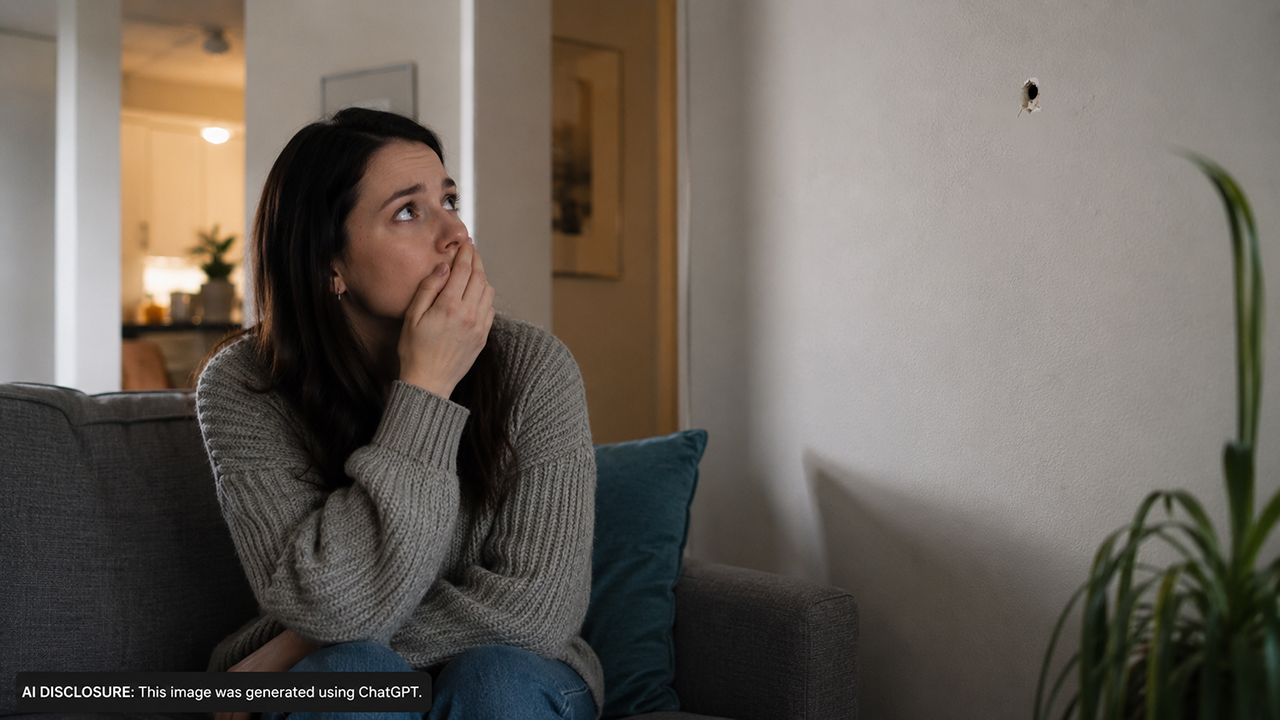
Photo credit: AI-generated image created using ChatGPT. Illustrative only
Most folks who own guns have had a “that could’ve been bad” moment at some point—usually at the range, with a lesson learned and nobody else put at risk. But it’s a different deal when that mistake sends a live round through an interior wall and into a neighbor’s apartment.
That’s what one renter woke up to when her next-door neighbor’s gun “went off,” and the bullet passed through her closet. Nobody was hurt, but the fact that it happened inside a multi-unit building turned a scary incident into a real safety problem. The account was shared by a friend seeking guidance in the original post, after the renter tried to get her apartment complex to take it seriously.
A bullet hole isn’t “low priority” when it came from a gun
The renter did what a lot of people would do first: she reported the incident to the leasing office and asked them to investigate. According to the post, the response was basically a shrug. Management told her there was “nothing they could do,” and that she could put in a work order to repair the hole—but it would be “low priority.”
That’s the part that’ll make responsible gun owners shake their head. A random hole in drywall is maintenance. A hole made by an unplanned discharge is a safety incident. Treating it like a cosmetic issue tells the tenant, plain as day, that the building’s priority is patching walls—not preventing the next round from crossing the same line.
Why an “accidental” discharge still demands accountability
In gun country, people toss around the word “accident” like it erases responsibility. But a gun doesn’t “just go off” sitting untouched in a safe. When a round ends up in the neighbor’s closet, something went wrong with handling, storage, or both.
The friend who posted the story asked a straightforward question: isn’t this criminal negligence? Even without getting into statutes, the common-sense answer is that a negligent discharge in an apartment building is a serious problem. There’s no safe backstop in a shared-wall setup. Drywall, studs, and hollow space don’t stop much, and everybody knows it.
That’s why this isn’t about being anti-gun. It’s about being pro-responsibility. The poster summed it up plainly: “This is how accidental gun deaths occur.” That’s not fear-mongering—it’s the reality of what happens when people get sloppy around loaded firearms.
The renter’s fear: reporting it might make life worse
The tension in this story isn’t just the bullet hole. It’s the social fallout that can come from making an official report in a shared living situation. Plenty of renters worry that pushing too hard will turn a neighbor into an enemy, or that the property manager will label them a “problem tenant.”
And that fear isn’t made up. Multi-unit living can feel like walking a narrow ridge: you want safety, but you also want peace. You don’t want retaliation. You don’t want a lease non-renewal. You don’t want to be the person management blames for “drama,” even when you didn’t cause any of it.
Still, there’s a hard truth here. If a neighbor’s negligence put a bullet into your home once, hoping it doesn’t happen again is not a plan. It’s a gamble.
She filed the police report—and management didn’t like it
In an update, the poster said the renter did file a police report. They weren’t sure what the police did next, but the response from the apartment manager came through loud and clear in an email: the manager was “very passive aggressive,” saying she didn’t need to file a report and that maintenance would fix the wall the next day. The email also included an apology that the renter “still feels unsafe.”
That wording is worth paying attention to. “Feels unsafe” frames it like an emotional issue instead of a real-world, measurable danger. A bullet through a wall isn’t a feeling. It’s evidence. If anything, the physical hole is the one part of this story that doesn’t argue back.
The renter’s reply also matters. She told management the wall was the least of her concerns and asked them to do their due diligence verifying the neighbor was following safe gun handling procedures. At the time of the update, there was no reply yet.
What people tend to focus on in situations like this
Even without a long comment thread included in the source, you can predict the two camps that usually form in these disputes. One side says, “Call the police, document everything, and don’t let it get minimized.” The other side worries about escalation and says, “It was a one-off—let it go.”
From an outdoorsman’s perspective, here’s the practical middle ground: treat it like a safety incident, not a neighbor squabble. Documentation matters because stories change. A repaired wall erases evidence. And apartment management has a built-in incentive to keep things quiet and moving, especially if acknowledging the situation creates liability or forces them into an eviction fight.
That doesn’t mean you have to start a war with your neighbor. It does mean you don’t accept “low priority” when the incident involved a firearm and an occupied unit next door.
The most practical steps when a round crosses into your home
This renter already did two key things: she notified management and she filed a police report. Those aren’t vindictive moves. They’re the basic steps that create a record in case something happens again, and they push the situation into the hands of people who can actually compel cooperation.
Beyond that, the practical focus is safety first. If you’re in a multi-unit building and a round comes through your wall, you want clear documentation of where it entered, what it hit, and where it ended up—before repairs happen. You also want all communication with management in writing, because verbal conversations disappear the minute someone denies them.
And if you’re the gun owner reading this, take it as the reminder none of us like but all of us need: safe storage and safe handling aren’t just about your own household. In tight living spaces, your mistake can become your neighbor’s funeral. That’s not politics. That’s physics.
In the end, the renter wasn’t asking for special treatment—just accountability and a real effort to keep it from happening again. When a gunshot sends a bullet through a shared wall, “patch the hole and move on” is the kind of response that invites the next incident. Responsible gun owners—and responsible property managers—should know better.
Like The Avid Outdoorsman’s content? Be sure to follow us.
Here’s more from us: