Photo credit: AI-generated image created using ChatGPT. Illustrative only
A charity fundraiser is supposed to feel simple: you put your money down for a good cause, you take home the item, and everybody wins. But one gun buyer says his silent-auction purchase turned into a months-long headache that ended with the firearm being destroyed before he could ever pick it up. The account was shared in the original post, and it’s the kind of mess that makes a guy double-check every “easy” firearms transaction from here on out.
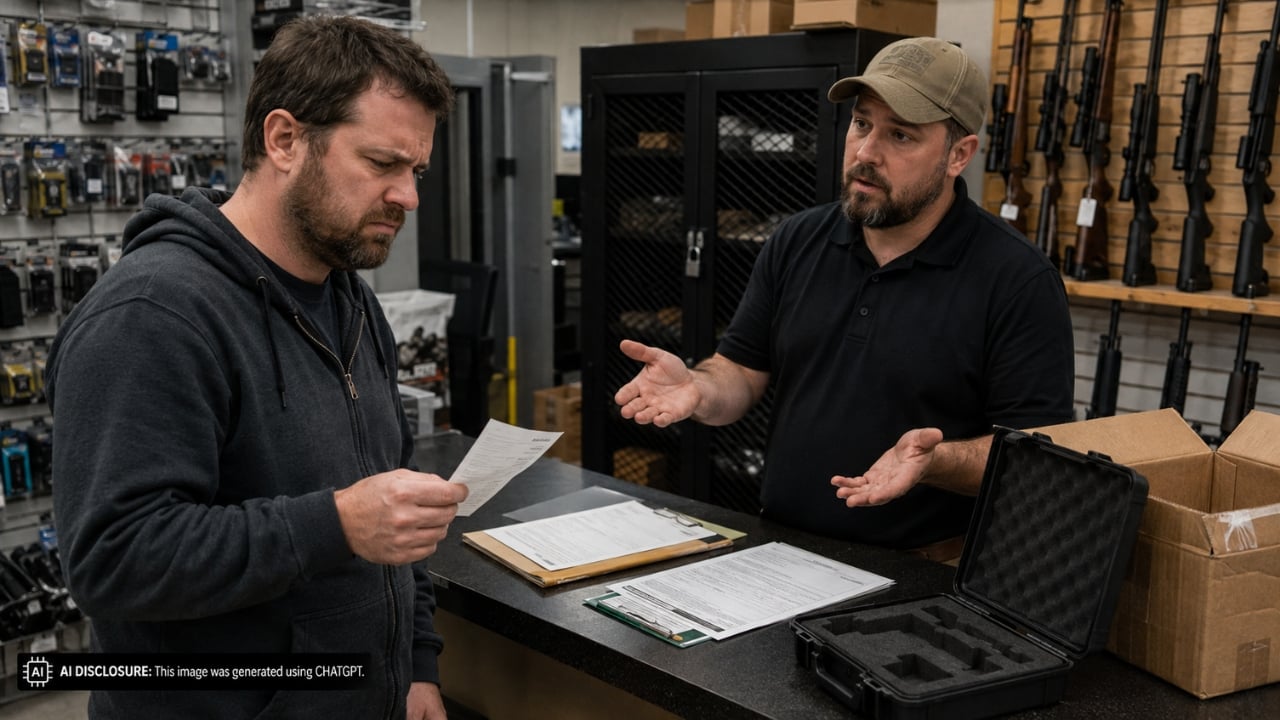
According to the post, the buyer paid $550 for a Ruger Mark IV Lite at a fundraiser in New Hampshire. When he went to retrieve it from the gun store handling the transfer, he learned the pistol wasn’t on Massachusetts’ approved firearms list—an issue because he’s a Massachusetts resident and the store couldn’t legally transfer it into his possession.
A simple auction win ran straight into Massachusetts paperwork
The big snag wasn’t the Ruger itself—it was the destination state. Massachusetts maintains an “approved firearms list,” and the buyer says the Mark IV Lite wasn’t on it at the time he tried to take delivery. That meant no transfer, no pickup, no walking out with the pistol after doing the standard paperwork.
This is the part that catches folks off guard, especially people who live near state lines. Buying a gun in one state and bringing it home isn’t like buying a chainsaw or a cooler. With handguns in particular, your home-state rules can reach across the border fast, because the transfer has to be lawful for you where you actually reside.
The waiting game seemed like it would end with a legal transfer
Months went by, and then the buyer says the Ruger Mark IV was added to the Massachusetts approved list. That’s the moment most gun owners would circle on the calendar—finally, the green light. He reached back out to the shop expecting to complete the transfer now that the model was on the list.
Instead, he says he was told something he wasn’t expecting: because he hadn’t picked it up earlier, the Bureau of Alcohol, Tobacco, Firearms and Explosives had made the store destroy it. No pistol, no chance to re-do the transfer now that the rules changed, and—according to his post—no outreach from the shop before it happened.
Where this kind of mess hits gun owners the hardest
If you’ve ever budgeted for a new pistol, you already know the sting. $550 isn’t pocket change, and in this case it was paid at a charity auction—money that likely isn’t sitting in a neat “return policy” lane like a normal retail sale. The buyer is left holding the bill for an item he never possessed, never took home, and never got to decide what to do with.
There’s also the gut-level frustration of it. The Mark IV Lite is a practical little .22 pistol platform for range time, small-game camp use where legal, and training new shooters with a suppressor host in mind (where allowed). But none of that matters if the system never lets the lawful owner actually take possession.
And for outdoorsmen, it’s not just about the one gun. It’s about trust in the process. Most of us are willing to follow the rules, fill out the forms, and wait the waiting periods. What makes people mad is when the goalposts move or when the communication isn’t there—and they’re the ones left eating the loss.
The shop’s lack of contact is what really pours gas on the fire
In his account, the buyer says the store “made no effort to contact me” before the gun was destroyed. That’s a big deal, because a quick phone call or email would have at least given him a chance to ask about options—returning it to the original consignor, transferring it to a New Hampshire resident, or sorting out some other lawful disposition depending on what the paperwork allowed.
Even if the store felt boxed in by regulations, most customers would expect a heads-up before a $550 item—especially a serialized, controlled item—gets cut up. Communication doesn’t fix every compliance problem, but it can keep a bad situation from turning into a personal and financial blindside.
This is also why auction guns can be tricky. With a normal retail sale, the shop usually has established procedures for delays, denials, and storage. With fundraiser items, you’ve got a charity, a donor or consignor, and a receiving dealer all involved. If nobody clearly owns the “call the buyer and make a plan” role, people fall through the cracks.
What the buyer asked about next: getting the money back
After being told the firearm was destroyed, the buyer’s focus turned to recovering his $550. In the post, he asked what efforts he can make to get the money back, and specifically whether filing a claim through the Federal Tort Claims Act (FTCA) might apply.
That question tells you where his head is: he isn’t just upset about missing out on a Ruger. He’s trying to figure out whether this was a government-caused loss, a shop-caused loss, or just a hard lesson about crossing state lines with a regulated purchase. Without more details on what instructions were given to the dealer and what paperwork existed between the fundraiser and the shop, there’s no clean, one-size-fits-all answer—but the practical point remains: once that gun is gone, the only thing left to fight over is the money.
If you ever find yourself in a similar bind, the most useful habit is to document everything early. Save your receipt from the auction, any emails or texts with the shop, and any dated notes about phone calls. Keep it boring and factual. When money changes hands and time passes, paper trails are the only thing that holds a story together.
The takeaway for anyone buying guns at auctions or out of state
This story is a reminder that “legal to buy” and “legal to transfer to you” are two different questions, especially when your home state has extra layers. Before you bid at a banquet or fundraiser, it’s worth asking one blunt question: “If this can’t be transferred to me because of my state’s rules, what happens next—and do I get my money back?” If nobody can answer clearly, you’re gambling.
It’s also worth getting clarity on storage and timelines. Some shops charge storage fees after a set period. Others won’t hold certain items indefinitely. And in any regulated situation, letting months go by without checking in can turn into a problem you didn’t see coming. None of that excuses poor communication, but it can keep you from being the guy who pays and ends up empty-handed.
Most outdoorsmen aren’t looking for special treatment—we just want a fair shake and a straight answer. This one ended with a destroyed pistol and a buyer trying to figure out how to get his $550 back. If there’s a lesson to carry forward, it’s to treat every auction gun like a cross-state paperwork project until you’ve proven it isn’t.
Like The Avid Outdoorsman’s content? Subscribe to our newsletter so you never miss an article.
Here’s more from us: