
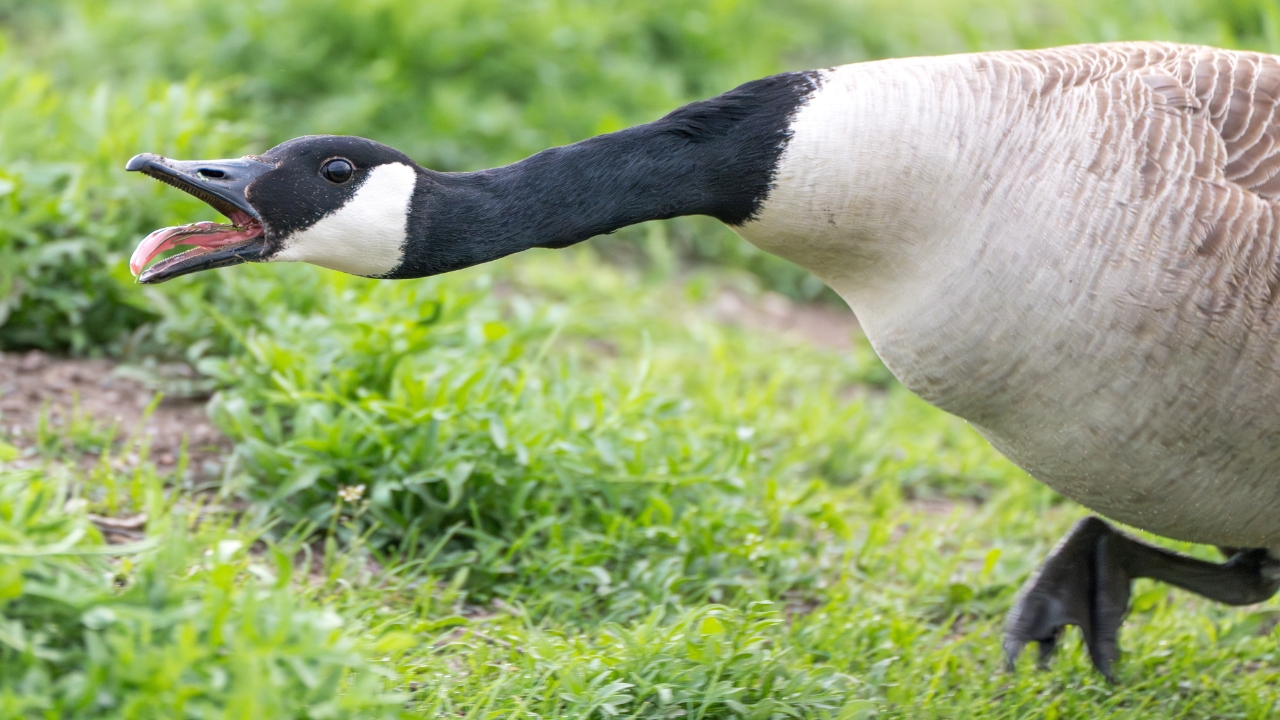
Photo credit: Cami Johnson/Shutterstock.com
You can get close to a lot of wildlife and nothing bad happens. That’s what teaches people the wrong lesson. The problem is that distance is your safety margin, and when you shrink it, some animals go from “tolerant” to “all business” in a heartbeat. To you, it feels like an attack with no warning. To the animal, it’s a boundary being crossed, a calf being protected, a nest being defended, or a surprise at bad range.
Most charges and bites happen in those last few seconds—when you step around a blind corner, push into thick cover, crowd a shoreline, or try to get a photo that’s too tight. If you want to stay out of trouble, you don’t need to fear every animal you see. You need to respect the ones that react fast when you get too close, and understand that the “warning” is often subtle, quiet, and easy to miss.
Moose

Moose look calm right up until they aren’t. You can walk a trail and see one feeding like it owns the place, and the second you close the gap, it can pin its ears and come at you like a freight train. People get fooled because moose don’t always growl, snort, or posture the way predators do.
The danger spikes around cows with calves and during the fall rut. A cow may decide you’re a threat even if you think you’re being respectful, and a bull may react to movement in a way that feels sudden and personal. Give them space, don’t put yourself between a moose and thick cover, and don’t try to “sneak by” at close range. Back out wide and slow.
Bison

Bison are the classic “looks slow, moves fast” animal. They can stand there like a statue, and then explode into a charge so quickly you don’t process it until it’s happening. A lot of bison incidents start the same way: someone creeps in for a photo, the herd shifts, and one animal decides that’s close enough.
You also have to remember they’re not acting like a deer that wants to flee. A bison will hold ground and use its size to solve problems. You won’t always get a long warning. The head swing, the short step forward, the tail twitch—those can be your only clues. If you see bison, keep a wide buffer, and never assume one “used to people” is safe to crowd.
Cow elk with calves

A cow elk in open country can seem like the easiest animal in the world to watch. Then you bump into her in the timber with a calf nearby, and she can come unglued fast. The threat isn’t that elk are aggressive by nature. It’s that a cow will defend her calf hard, and she may decide you’re the problem before you even see the calf.
The “no warning” part usually happens because you surprised her at close range. You step into a pocket of cover, she’s already tight, and she comes in quick. If you’re hiking in elk country during calving season, pay attention to fresh sign, listen for chirps and short barks, and don’t push through thick bedding cover like you own it. Circle around and give her an exit.
Wild hogs and feral boars

Hogs don’t need much reason to get nasty at close range. A big boar in thick brush can feel like nothing is there, and then you hear a pop of teeth or a hard grunt and it’s coming. A sow with piglets can be even touchier, especially if you stumble into the group and block their escape route.
What makes hogs scary is how quickly they commit once they decide. They’re low to the ground, fast in tight cover, and they don’t have to “look angry” to be dangerous. If you’re in hog country, don’t push into brush piles, reed beds, or creek bottoms where visibility is poor. Give yourself room to move, and don’t crowd sounders, even if they look calm from a distance.
Black bears at close range

Most black bears want nothing to do with you. The problem is that close-range surprises change the script. If you pop over a rise and a bear is right there, you might get a bluff charge that feels like a full-on attack. Add cubs into the mix and you can get a defensive response fast.
The warning signs can be quiet: a jaw pop, a huff, a sudden stiff stance. You might miss it because your brain is still catching up. Keep your head up in thick cover, make noise in brushy creek bottoms, and don’t crowd a bear on a food source. If you see one at close range, give it space immediately. Don’t run, don’t corner it, and don’t try to “stand your ground” five yards away.
Brown bears and grizzlies

With grizzlies, the “no warning” feeling often comes from how fast a defensive charge happens. You turn a corner in alders, or walk into a salmon stream, and suddenly you’re inside the bear’s comfort zone. If that bear has cubs or a carcass, it may react in a split second.
You won’t always get the classic Hollywood warning. Sometimes you get a woof, a head swing, and a rush. Sometimes you get nothing but movement. Good habits matter more than bravado here: avoid tight cover when you can, make noise when you can’t, and treat every blind spot like it could be occupied. If you hunt or hike in bear country, you’re not trying to be fearless. You’re trying to stay out of surprise distance.
Mountain lions

Mountain lions don’t usually announce themselves. That’s the point. If one decides you’re prey, the approach is quiet and the first sign may be impact. Even when a lion is acting defensively, it can react fast if you crowd it, especially around a kill site or when it’s cornered.
The danger near humans often shows up where visibility is poor—brushy trails, rocky ledges, and shaded timber where a cat can watch you without being seen. Don’t hike with headphones in lion country, and don’t let kids lag behind. If you spot a lion close, don’t crouch or turn away. Stand tall, keep it in view, and create space while you back out. A lion that feels you’re closing in may commit hard.
Wolverines

Wolverines are not common encounters, but when they happen, they can be intense. They’re built to bully animals larger than themselves, and they don’t always retreat when you expect them to. If you stumble into one on a carcass, or crowd it in deep snow where movement is limited, you can get a sudden, aggressive response.
The “warning” can be a hard stare, a stiff posture, and then a rush. It’s not a predator that wants to test you for long. If you see a wolverine, give it a wide berth and don’t hover around anything it might be guarding. Trappers and backcountry hunters respect them for a reason. They’re small compared to bears, but they fight like they’re ten feet tall.
American alligators

An alligator in the water can be invisible until it decides to move. That’s what makes close encounters feel sudden. If you step down a bank and you’re inside its space, it can surge forward fast. Many incidents happen near shorelines, boat ramps, and marsh edges where people assume shallow water means safety.
Alligators are most dangerous when you surprise one at close range or get near a nest. They may also associate people with food in places where they’ve been fed, which is a problem nobody wants to admit. If you’re in gator country, stay out of murky shallows at dawn and dusk, keep pets away from the waterline, and don’t crowd any gator you can see. If you can see it, it can reach you faster than you think.
Crocodile

Crocodiles are built for ambush, and a close encounter often starts with you not realizing one is there. They can sit like a log at the edge, then launch with shocking speed. That’s why people describe it as “no warning.” In many habitats, the warning is the habitat itself—muddy banks, still water, and a place where crocs hunt.
They’re also highly territorial. If you’re near a nesting area or a favored basking spot, a croc can react aggressively to proximity. The safest move is boring: don’t enter the water in known crocodile areas, avoid low banks, and treat every calm stretch of river like it has teeth in it. In croc country, your best defense is distance and discipline.
Hippopotamus

Hippos kill a lot of people because they don’t tolerate close approaches near water. They spend their days in rivers and lakes and travel at night to feed, and if you get between a hippo and water, it may charge hard. That charge happens fast and feels like it came out of nowhere.
Boat encounters can be even worse. A hippo can surface close, slap water, and then come at the boat with its mouth open. The animal isn’t hunting you. It’s defending space. If you’re in hippo country, you don’t hug shorelines, you don’t crowd pods, and you don’t assume they’ll move because you want them to. Give them room, especially around dusk and dawn when they’re on the move.
Cape buffalo

Cape buffalo have a reputation for a reason. They can look like cattle standing in the shade, and then turn violent when you’re too close. Injured or pressured buffalo are especially dangerous because they don’t always flee. They may hook into brush, hold tight, and come out hard when you step into their bubble.
The “no warning” part often happens in tall grass or thick bush. You don’t see the buffalo until it’s near, and by then the decision is already made. If you’re on foot in buffalo country, you move slow, read the wind, and treat every patch of cover like it’s occupied. A buffalo doesn’t need a long argument. If it thinks you’re a threat, it may try to end the situation immediately.
Elephants

Elephants can seem calm until you learn what “personal space” means to a six-ton animal. If you get too close, especially to a cow with a calf, an elephant may charge with almost no visible warning to you. The warning might be a subtle head lift, a shift of weight, or ears flaring—easy to miss if you’re focused on taking a photo.
Even a mock charge can get you hurt because you can’t outrun it and you can’t outmaneuver it in thick brush. Bulls in musth can also be unpredictable and short-tempered. If you’re on foot around elephants, keep distance, stay out of travel corridors, and never get between them and water. Respecting space is not polite behavior here—it’s survival behavior.
Swans and geese guarding nests

It sounds laughable until you’ve been charged by a big bird that’s defending a nest. Swans and geese can go from calm to violent the second you step too close, and they often nest near paths, docks, and shorelines where people walk without thinking.
The attack is fast: wings out, hissing, and a straight-line rush aimed at your legs and knees. It’s defensive behavior, and it works because it surprises people. If you see a swan or goose holding ground, neck extended, not moving away, you’re already too close. Give it space and go around wide. The “warning” is that the bird isn’t leaving. If it stands its ground, it’s telling you the line is right there.
Rattlesnakes

A rattlesnake can give you a warning and you still get tagged, because the warning doesn’t always happen the way people imagine. Not every snake rattles before striking, and in thick grass, rocks, or leaf litter, you can be within range before you ever know it’s there. That’s why bites feel like they come out of nowhere.
The other factor is foot placement. If you step near a snake, you’ve already forced the moment. The strike is quick, and it doesn’t take much distance. In snake country, slow down in rocky areas, don’t step over logs without looking, and keep your hands off ledges you can’t see. Most bites happen to people who were moving too fast, reaching blindly, or walking through cover like the trail is guaranteed safe.
Wild turkeys during breeding season

Turkeys aren’t a top-tier threat, but close-range aggression can surprise you, especially in spring. A dominant tom can get fixated and charge, spurring and pecking like it’s trying to drive you off. It’s not common, but it happens, and it happens fast when a bird has lost fear of people.
The “no warning” feeling comes from how normal it looks right before it isn’t. A tom struts, drags wings, and then suddenly closes distance. The risk is higher around homes, parks, and farm edges where birds get too comfortable. If a turkey starts crowding you, don’t back away timidly. Create space, keep it in view, and move away with purpose. The goal is to end the interaction early, before it turns into a full-on dominance fight you didn’t sign up for.
Like The Avid Outdoorsman’s content? Be sure to follow us.
Here’s more from us:


