Photo credit: Saad315/Shutterstock.com
A lot of people still talk about North America’s big cats like they belong to fixed old maps: mountain lions out West, Florida panthers in the south, jaguars only in history books, and everything else safely outside ordinary life. That picture is getting less reliable. The real story now is more uneven and more interesting. Some cat populations are recovering slowly. Some are dispersing farther than people expected. Some are not fully re-established yet, but they are showing up often enough that wildlife agencies, land managers, and rural communities can no longer dismiss them as one-off curiosities.
That does not mean every sighting equals a full comeback, and it definitely does not mean every viral photo proves a breeding population is spreading across the map. But it does mean the edges are moving. In several places, the old range lines are getting blurrier, and the biggest reason is simple: when habitat, prey, and travel corridors line up well enough, cats start testing ground beyond where people got used to seeing them.
Cougars are the clearest example of the map changing
If you want the strongest example of a big cat quietly pushing into new ground, start with cougars. The U.S. Fish and Wildlife Service has already acknowledged that wild cougar populations in the West expanded eastward over the last two decades, with confirmed dispersers turning up across parts of the Midwest and beyond. That does not mean the East suddenly has stable cougar populations again, but it does mean the old idea that mountain lions simply stop at the Rockies is no longer useful.
Michigan is the most interesting recent case because the story there has moved beyond occasional mystery sightings. According to reporting based on Michigan DNR confirmations, the state logged a record number of confirmed cougar reports in 2025, and the bigger development was evidence of a mother with cubs in the Upper Peninsula, suggesting at least some animals are doing more than just passing through. That is a different conversation than the old pattern of lone wandering males showing up and disappearing again.
The important point is not that cougars have suddenly reclaimed the eastern half of the country. They have not. The point is that dispersal is real, reproduction evidence in at least one Great Lakes state has now entered the picture, and wildlife agencies are spending more time sorting verified sightings from wishful thinking because there is more to sort through. That is exactly what range change looks like in its early, messy stage.
Jaguars are still rare in the U.S., but they are not gone
Jaguars are still a fringe story inside the United States, but they are not an extinct one. The Arizona-New Mexico borderlands remain the place to watch. The Associated Press reported that another jaguar was documented in southern Arizona, and Arizona Game and Fish verified the footage, marking yet another distinct wild jaguar documented in the Southwest since 1996. That is not the same thing as a stable U.S. population, but it is strong evidence that jaguars are still filtering north from Mexico into habitat that can hold them, at least temporarily.
That matters because jaguar recovery in the U.S. is not really about dramatic numbers right now. It is about persistence and corridor use. If individual cats keep appearing in southern Arizona and southwestern New Mexico, then the borderlands are still functioning as more than a historical footnote. The population center remains well to the south, but the northern edge is active enough that the species cannot be treated like a closed chapter in the American landscape.
Florida panthers are still boxed in, but the pressure to move north is real
The Florida panther story is a little different because it is not about surprise sightings in new states. It is about a cat population that clearly needs room to expand if it is going to remain healthy over the long term. Florida’s own reporting hub shows annual panther research and management reports are still tracking births, deaths, and movement, while legal and conservation analyses published in 2025 note that the breeding population remains south of the Caloosahatchee River even though the cats are capable of using much broader territory.
That makes the panther one of the most important “quiet spread” stories in the country, even if the spread is not happening fast enough yet. The habitat pressure is obvious. The biological need for expansion is obvious. The corridor question is the whole game. Panthers do not need a social-media moment to become important outside their current core range. They just need enough connected land to start breeding north in a durable way, and that is why the conversation around Florida panther recovery keeps circling back to expansion, not mere survival.
Ocelots are tiny in number, but the recovery plan is explicitly about expanding range
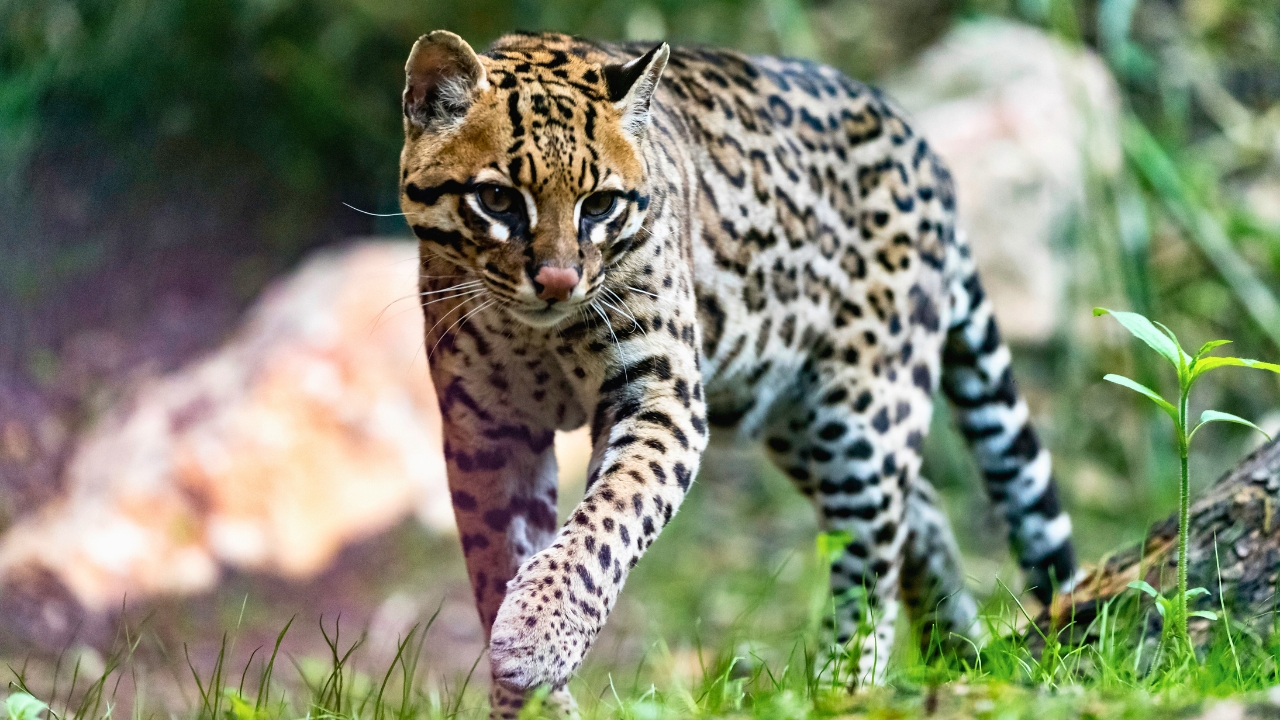
Ocelots are not what most people picture first when they hear “big cats,” but they absolutely belong in this broader range-shift conversation because the official recovery effort in Texas is centered on expansion. The U.S. Fish and Wildlife Service said in 2023 that U.S. ocelots had been reduced to a small group in South Texas and described a plan aimed at expanding their range through reintroduction and habitat work. The agency said the cats were then known only from two small, isolated breeding populations totaling fewer than 100 animals.
That effort has not stayed hypothetical. A 2025 Wildlife Society Bulletin case study on Texas ocelots described reintroduction of an additional population into historic but now unoccupied range as a necessary recovery action and noted that both known breeding populations remain in South Texas. In other words, the spread is not accidental here. It is part of the strategy, because the existing footprint is too small and too fragile to leave untouched.
Even bobcat recovery is helping redraw the cat map
Bobcats are not “big cats” in the strict sense, but they matter here because they show what happens when habitat corridors start working again. In the Northeast, the “Bobcat Alley” conservation push has expanded from an initial 50-square-mile corridor concept to 156 square miles aimed at linking protected landscapes across New Jersey and into wider Appalachian connections. The project exists because bobcats in that region are trying to recover and need room to move.
That is worth paying attention to because it is often how larger cat stories begin too: not with a sudden explosion in numbers, but with better movement through fragmented habitat. If smaller wild cats are finding their way back through restored corridors, that tells you something important about what landscapes still can support when people stop thinking in neat, static range boxes.
What this really means
The real takeaway is not that cat predators are about to flood into suburbia or reclaim every place they once occupied. It is that wildlife range change is often quiet until it is undeniable. Cougars do not need full eastern recolonization to prove the map is shifting; verified dispersal and cub evidence in Michigan already say plenty. Jaguars do not need a breeding U.S. population to show that the Southwest still matters to them. Panthers do not need a dramatic breakout north to prove expansion is the next real conservation question. Ocelots do not need large numbers yet to show that range growth is now official recovery policy in South Texas.
That is why these cats keep turning into more than wildlife trivia. They are not only surviving in pockets. In different ways and at different speeds, they are testing old boundaries. Some are reclaiming space. Some are trying to. Some are being given help to do it. The spread is not uniform, and it is definitely not complete, but it is real enough now that anyone who still thinks the old map is permanent is probably behind the story.
Like The Avid Outdoorsman’s content? Subscribe to our newsletter so you never miss an article.
Here’s more from us: