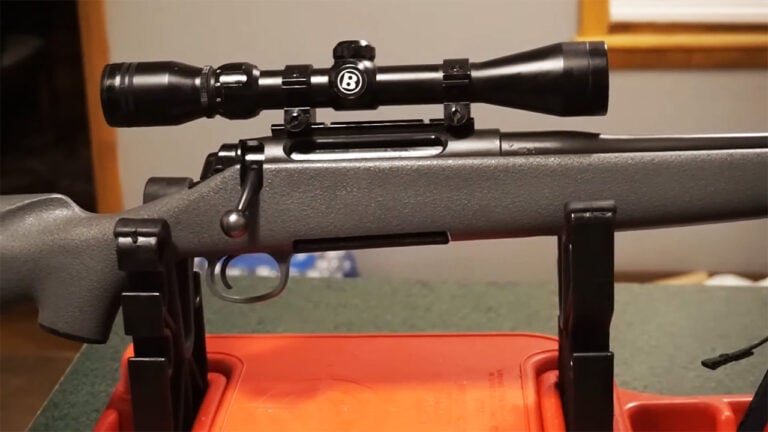
Photo credit: sootch00/YouTube
You usually don’t realize what a gun meant until it’s gone. While it’s still on shelves, it feels like something you can always come back and buy later. Then production ends, the used prices start climbing, and you notice people talking about that model with a tone that sounds a lot like regret. Not every discontinued firearm deserves a second look, but some left a real gap behind them.
That usually happens when a gun did one thing especially well without making a big show of it. Maybe it carried better than newer rifles, fit the hand better than modern pistols, or gave you honest field performance without asking for much. Then it slipped away, replaced by something newer, cheaper to build, or easier to market. These are 15 gun models that disappeared with far less noise than they deserved, and many shooters miss them more every year.
Savage Model 99

The Savage 99 was one of those rifles that felt ahead of its time long before people started talking about “modern” hunting features. It gave you a lever-action rifle that could handle pointed bullets in a way traditional tube-fed lever guns could not, thanks to its rotary magazine. That made it a serious hunting rifle, not only a nostalgic woods gun, and a lot of deer camps leaned on them for good reason.
What made the loss sting more is that nothing else really replaced it in the same way. You could still buy bolt guns and classic lever guns, but the 99 occupied its own lane. It carried well, handled quickly, and offered a kind of practical elegance many newer rifles never matched. Once it disappeared, shooters began realizing how much ground that rifle quietly covered.
Winchester Model 88

The Winchester 88 never got the same broad fame as the Model 94, but plenty of hunters who used one knew exactly what they had. It was a lever-action that handled more like a bolt rifle, fed from a detachable box magazine, and chambered serious hunting cartridges such as .308 Winchester. In the field, that made it far more versatile than many lever guns people group it with.
That is part of why it is missed now. The Model 88 gave you quick handling with more modern cartridge options, and it did it in a package that still felt trim and lively. It was not around nearly long enough to become common in the way some other Winchesters did. Today, the shooters who know them tend to speak about them the same way: a very smart rifle that left too early.
Remington 788

The Remington 788 built a following because it shot far better than many people expected for the price. It was marketed as a more affordable bolt-action rifle, but in real use, it earned a reputation for accuracy that often embarrassed rifles that cost more. For hunters who cared more about what happened on target than what name was stamped on the side, that mattered a lot.
Its disappearance still gets talked about because it represented real value done right. The rear-locking action had its own look and feel, and the detachable magazine made it useful in the field. It was not the prettiest rifle Remington ever made, but it worked. Once it was gone, many shooters started realizing that bargain rifles were not always built with the same honest priorities the 788 seemed to have.
Remington Model 600

The Remington 600 was a short, handy bolt gun that felt made for hunters who actually moved through rough country. With its compact size and light carry weight, it was easy to live with in thick woods or broken terrain. It did not look like a traditional rifle, and that unusual appearance probably kept some shooters from appreciating it while it was still around.
Over time, though, hunters began seeing the appeal much more clearly. The 600 was compact without being useless, and it filled a practical role long before “light mountain rifle” became a major selling point. For the hunter who wanted a fast-handling rifle instead of a long, heavy one, it made real sense. That is why it is remembered now with more affection than it often received when it was still in production.
Marlin 39A

The Marlin 39A was one of those .22 rifles that felt built to outlast the person carrying it. It gave you a smooth lever action, solid steel construction, and the kind of small-game utility that made it easy to keep around for decades. A lot of shooters learned on one, and many more kept one nearby because it was the sort of rifle that always seemed to have a use.
Its absence still feels noticeable because today’s rimfire market leans heavily toward lighter, cheaper rifles. The 39A had a different feel entirely. It was a rimfire with real heft, real history, and real staying power. When it disappeared, it took more than a model name with it. It took away one of the clearest examples of a serious lever-action .22 that felt made for a lifetime, not a sales season.
Winchester 9422

The Winchester 9422 earned respect because it gave you a rimfire lever gun that felt like a real Winchester, not a toy version of one. The action was smooth, the fit was usually excellent, and the rifle carried the kind of quality that made people hang onto them. For shooters who wanted a .22 that still felt like a serious rifle, it hit a sweet spot that was hard to ignore.
That is why its disappearance still bothers people. The used market has made it clear that shooters did not forget what the 9422 was. It handled well, shot well, and had a level of fit and finish that many newer rimfires do not even try to match. Once production stopped, it became easier to see how unusual it really was. People miss it because they know exactly what they lost.
Remington 597

The Remington 597 never had the glamour of some classic .22s, but it did build a loyal following among shooters who wanted a practical semi-auto rimfire with good potential. When it ran with the right magazines and decent ammo, it could be accurate, comfortable, and easy to shoot well. A lot of owners found that it fit them better than some of the more famous alternatives.
Its quiet exit left behind more appreciation than many expected. The 597 was one of those rifles that made more sense after you spent time with it instead of reading about it. It had a useful feel, a stable shooting character, and enough accuracy to keep small-game hunters and plinkers happy. Once it disappeared, many shooters started looking back at it as a rifle that deserved more credit than it got.
Ruger Deerfield Carbine

The Ruger Deerfield Carbine filled a very specific role, and that is exactly why people still miss it. It gave hunters a compact semi-auto chambered in .44 Magnum, making it especially useful in thick cover where shots were close and fast handling mattered more than long-range reach. It was easy to carry, quick to shoulder, and well suited to the kind of hunting many woods hunters still do.
Nothing else has really stepped in to replace it in the same practical way. Plenty of rifles are compact, and plenty of carbines are fast, but the Deerfield had a combination of portability, familiar Ruger durability, and straight-wall authority that made it stand out. When it left, it took a very workable niche rifle off the table. The shooters who used them knew how useful they were long before everyone else caught on.
Smith & Wesson 3913

The Smith & Wesson 3913 came from a time when carry guns were being built with a little more metal and a little less obsession over spec-sheet bragging. It was slim, reliable, and easy to carry, with an aluminum frame and a single-stack 9mm layout that made real sense for concealed carry. It was not oversized, but it also did not feel flimsy or cheap in the hand.
That is why it has aged so well in people’s memories. Many newer carry guns give you more rounds, but the 3913 had a steadiness and shootability that still wins people over. It sat flat, carried cleanly, and felt like a serious sidearm instead of a disposable solution. Once it disappeared, more shooters began realizing that a lot of modern carry pistols may be smaller or lighter, but not always better to live with.
Ruger P89

The Ruger P89 was never the prettiest pistol on the shelf, and that probably kept some buyers from taking it as seriously as they should have. But people who actually ran them learned the truth fast. It was a durable, dependable 9mm built with the kind of overbuilt attitude Ruger was known for at the time. It could take hard use, digest a lot of ammo, and keep going.
That kind of gun tends to be appreciated more after it is gone. The P89 did not win people over with sleek lines or modern styling. It won them over by being hard to wear out. In a market full of pistols built to be thinner, lighter, and flashier, the old Ruger P-series now looks a lot more appealing to shooters who value long-term durability over looking current.
Browning Hi-Power Mk III

The Browning Hi-Power in its later Mk III form stayed in service with shooters for years because it still worked. By then, it was already an old design, but it remained slim, easy to point, and mechanically proven. You got high capacity for its era, a grip shape many shooters still love, and a pistol that carried history without feeling like dead weight on the belt.
What people miss now is not only the design, but the way that version of it felt as a production pistol. The original Hi-Power line had a balance and character that many newer handguns do not share. Yes, modern pistols may be easier to maintain or accessorize, but that is not the whole story. The Mk III is remembered because it gave you a fighting pistol that still felt refined in the hand.
Colt Detective Special

The Colt Detective Special deserves more respect than it often gets in conversations about older carry guns. It gave you six rounds in a compact revolver format at a time when many of its rivals offered five. That extra round mattered, and so did the fact that it remained compact enough to carry discreetly. For plainclothes work and civilian carry, it made a lot of practical sense.
Its disappearance left a gap that people still notice because small revolvers never really stopped being useful. The Detective Special had classic lines, good concealability, and more capacity than its size suggested. In today’s market, six shots in a compact revolver still sounds appealing. The fact that shooters keep coming back to that point says a lot. Colt let a very workable revolver fade away, and people have not forgotten it.
Colt Woodsman

The Colt Woodsman was one of those .22 pistols that made you understand why older rimfires still have such a hold on serious shooters. It was accurate, well-balanced, and built with the kind of fit that made it feel more like a real field pistol than a casual plinker. Whether you were using it for small game, trail carry, or range time, it had a level of polish people still talk about.
Its absence still stands out because so many newer rimfire pistols are made to hit a lower price point first. The Woodsman belonged to a different era. It offered handling and craftsmanship that are much harder to find now in a production .22 handgun. Once it disappeared, it became even more obvious how few modern pistols really try to fill that same space with the same kind of care.
Smith & Wesson 4506

The Smith & Wesson 4506 was a big, all-stainless .45 that never tried to be anything other than a serious duty pistol. It was heavy, durable, and built for hard service in a way that gave shooters a lot of confidence. People who carried them or shot them regularly knew they were dealing with a pistol that felt strong in every sense of the word.
That is exactly why it is missed now. The market moved toward lighter polymer guns, and that shift made sense in plenty of ways, but something was lost too. The 4506 had weight, but that weight gave it a steady shooting character and a kind of mechanical assurance many shooters still appreciate. It was not built around trends. It was built to last, and that kind of pistol always gets more respect once it is gone.
Ruger Red Label

The Ruger Red Label meant a lot to shooters who wanted an American-made over-under that felt built for real field use. It offered a practical alternative in a market where good over-unders often came with eye-watering price tags. Hunters and clay shooters liked it because it was solid, familiar, and carried the kind of working-gun appeal that made people comfortable actually using it.
Its quiet disappearance is still felt because affordable over-unders are not all equal, and the Red Label had a following for a reason. It gave shooters a domestic option with real usefulness and real character. When it went away, there was no perfect replacement waiting in the wings. For a lot of bird hunters and shotgun fans, that model represented a dependable middle ground that is much harder to find now.
Winchester Model 100

The Winchester Model 100 is often overlooked in these conversations, but it deserves a place because it gave hunters a semi-auto centerfire rifle that carried well and felt at home in the deer woods. It offered quicker follow-up potential than a bolt gun while still handling like a practical hunting rifle. For the shooter who wanted a fast second shot without carrying something bulky, it made plenty of sense.
It is missed more now because the rifle came from a period when semi-auto hunting rifles still had a trim, classic feel. The Model 100 looked and handled like a hunting rifle first. That still matters to a lot of shooters. Once it disappeared, it left behind a style of centerfire semi-auto that many hunters still wish had stayed in the catalog longer than it did.
Like The Avid Outdoorsman’s content? Subscribe to our newsletter so you never miss an article.
Here’s more from us: