Photo credit: Brownells, Inc./YouTube
When you spend enough time around guns, you start to realize something: firearm history is a long trail of smart ideas, hard lessons, and a whole lot of experiments that looked great on paper. Some designs were built to solve a real problem that soldiers, cops, or hunters were dealing with at the time. Others were somebody swinging for the fences because they were convinced they could out-think physics, logistics, and dirt.
You can learn a lot from the oddballs. They show you what designers feared, what they valued, and what they were willing to trade away to get an edge. Some of these guns worked better than they had any right to. Some were dead ends. All of them are worth knowing about, because they explain how we got to the firearms you trust today.
MBA Gyrojet Pistol

If you ever wanted proof that gun designers will try anything, the Gyrojet is it. Instead of firing a normal bullet, it launched tiny rocket projectiles that sped up after leaving the barrel. That meant low recoil and a very different feel at the trigger.
In theory, it was brilliant. In practice, the ammo was the whole game, and it was finicky. At very close range the projectile had not built full speed yet, so performance could be underwhelming compared to what you expected. Accuracy also depended heavily on consistent rocket manufacturing, and that was a tall order. It remains one of the most memorable attempts to replace the cartridge with something that behaves like a miniature missile.
Dardick Model 1500
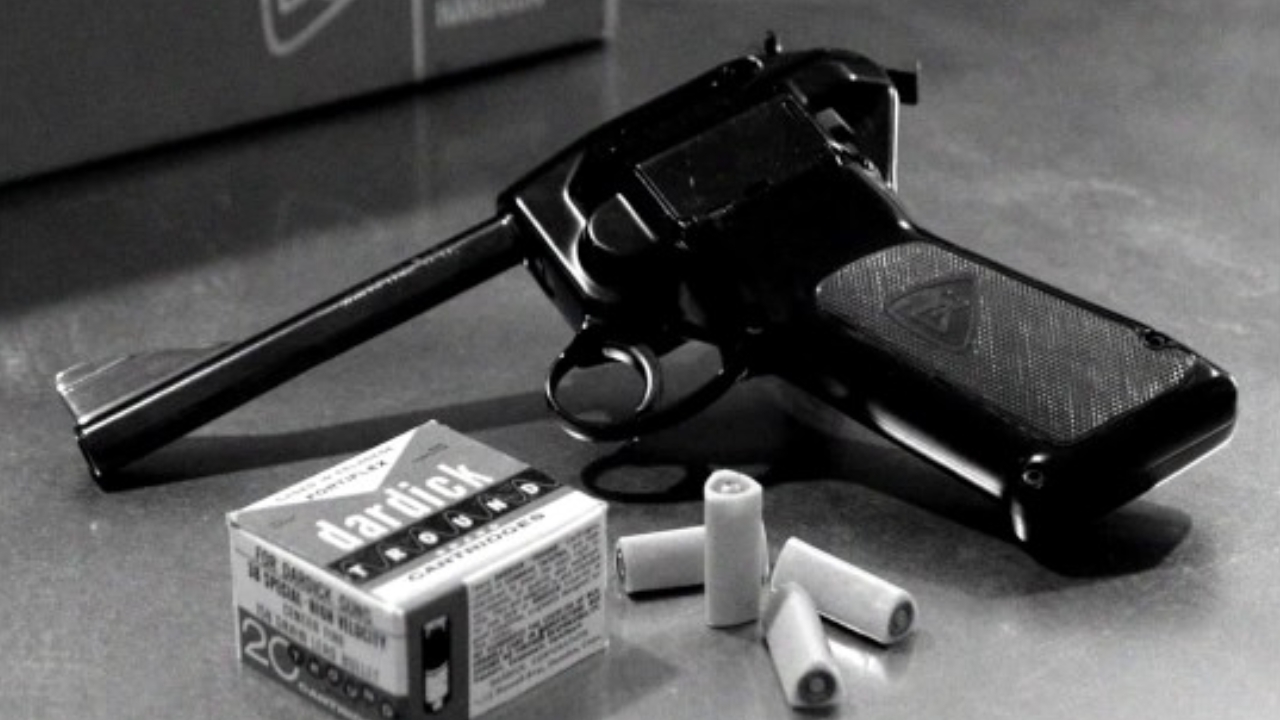
The Dardick is the kind of gun that makes you stop and stare because the chamber is literally open on one side. It used triangular cartridges called trounds, and the pistol’s frame filled in the missing wall as the round lined up to fire. It looks wrong until you understand what you are seeing.
The goal was to create a system that could feed reliably and potentially be cheaper to produce at scale. The tround concept also allowed some flexibility in how the cartridge case could be built. The problem was adoption. A new ammo format has to be better enough that people change habits, supply chains, and tooling. That is a brutal hill to climb. The Dardick is a classic example of a clever engineering solution that never found a big enough world to live in.
Puckle Gun

The Puckle Gun shows that people were chasing higher rates of fire long before modern machine guns. It was an early 1700s crew-served firearm with a revolving cylinder, meant to speed up loading and keep shots coming in a steadier rhythm than a single-shot gun could manage.
The design is famous not because it dominated battlefields, but because it captured the idea of a repeating mechanism in a time when manufacturing was still inconsistent. Even small tolerance issues can wreck reliability in a rotating system. It also faced the old problem of any complex weapon: training, maintenance, and cost. You can build something advanced, but if it is fragile, slow to service, or expensive to field, it stays a curiosity. The Puckle Gun ended up being a glimpse into the future rather than a tool that changed its present.
Duck’s Foot Pistol

This one looks like somebody tried to build a handgun for a bar fight and a pirate movie at the same time. A duck’s foot pistol spreads multiple barrels outward so you can fire several shots at once in different directions. It is as dramatic as it sounds, and that is part of why it sticks in your memory.
The idea was crowd control at close range, whether on a ship’s deck or in a tight hallway. The tradeoff is obvious the moment you picture it in your hands. Multiple barrels mean more weight up front, more complicated loading, and recoil that can feel unpredictable because you are launching several projectiles at once. It is not a precision tool. It is a blunt instrument built around fear of being outnumbered, and it says a lot about the environments it was meant for.
LeMat Revolver

The LeMat is one of those designs that makes you wonder why it is not in more movies. It looks like a normal revolver at a glance, but it hides a second barrel running through the center of the cylinder. That center barrel was typically a shotgun bore, giving you a close-range option that no standard revolver offered.
It was carried by some Confederate officers during the Civil War, and it earned a reputation for being formidable in the kind of messy, close fighting where a single heavy blast could end the problem fast. The downside was weight, complexity, and the realities of keeping a specialized weapon fed and maintained in wartime. The LeMat was not a mass-issue solution, but it remains an all-time example of designers trying to stuff multiple roles into one sidearm without caring how strange the final package looked.
Colt 1855 Revolving Rifle
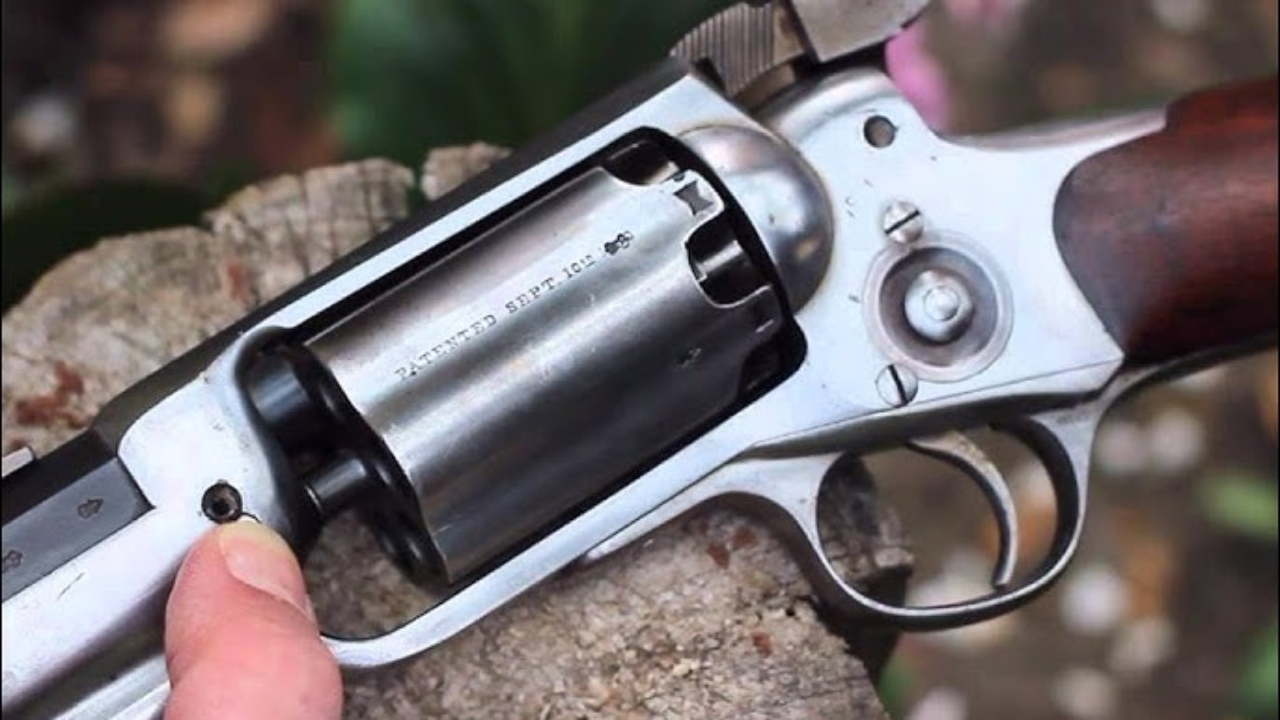
A revolving rifle sounds like a smart way to get fast follow-up shots before magazines were common. Colt proved you could do it, and the 1855 series put a revolver-style cylinder behind a rifle barrel to boost capacity and rate of fire.
Then reality showed up. That cylinder gap you tolerate on a handgun becomes a different animal on a long gun where your support hand is close to the front of the cylinder. Hot gas and debris venting sideways is not a small concern when your fingers are right there. Fouling could also bind the action, especially with black powder. You end up with a rifle that can shoot fast for a while, but asks you to accept safety and reliability compromises that most shooters will not. It is an important stepping stone, and also a reminder that scaling a handgun concept up is not always clean.
Krummlauf Curved Barrel
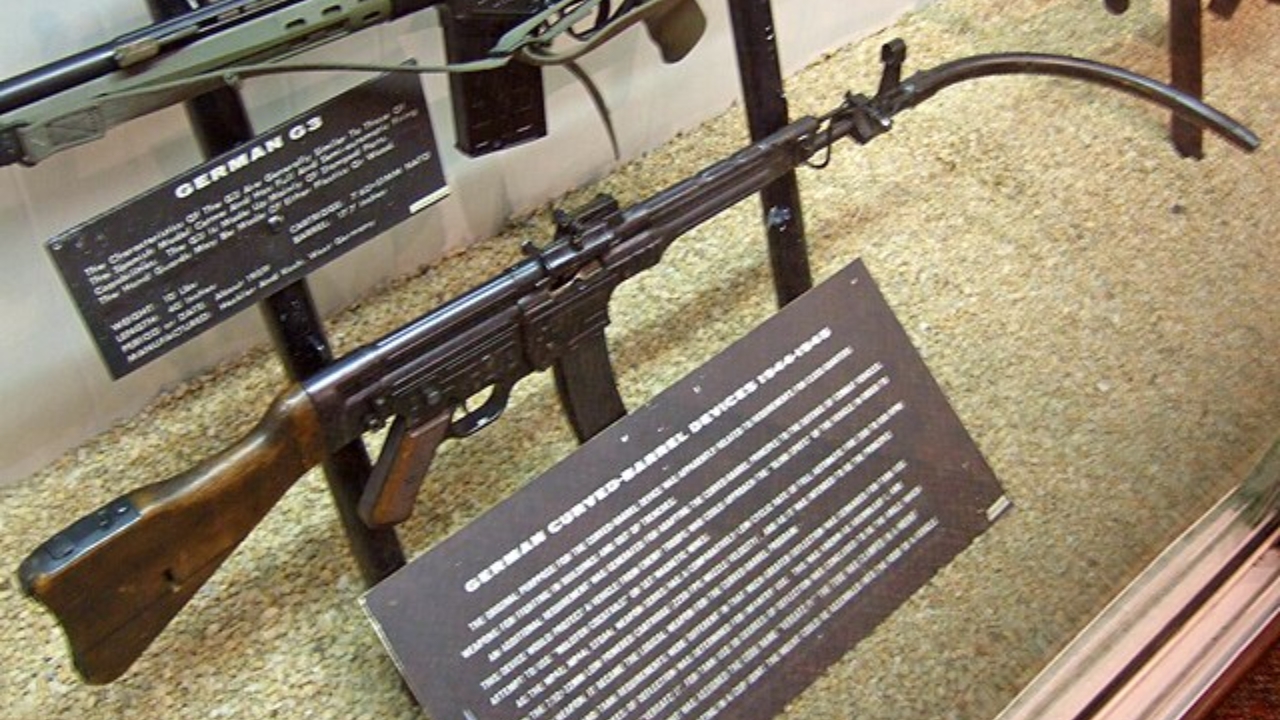
If you have ever wished you could shoot around a corner without exposing yourself, you are thinking along the same lines that led to the Krummlauf. It was a curved barrel attachment developed for the German StG 44, intended for firing from behind cover or from inside armored vehicles.
The concept is clever and also brutally hard on equipment. Bullets do not love being forced through a curve at speed, and the stresses are punishing. Accuracy suffers, velocity can drop, and barrel life becomes short because the projectile and hot gases are scraping and hammering their way through that bend. It was not a general-purpose solution, but it is absolutely one of the strangest serious military attempts to change geometry instead of tactics. When you see one, you understand why it stayed a niche tool.
Heckler and Koch G11
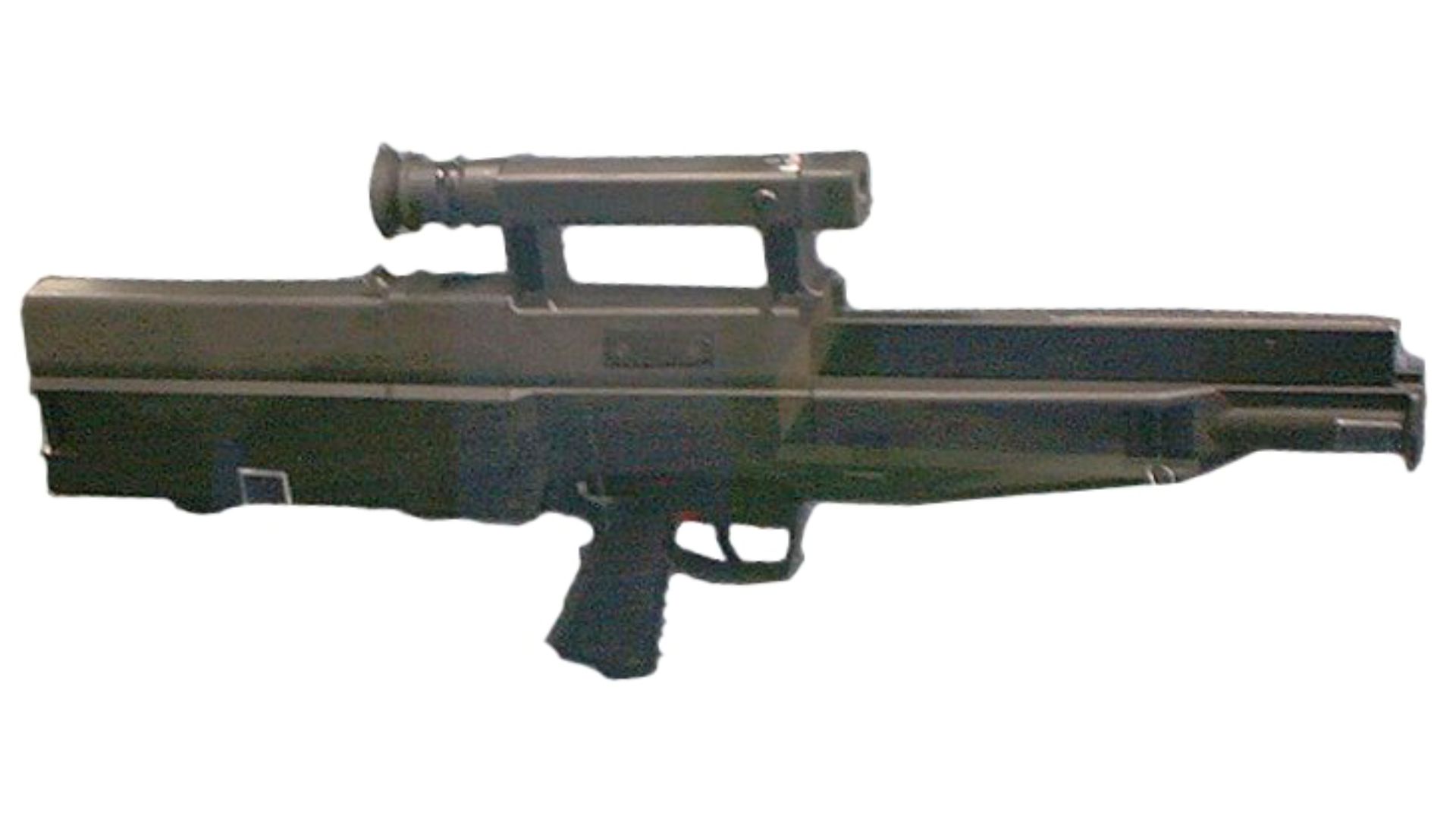
The G11 looks like it came from a future that never happened, and in a way it did. It was built around caseless ammunition, meaning there was no brass case to extract and eject. That allowed a compact package and a very unusual internal mechanism designed to keep the system running cleanly and fast.
Caseless ammo also creates headaches you do not get with brass. Heat management becomes a major concern because cases normally help carry heat away, and extraction problems are replaced by different failure modes. The rifle’s rotating chamber and complex action were engineering art, but complexity can be the enemy of mass adoption. Costs rise, maintenance gets harder, and logistics become a nightmare because you are betting everything on a new ammo ecosystem. The G11 is famous because it was so close, and because it showed how far a company would go to chase a leap instead of an upgrade.
Pancor Jackhammer

Few guns have a name that fits their reputation as well as the Jackhammer. It was a select-fire shotgun concept with a futuristic look and an internal drum magazine. It promised a compact, fast-cycling package that could deliver serious firepower without the bulk of older combat shotguns.
The reason it stays in the conversation is partly because it never truly became a mainstream production firearm. Prototypes and limited examples exist, but it did not end up as a widely issued or commonly owned design. That adds to the mystique, but it also points to the hard part of taking an ambitious concept into real manufacturing and real end users. Shotguns are already a tough platform to make run smoothly under high rates of fire because shells vary and recoil is heavy. The Jackhammer remains a symbol of what designers wanted, even if the market never got the finished product.
Metal Storm
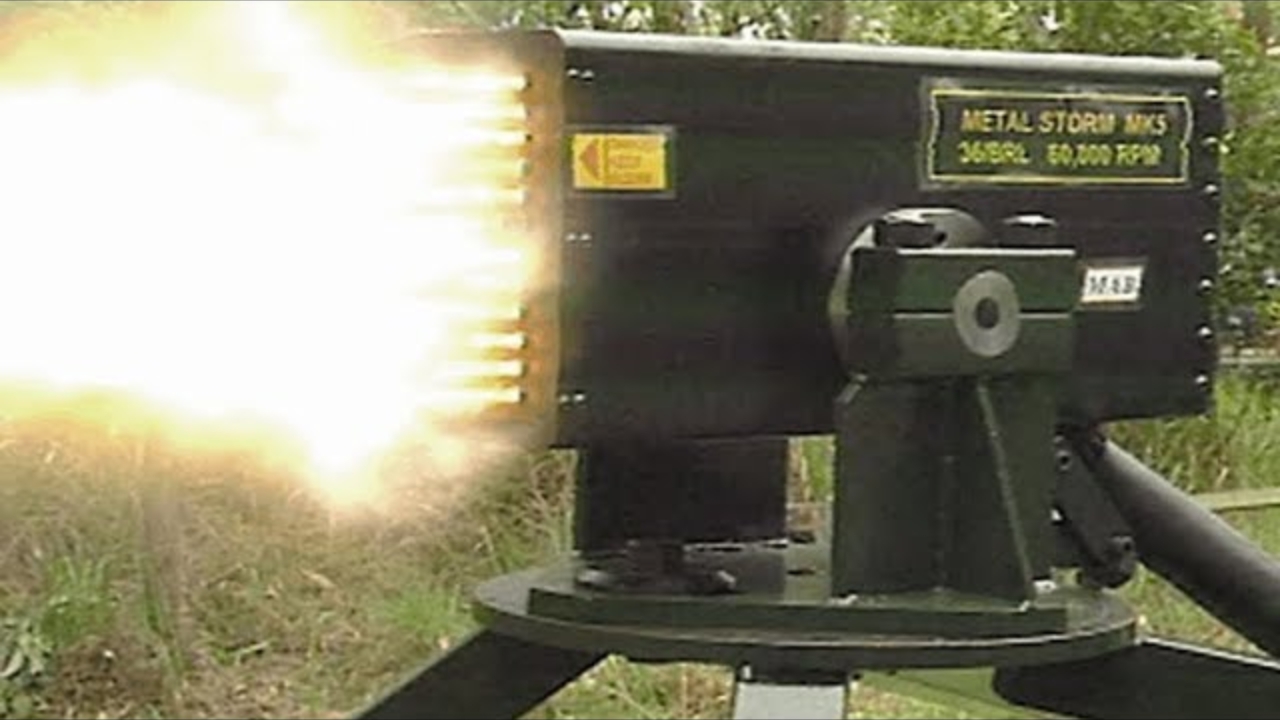
Metal Storm is one of the wildest departures from traditional firearms thinking. Instead of feeding individual rounds through a chamber, it used stacked projectiles in a barrel and fired them electronically. In theory, that allowed extremely high rates of fire with fewer moving parts than a conventional machine gun.
The concept is real, and demonstrations showed it could work, but turning it into a practical field weapon is another story. You still have to deal with heat, barrel wear, and the fact that reloading stacked projectiles is not like swapping a magazine. The system also leans heavily on specialized ammunition and electronics, which raises costs and complicates support. Metal Storm is important because it proves you can rethink the idea of what a gun even is. It also proves that new physics does not automatically translate to a better tool for real-world users.
Harmonica Gun
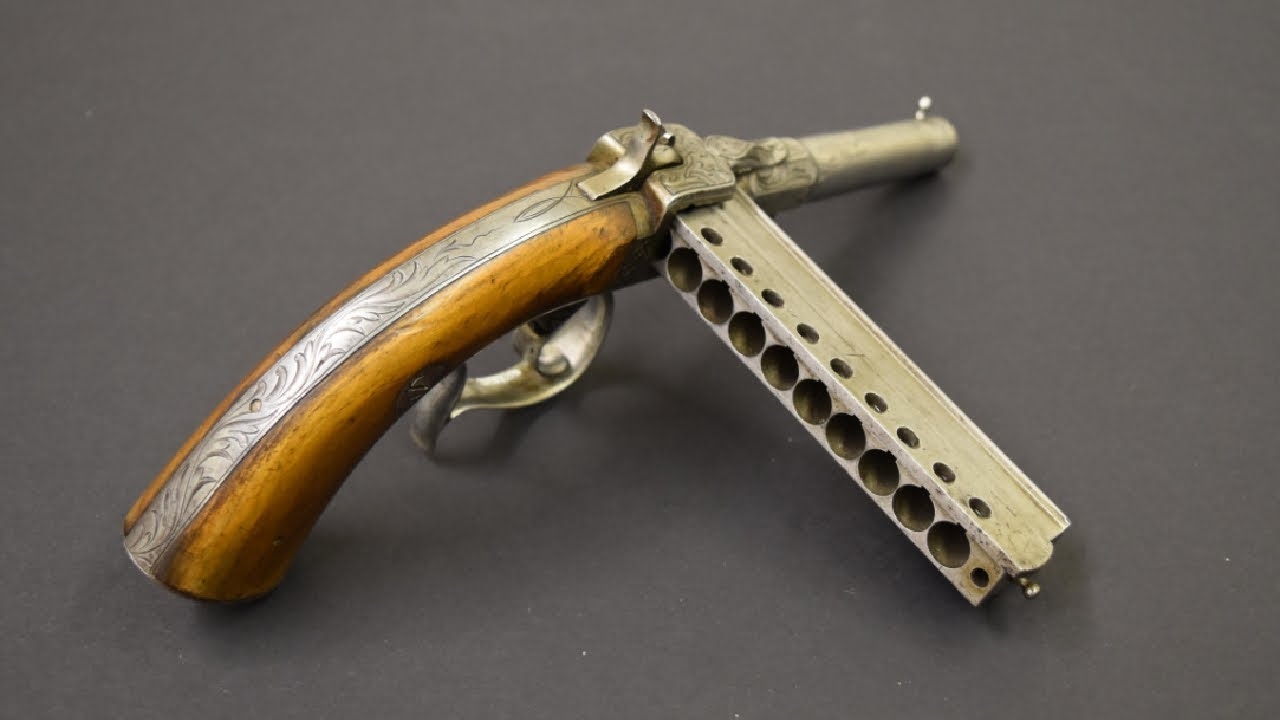
The harmonica gun looks like a firearm designed by someone who hated cylinders and wanted to try something new. Instead of a revolver cylinder, it used a sliding bar of multiple chambers, moving side to side like a harmonica. Some 1800s designs paired that with percussion ignition, creating a repeating system that was visually unmistakable.
It solved one problem and created several others. The sliding chamber bar had to line up precisely with the barrel and the firing system, and any dirt or wear could throw things off. Reloading also had its own complications depending on the exact design. Still, these guns show you how creative the early repeating era really was. Before the industry settled on magazines and standard cylinders, inventors were experimenting with any geometry that might hold more shots and speed up the next one. The harmonica gun is a reminder that the road to modern repeaters was anything but straight.
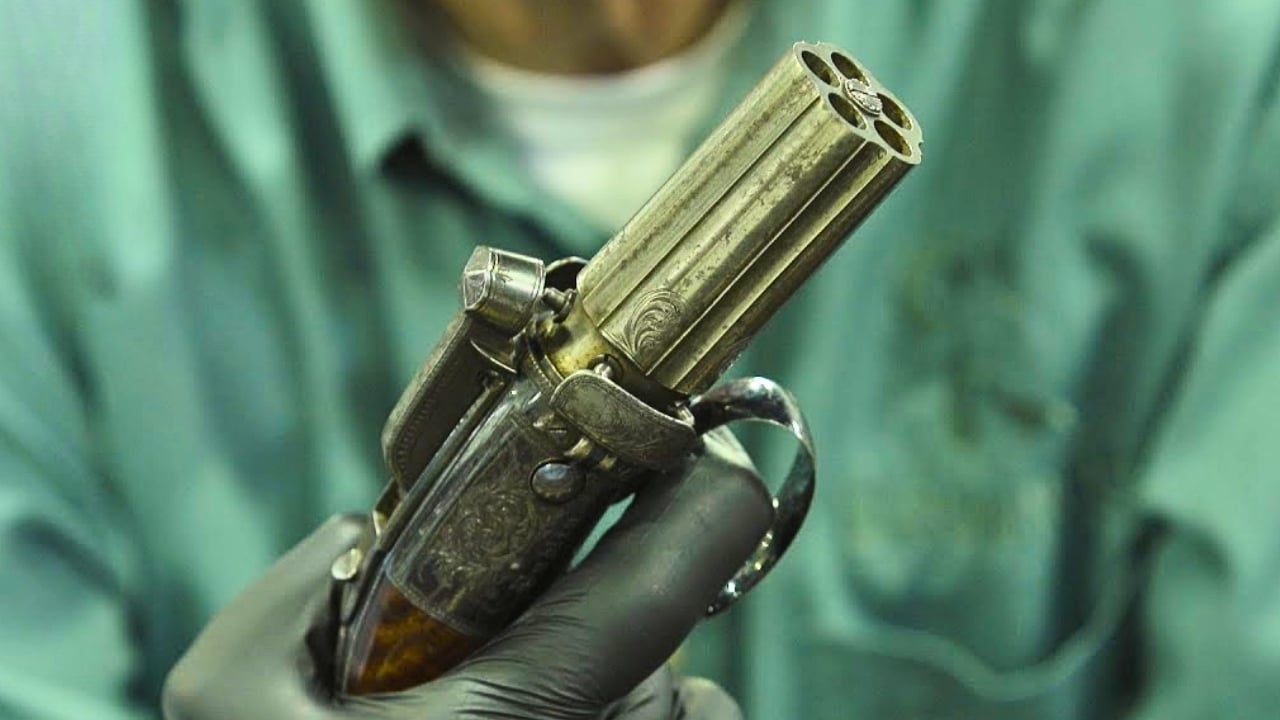
Pepperbox Pistol
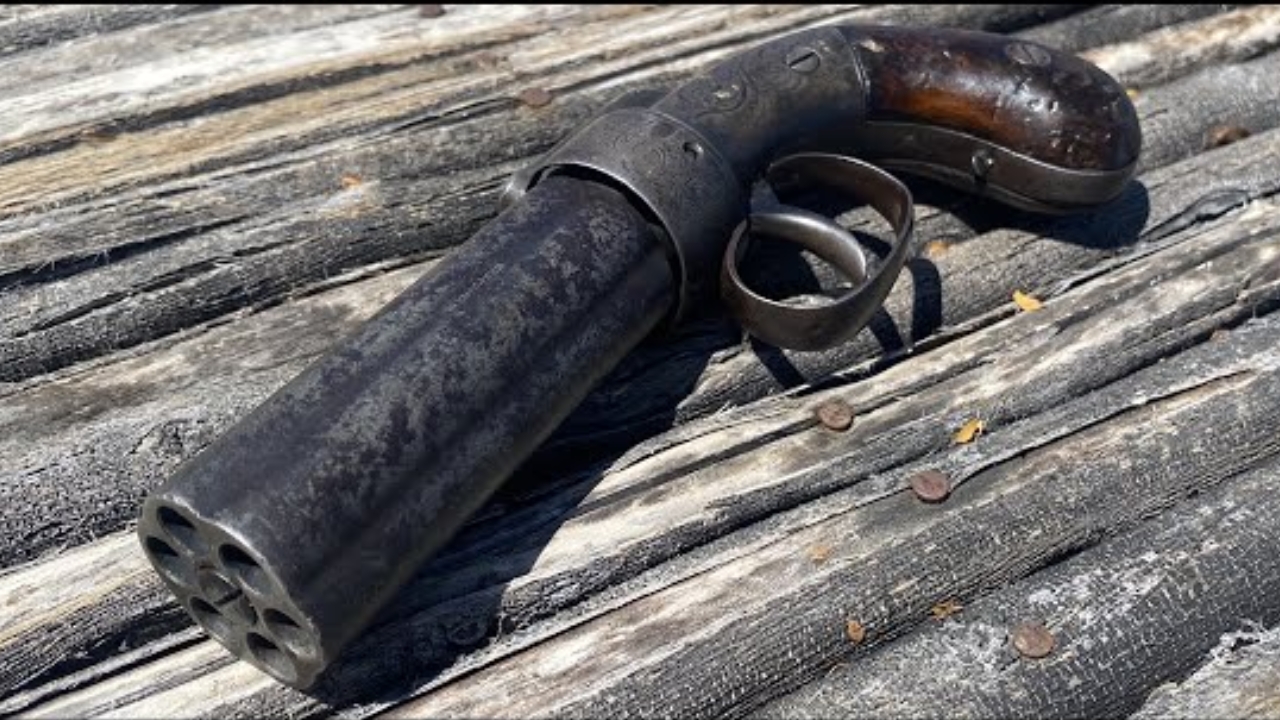
Pepperbox pistols were the answer to a simple desire: more shots before you have to reload, in an era when single-shot pistols were common. Instead of one barrel and a rotating cylinder, a pepperbox rotates multiple barrels around a central axis. Each barrel is its own chamber, and the whole bundle turns as you fire.
The design offered capacity and simplicity of ignition, but you paid for it in weight and handling. A cluster of barrels makes the front end heavy, and sighting can be crude. Accuracy was often not the point. These were close-range defensive guns for people who wanted several chances quickly. Pepperboxes also show how repeating systems evolved under constraints of manufacturing and ignition technology. They were never the final answer, but they were a practical stop along the way. When you hold one, you understand why people accepted the awkward shape in exchange for more loaded shots.
Welrod Suppressed Pistol
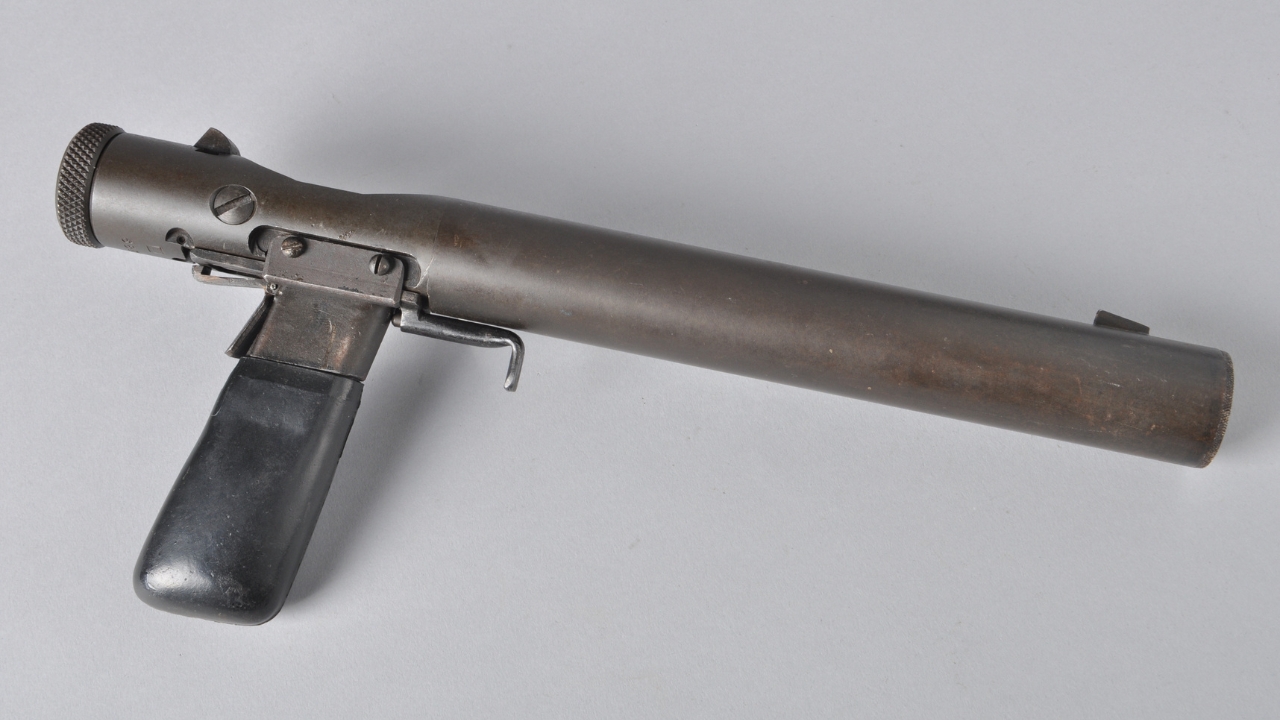
The Welrod is one of the strangest serious pistols ever issued because it looks almost homemade and purpose-built at the same time. It was a suppressed bolt-action pistol developed for clandestine work during World War II. Yes, bolt-action. You manually cycle it after firing, which sounds slow until you understand the mission.
The Welrod was designed to be quiet and discreet, not fast. A bolt action allowed better control of the cartridge cycle and reduced noise compared to many self-loading systems. Its shape also kept things low profile, and it could be carried without drawing attention in the ways a normal handgun might. It is not a range toy concept. It is a tool built for a narrow job, where the first shot matters most and the rest of the world cannot know it happened. The Welrod proves that sometimes the weirdest guns come from serious requirements, not marketing.
FP-45 Liberator

The FP-45 Liberator is a single-shot pistol that was never meant to be admired. It was designed for cheap, fast production during World War II, intended to be dropped into occupied territory as a last-ditch weapon. It is crude by design, and that is what makes it so unusual.
The Liberator was meant to be used at extremely close range to obtain a better weapon, not to serve as a long-term sidearm. That intention shaped everything about it: minimal parts, minimal cost, and minimal time on the assembly line. It came with basic instructions and a handful of cartridges, all focused on the idea of desperation and opportunity. Today it is a historical artifact that makes you think about wartime logistics and psychology as much as mechanics. It is one of the clearest examples of a firearm built around strategy and manufacturing limits instead of shooter comfort.
Villar Perosa M1915
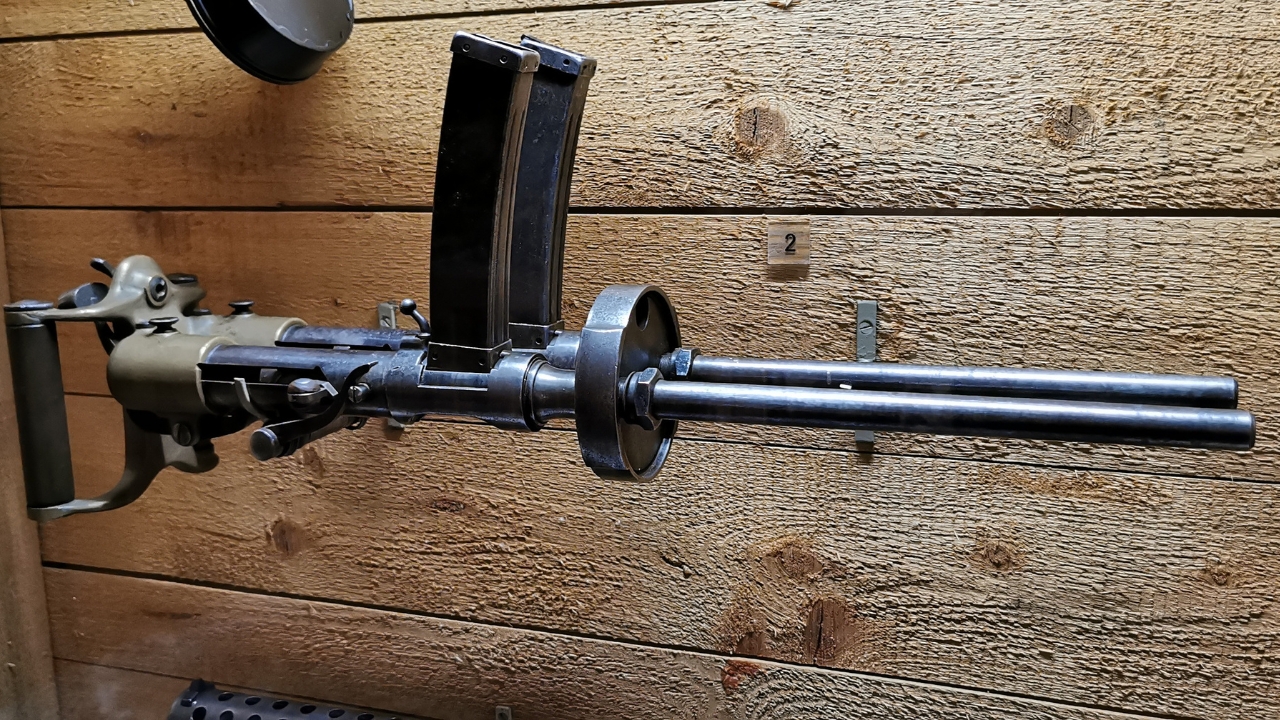
The Villar Perosa is a reminder that early automatic weapons were a chaotic laboratory. Italy built this odd twin-barreled, pistol-caliber machine gun during World War I. It fired from two side-by-side actions and was originally conceived for aircraft use, which should tell you how experimental the era was.
On the ground, it was both impressive and awkward. The high rate of fire could be startling, and the twin layout gave a wall of bullets, but the caliber and range limited its effectiveness compared to full-power rifle cartridges. It also demanded a mounting approach and handling techniques that did not match how infantry wanted to fight. Over time, the concept influenced other submachine gun development, but the original Villar Perosa remains one of the strangest shapes that ever saw real military use. When you look at it, you can almost hear engineers arguing about what the future of firepower should look like.
Like The Avid Outdoorsman’s content? Subscribe to our newsletter so you never miss an article.
Here’s more from us: