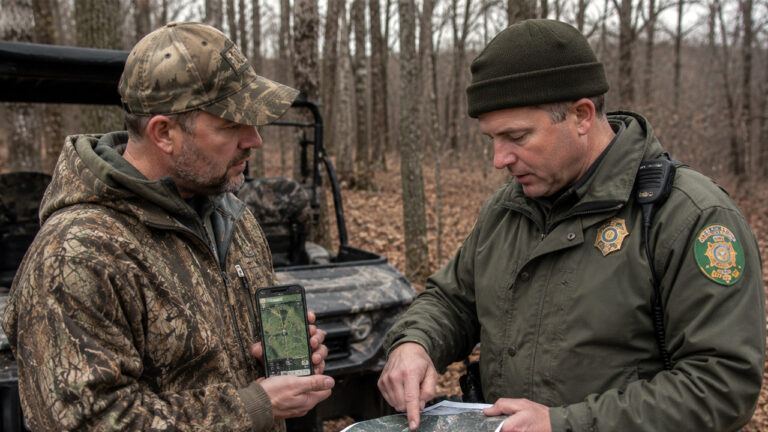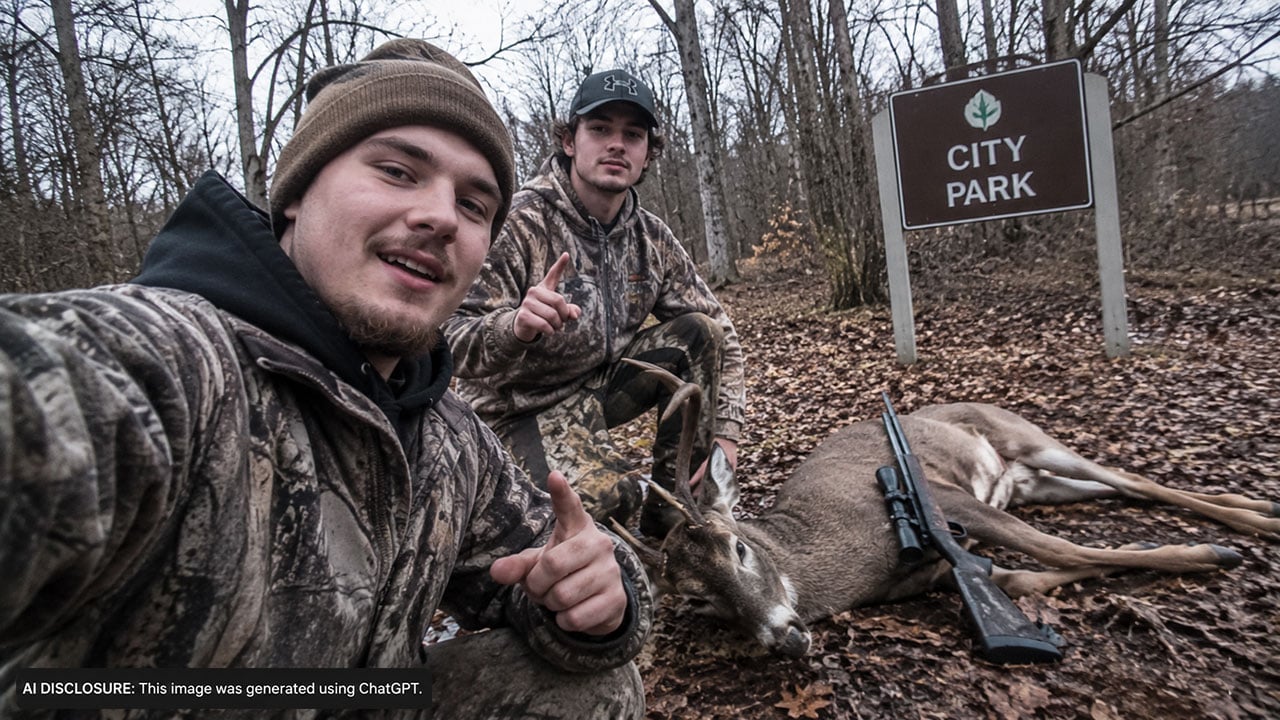
Photo credit: AI-generated image created using ChatGPT. Illustrative only
Most guys who hunt the right way try to keep their head down and do things by the book—permission, tags, seasons, and a clean kill. That’s why cases like this one hit so hard: two Ohio cousins didn’t just break rules, they filmed themselves chasing deer where hunting wasn’t allowed and stacked up a combined 40 guilty pleas once the evidence caught up with them.
The details came out in the original post from Outdoor Life, which also ties their case to another Ohio poaching investigation involving a young traveling hunter and a long list of wildlife violations across multiple states. Different situations, same theme: social media “content” doesn’t excuse illegal hunting.
A city park isn’t “public land hunting”
The cousins—William Bethel, 28, and Justin Booth, 23—were caught pursuing deer inside Three Creeks Metro Park, a roughly 1,100-acre city park where hunting is not allowed. That’s not a gray area or a “rules are confusing” situation. If hunting is closed, it’s closed, even if there are deer everywhere and even if the place looks like perfect habitat.
A lot of hunters hear “park” and think trails, playgrounds, and dog walkers. That matters, because discharging a weapon around urban edges or high-traffic recreation areas is where a bad decision can turn into a tragedy fast—even before you get to the poaching side of it.
The case was built on proof, not rumors
According to the report, evidence was collected at the park using trail cameras. That’s a big point for anybody dealing with trespass or illegal hunting pressure: proof changes everything. A hunch, a rumor, or “my buddy said” doesn’t carry the same weight as images that show exactly who was there and what they were doing.
There’s also a quiet lesson here for the guys doing wrong: the outdoors is full of cameras now. Parks have them. Landowners have them. Sometimes other hunters have them. When someone decides to treat a place like their personal honey hole, it’s not hard for an investigator to start building a timeline.
They weren’t just taking deer—they were selling a fake image
One of the most telling quotes came from Mark Williams with the Ohio Division of Wildlife’s Franklin County office, who said, “They treated it like it was their private hunting preserve.” He went further and explained it wasn’t about selling deer for market. It was about selling the experience—“dress it up like I’m an honest hunter instead.”
That’s the part that burns legitimate hunters. The damage isn’t only a dead deer. It’s the way this kind of behavior poisons public trust, especially in areas where hunting access is already under pressure. When non-hunters see “hunters” breaking rules in a city park for clicks, it gives anti-hunting voices fresh ammunition.
The penalties were expensive, restrictive, and timed to hurt
Bethel and Booth ended up with 40 guilty pleas combined. The penalties weren’t a slap on the wrist, either: more than $37,000 in penalties, plus nine days of jail time that must be served during the 2026–2027 hunting season.
They also can’t hunt, fish, trap, or even visit parks for five years. That last part is easy to overlook, but it’s a big lifestyle hit. A lot of folks don’t just hunt—they hike, scout, shed hunt, take their kids to trails, and spend their free time outdoors. Losing park access for half a decade is a hard door slam.
Another Ohio case shows how social media bragging can backfire
This cousins case was mentioned alongside another Ohio poaching investigation involving Carter Hickey, 21. Hickey pled guilty in May to 17 counts of poaching, with violations listed as taking wildlife out of season, illegal possession, hunting without permission, spotlighting, using a vehicle to aid in killing wildlife, and failing to follow game check rules.
Federal officials said tips and complaints led them to “something much bigger,” alleging Hickey violated wildlife laws in at least 17 states. His penalties included $33,500 in fines and restitution, 15 days in jail, 80 hours of community service, and a five-year hunting and trapping ban. He also surrendered three guns, a bow, blinds, decoys, 115 pounds of turkey meat, and 47 turkey fans.
And here’s the kicker: because officials said he posted false information on TikTok “bragging about his hunting skills” while actions were illegal, he was ordered to post an apology video on the same platform. He also had to send an apology letter to the city of Dover, Ohio for trespassing and poaching a 10-point buck in a public park.
The practical takeaway for honest hunters and landowners
There are a few common-sense lessons here, and none of them require getting dramatic. First, if you’re hunting, know the exact rules for that exact property—especially parks and metro areas where regulations can be different than nearby state ground or private farms.
Second, if you’re a landowner or a hunter dealing with trespassers, documentation matters. Trail cameras, clear boundary marking, and timely reporting are what turn “somebody’s been sneaking in” into a case that can actually be enforced.
Third, don’t confuse online attention with woodsmanship. Real hunters don’t need to dress up illegal activity like it’s skill. In these Ohio cases, the cost wasn’t just money and jail—it was years of lost seasons and a stain that follows you a lot longer than any short-lived social media clip.
Like The Avid Outdoorsman’s content? Subscribe to our newsletter so you never miss an article.
Here’s more from us: