Photo credit: Theavidoutdoorsman.com
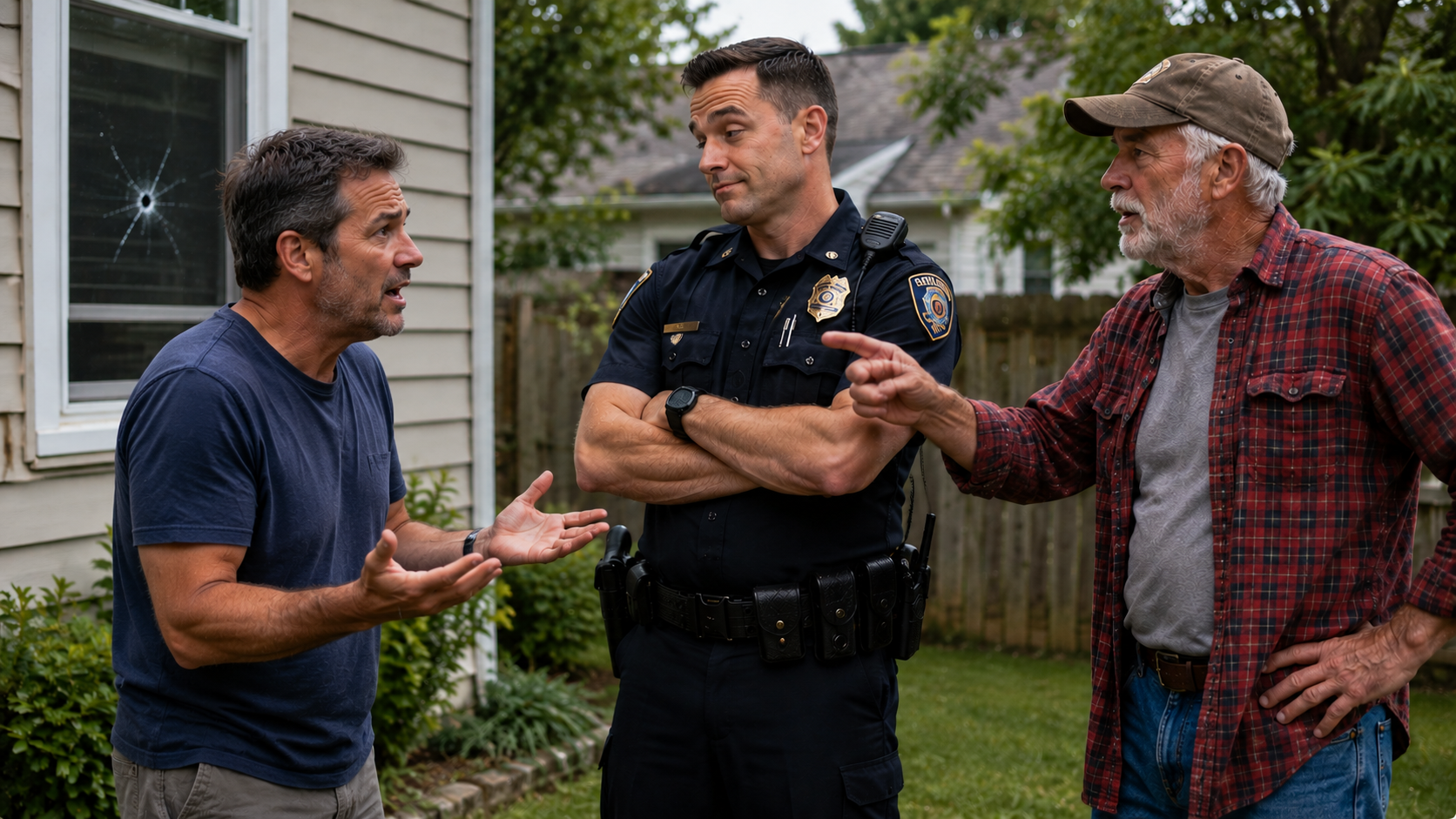
It’s the kind of sound that doesn’t fit with making dinner: a sharp crack, then a pop and a hiss of glass. One rural homeowner stepped into his kitchen to find a fresh hole punched through the window, a dusting of shattered glass on the counter, and a small, ugly dent in the drywall beyond it.
At first, he figured it was a rock from the mower or a stray pellet from somebody plinking too close. Then he found the slug—deformed, gray, and warm enough to make his stomach drop. That’s when he picked up the phone and called law enforcement, expecting the situation to be treated for what it was: a round that crossed property lines and entered an occupied home.
The shot line didn’t make sense until they walked the fence
In a lot of country neighborhoods, you can stand on a back porch and see three or four other places where folks shoot—dirt berms, old stumps, a line of steel hung from a crossbar. This homeowner had lived with that reality for years and didn’t have a problem with it, as long as people did it right.
But the angle of the hole told a story. The round came in slightly downward, like it had been lobbed or skipped, not fired into a safe backstop. The homeowner and the responding officer paced off the distance and sighted across the yard toward the neighboring property. A short walk along the fence line put them in view of a makeshift target area—paper stapled to plywood, a few chewed-up 2x4s, and a patch of bare dirt that didn’t look deep enough to catch much.
When the neighbor came out, he admitted he’d been shooting earlier. He pointed toward the targets and said he was staying on his land. That’s usually where the conversation turns to backstops, safe directions, and the fact that “staying on your land” doesn’t mean much if your bullets don’t.
When the officer showed up, the homeowner expected a safety-first response
The homeowner’s ask was simple: document the damage, collect the projectile, and make sure the shooting stopped until it could be done safely. In his mind, it wasn’t about punishing a neighbor—it was about not having another round come through the house the next time somebody decides to sight in before dark.
Instead, the tone reportedly shifted fast. The officer took a look at the window, stepped outside, and focused on whether the homeowner had “proof” that the neighbor’s gun fired that exact round. He also zeroed in on whether the homeowner had any “No Trespassing” or “No Shooting Toward Homes” signs posted—like signage somehow changes what a bullet does when it leaves a muzzle.
In rural areas, a lot of disputes get handled with common sense and a handshake. But once a responding officer is on scene, common sense is supposed to be paired with a basic understanding of firearms safety: you’re responsible for every round you send, and you don’t shoot without a backstop that can stop it.
The neighbor’s “range” setup was the real issue
Most of us who grew up shooting behind the barn learned the hard way that dirt isn’t automatically a backstop. A shallow mound, hard-packed clay, or a target stand set on flat ground can all lead to skips and ricochets. The round that came through the kitchen window didn’t have to be “aimed” at the house to end up there.
From what was described on scene, the neighbor’s target area looked more like a weekend plinking spot than a purpose-built berm. No railroad ties, no stacked sand, no real earthwork—just a general direction and the assumption that “it’s fine.” That assumption can put holes in siding, destroy windows, and in the worst cases, hurt somebody.
There’s also the reality of common calibers. A .22 LR can travel farther than folks think, and centerfire rounds can go a long, long way if fired at a shallow angle. Even handgun rounds can skip off hard ground or rocks and stay unpredictable. Safe direction isn’t a vibe—it’s geometry, dirt depth, and what’s beyond.
The moment the officer sided with the shooter, everything got harder
The homeowner expected the neighbor to be told to stop shooting until he built a proper backstop or changed direction. What he got was closer to a shrug. The officer reportedly treated it like a “neighbor dispute” and suggested the homeowner “work it out” or take it to civil court if he wanted reimbursement for the broken window.
That’s a tough pill to swallow when you’re staring at a bullet hole that could’ve been a few feet higher and hit someone. Property damage is one thing. A round entering an occupied dwelling is another category entirely, and most folks—gun owners included—expect that to be taken seriously.
The other practical problem is that once an officer signals it’s not a big deal, the homeowner is left trying to solve a safety issue without authority. And in the country, confronting a neighbor about guns can go sideways quick if tempers are hot or pride gets involved.
Commenters zeroed in on documentation, cameras, and calling the right people
When stories like this get passed around in hunting camps and local groups, the same advice shows up every time: document everything. Photos of the hole, the glass, the interior impact point, and the projectile if it can be safely recovered. Measurements. A sketch of the likely line of fire. Keep the case number. Get names and badge numbers if it’s offered.
More than a few outdoorsmen also pointed to trail cameras and driveway cameras as a practical tool—not to “spy” on a neighbor, but to establish a timeline. If the neighbor is shooting and a fresh impact shows up minutes later, that’s not a courtroom-level ballistic match, but it’s a lot better than “he said, she said.”
Others suggested contacting a supervisor or requesting a second response, especially if the initial officer seemed unfamiliar with what constitutes a safe shooting setup. And while game wardens don’t handle every gun incident, many states have conservation officers who understand rural firearms use better than a town-trained patrol officer. The key is keeping it calm and professional: you’re reporting a safety hazard and property damage, not trying to win a feud.
What the homeowner could do next without making it worse
In a perfect world, the neighbor would recognize how bad this was and fix his setup immediately. A proper berm, a different shooting direction, or taking the shooting to a real range solves the problem fast. A quiet conversation, done at the right time, can still work—especially if it’s framed as “I’m not trying to stop you from shooting, I’m trying to keep rounds out of my house.”
If that doesn’t work, the next step is usually formal: a written request to stop shooting in that direction, filed complaints with documentation, and, if needed, a civil claim for damages. Some homeowners also involve their insurance, not because they want a payout, but because insurers tend to take “projectile entered dwelling” seriously and may push for accountability.
And for the shooter reading this: if you’ve got a backyard setup, go look at it like a stranger would. Walk past the targets. Look at what’s beyond. If you don’t have a berm that can reliably stop rounds, you don’t have a safe range—period.
Country living comes with noise, dust, and neighbors doing neighbor stuff. A bullet through a kitchen window isn’t “country living.” It’s a warning shot from reality that something is wrong, and it deserves a response that puts safety ahead of convenience.
Like The Avid Outdoorsman’s content? Be sure to follow us.
Here’s more from us: