Photo credit: Gun Mart TV/YouTube
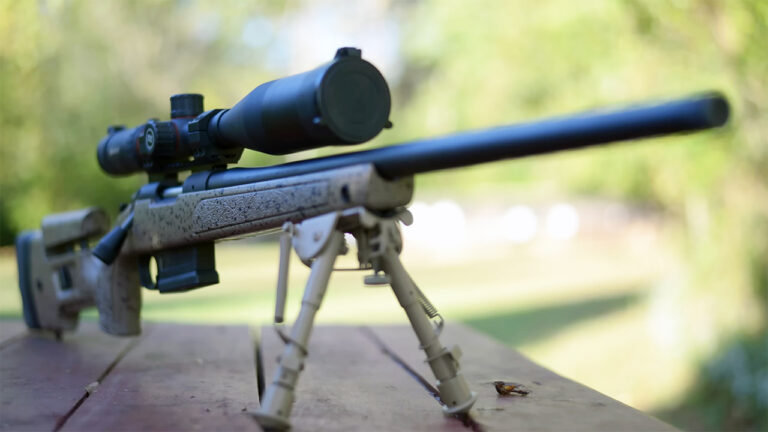
Some rifles get a reputation before they ever prove a thing. You’ll hear folks talk them up at the range, brag about groups they’ve never shot, and praise barrels that haven’t seen more than a few boxes of ammo. These rifles sound accurate on paper—good specs, flashy marketing, the right twist rate—but when you actually put them to work, they fall short. That’s the problem with chasing a rifle by reputation instead of performance. Accuracy isn’t a spec sheet—it’s what shows up downrange. And a lot of the rifles that claim precision never hold it long enough to matter. Here’s what that looks like in the real world.
Remington 783 Heavy Barrel
The 783’s heavy barrel version sure sounds like a shooter. Threaded muzzle, stiffer profile, and a floating barrel make it look the part. But the actual consistency from rifle to rifle has been all over the place. One might shoot a solid inch group, while the next can’t hold three MOA. Add a factory trigger that feels mushy and a synthetic stock that flexes under pressure, and the accuracy starts falling apart fast. You’ll find yourself chasing groups, blaming optics, or questioning ammo—when it’s the rifle that never held it together.
Savage Axis II Precision

This one gets passed around as a budget tack-driver, especially since it wears the MDT chassis. That setup gives the illusion of a precision tool. But the barrel isn’t match-grade, and the action still has that gritty Axis feel. Accuracy tends to fade after it heats up, and the groups widen with each follow-up shot. If you’re shooting a cold-bore group for your buddy, it might look great. But run a five-shot string, and you’ll start seeing fliers that don’t belong. For a rifle branded “Precision,” it leaves a lot of guessing.
Springfield Waypoint 2020
You’d expect more from a rifle that breaks into the premium price range. Carbon-wrapped barrels, custom-looking furniture, and promises of sub-MOA accuracy set the bar high. But not every Waypoint delivers on those claims. Some owners have chased accuracy problems back to bedding issues or inconsistent barrels. You’ll find folks on forums defending it—and others selling theirs after three disappointing range trips. The rifle sure sounds like a shooter when you read the spec sheet. But sometimes it talks a bigger game than it can back up.
Mossberg MVP Precision

This one’s meant to bridge tactical looks with bolt-action consistency. The chassis design and AR-style features draw in shooters looking for crossover appeal. But behind all that is a barrel that heats up fast and groups that drift with temperature. You’ll shoot two good rounds and then three more that scatter. It’s loud about its potential but quiet when it’s time to hold a group past 200 yards. If you’re hoping for repeatable accuracy, you might end up disappointed once the novelty wears off.
Tikka T3x Lite in .300 Win Mag
Tikka makes some solid barrels, no question. But the T3x Lite in hard-recoiling calibers like .300 Win Mag tends to overpromise. The rifle’s too light to tame the recoil, and after a few shots, your groups start to open up. That’s not the shooter flinching—it’s the barrel wandering, action shifting slightly, and harmonics changing from shot to shot. It’ll feel like you’re chasing your zero. In milder calibers, the T3x holds its own. But in magnums, it sounds like a long-range tool and behaves more like a shoulder punisher with inconsistent results.
Ruger American Hunter

Drop a Magpul stock on a Ruger American and suddenly it looks like a custom rifle. The “Hunter” model pushes that image, marketing it as a practical precision rig. But you’re still working with the same basic barrel and action. Some shoot decently out of the box, but many see group drift once heat builds up. And the Magpul stock doesn’t fix the action bedding issues or the occasional feeding problems. You might feel like you’re getting accuracy on the cheap, but the consistency tends to fade with use.
Winchester XPR in 6.5 PRC
The XPR in 6.5 PRC sounds like it should be a laser. Ballistically, the cartridge is capable, and Winchester claims MOA accuracy. But many shooters report the XPR’s accuracy fading after the first couple of shots. The problem usually comes down to barrel quality and heat. The rifle lacks any meaningful barrel contour to help with heat soak, and the synthetic stock doesn’t offer much rigidity. Add in inconsistent factory ammo results, and you’ve got a rifle that sounds accurate until you put it to the test on a real hunt or range day.
Like The Avid Outdoorsman’s content? Be sure to follow us.
Here’s more from us:
The worst deer rifles money can buy
Sidearms That Belong in the Safe — Not Your Belt
*This article was developed with AI-powered tools and has been carefully reviewed by our editors.