
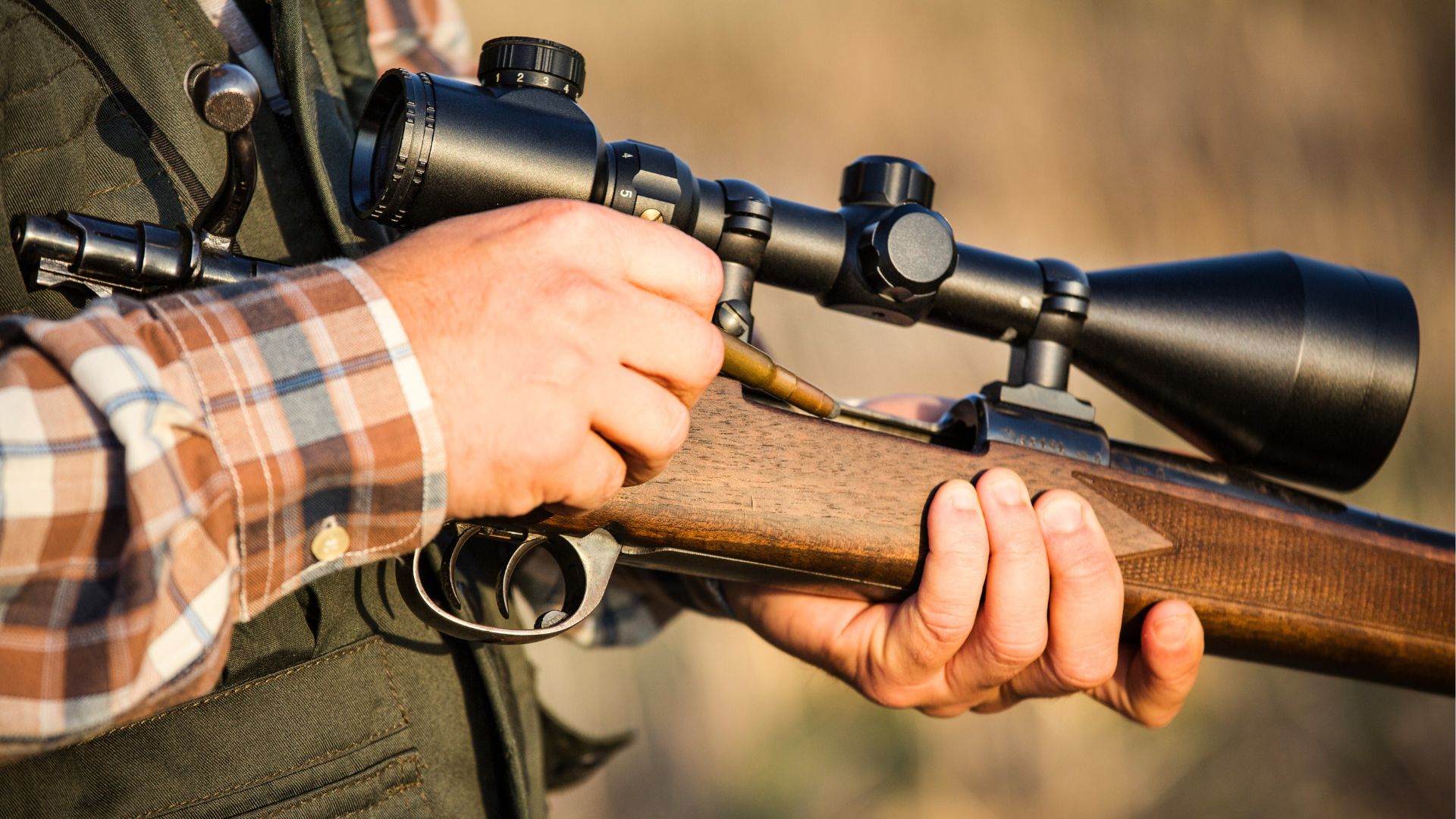
Photo credit: ZoranOrcik/Shutterstock.com
Calling a gun or caliber “outdated” usually means it’s been around long enough to get ignored. It doesn’t mean it stopped working. A lot of shooters stick with older setups for the same reason they keep an old pair of boots: they know exactly how it fits, exactly how it behaves, and exactly what it will do when the moment matters.
The modern market chases lighter, faster, smaller, higher-capacity, flatter-shooting. That’s fine. But there’s a different kind of confidence that comes from cartridges with real-world track records and guns that have been carried, hunted, and shot hard for decades. When you’ve seen a load perform on game, or you’ve watched a particular action run clean through bad weather, it’s hard to unlearn that trust.
Winchester Model 94 in .30-30 Winchester

The Model 94 gets called outdated because it isn’t a long-range rig and it doesn’t wear big glass as gracefully as newer rifles. In the woods, none of that matters much. The .30-30 hits with authority at the distances where most deer are actually killed, and the rifle carries like it was built for brush, fences, and saddle scabbards.
Shooters swear by it because it’s fast to the shoulder and easy to live with. Recoil is manageable, ammo is widely available, and the cartridge doesn’t punish meat the way some high-velocity loads can. When you’ve watched a .30-30 put deer down clean with a well-placed shot, the “outdated” label starts sounding like someone who hunts on the internet.
Marlin 336 in .35 Remington

The .35 Remington never won the marketing war, which is part of why it gets dismissed. The people who stick with it aren’t chasing charts. They like what it does in the timber: a larger-diameter bullet at sensible speed that penetrates well and tends to leave a strong blood trail.
In a Marlin 336, it’s a combination that feels made for real hunting. The rifle handles quickly, the recoil stays reasonable, and the cartridge hits harder than its paper stats suggest. Shooters swear by it because it’s effective without being dramatic. It’s also forgiving in the field—shots aren’t always perfect, angles aren’t always ideal, and the .35 Rem has a reputation for pushing through and finishing the job.
Marlin 1895 in .45-70 Government

On paper, the .45-70 looks like something you’d hang on a museum wall. In the field, it’s still a hammer. The Marlin 1895 brings that big-bore performance into a handy lever gun that carries well and points fast, which matters when you’re in thick cover or dealing with close-range opportunities.
People swear by it because it’s flexible. With the right loads, it can be mild enough for practice and stout enough for tough animals at practical distances. It also tends to work well in rough conditions—rain, snow, mud, and constant carry. The “outdated” reputation comes from the cartridge’s age, not its ability. When you’ve seen a .45-70 drive deep and leave a clear result, modern trends feel less important.
Ruger Blackhawk in .357 Magnum

The Blackhawk feels outdated because it’s a single-action revolver in a world of polymer pistols and red dots. Shooters who keep one aren’t confused about that. They like the way it shoots. A .357 Magnum out of a strong, well-balanced revolver can be accurate, controllable, and effective for everything from trail carry to hunting within realistic range.
The appeal is reliability and familiarity. You can run it with .38 Special for easy practice, then step up to .357 when you want more punch. The gun doesn’t depend on magazine springs or slide timing, and it handles neglect better than many people expect. Shooters swear by the Blackhawk because it’s steady, durable, and honest. It rewards good trigger work and doesn’t hide sloppy fundamentals.
Smith & Wesson Model 10 in .38 Special

The Model 10 gets written off as old police iron, and that’s accurate. It also explains why it still earns loyalty. A quality .38 Special revolver with a good double-action trigger teaches you to shoot correctly, and it tends to work every time without drama. That matters more than trends when you’re serious about skill.
Shooters stick with it because it’s practical. .38 Special is easy to find, recoil is manageable, and the gun is straightforward to maintain. In real use, it’s also a dependable defensive tool with the right loads and responsible shot placement. The Model 10’s reputation comes from decades of service, not nostalgia. When you want a handgun that does what it’s supposed to do and stays consistent for a lifetime, it’s hard to argue with this one.
Colt Government Model 1911 in .45 ACP

The 1911 gets labeled outdated because it’s heavy, lower capacity, and demands more attention than many modern pistols. Shooters who swear by it accept those tradeoffs because the shooting experience is hard to replace. A good 1911 trigger makes clean hits easier, and the .45 ACP has a long record of effective performance without relying on high velocity.
It also carries in a way that surprises people. The slim frame hides well, and the ergonomics fit a lot of hands. Serious shooters stick with it when they value precise shooting and a familiar manual of arms. The key is being honest: quality magazines, quality parts, and regular function checks matter. When you run a well-built 1911 and it behaves, it feels like a purpose-built tool, not a relic.
Browning Hi-Power in 9mm

The Hi-Power looks outdated next to modern striker pistols, but it still earns loyalty because it shoots like a natural extension of your hands. The grip shape and balance make it point fast, and the gun has a smoothness that’s hard to describe until you’ve carried one and run it on steel.
Shooters who stick with it like the combination of a proven 9mm cartridge and a pistol that rewards deliberate shooting. It isn’t optics-ready by default, and it isn’t designed around today’s accessory culture. That’s part of the appeal. It’s a handgun that feels complete without needing upgrades. With good magazines and proper maintenance, a Hi-Power can still run hard. The “outdated” label fades fast when your hits show up exactly where you’re looking.
SIG Sauer P220 in .45 ACP

The P220 gets called outdated because it’s a classic DA/SA pistol with lower capacity than modern double-stacks. Shooters who swear by it usually do so because it runs with a steady, predictable feel. The gun’s recoil impulse is smooth, the accuracy is easy to access, and the .45 ACP performs without needing extreme velocity.
The other reason is confidence. A well-maintained P220 tends to be dependable for a long time, and the manual of arms is familiar to anyone who grew up around traditional service pistols. It rewards practice, especially on that first double-action press, and it stays consistent when you keep your gear in order. For shooters who value a controllable .45 that doesn’t feel temperamental, the P220 keeps earning its keep year after year.
Remington 870 in 12 gauge

The 870 gets dismissed as yesterday’s pump gun in an era of semi-autos and detachable magazines. Shooters who rely on it aren’t missing the point. They like how it works in real conditions. A pump shotgun doesn’t care about load power the same way some semi-autos do, and it can handle abuse if you keep it reasonably clean and lubricated.
The 12 gauge also refuses to become obsolete. With the right shells, it can hunt birds, deer, hogs, and handle defensive roles. The 870’s strength is familiarity and durability. You can run it hard, maintain it with basic tools, and it stays functional through bad weather and hard seasons. Shooters swear by it because it solves problems without needing perfect conditions, and it still does it well.
Ithaca 37 in 12 gauge

The Ithaca 37 is one of those shotguns that looks old until you carry it through thick cover. The bottom-eject design keeps debris out, throws shells away from your face, and makes the gun comfortable for lefties and righties alike. That practical design is a big reason shooters keep them around.
People swear by the 37 because it’s slick and fast. The action can be extremely smooth, and the gun balances in a way that makes it feel lighter than it is. In hunting roles, that handling matters more than spec sheets. It also tends to be reliable in nasty field conditions, especially when you’re dealing with rain, snow, and mud. Calling it outdated ignores what it was built for: real hunting, real carry, real use.
Ruger GP100 in .357 Magnum

The GP100 gets called outdated because it’s a revolver, and revolvers aren’t the default choice anymore. Shooters who swear by it value durability and predictability. The .357 Magnum remains one of the most useful handgun cartridges ever made, and the GP100 is strong enough to digest heavy loads without feeling fragile.
It also offers flexibility. You can practice with .38 Special, then carry .357 when you want more power. The gun’s weight helps manage recoil, and the trigger can be very shootable once you learn it. In real-world use, the GP100’s appeal is confidence: it’s hard to knock out of service with normal use, and it doesn’t depend on magazines or slide timing. When you want a handgun that can live on a belt for years and keep working, this “outdated” setup keeps making sense.
Winchester Model 70 in .270 Winchester

The .270 Winchester gets labeled outdated because it isn’t the newest fast-twist, long-range darling. Shooters who stick with it usually hunt more than they talk. The .270 shoots flat enough for most real hunting distances, recoils reasonably, and has a long history of clean kills on deer-sized game and beyond with proper bullets.
The Model 70 adds another layer: controlled-round feed in many versions, strong extractor design, and a reputation for reliable function in rough conditions. It’s a rifle you can trust when the weather turns and your hands are cold. Shooters swear by this pairing because it doesn’t require constant tinkering. It’s a proven hunting setup that carries well, shoots well, and keeps delivering results without needing to be reinvented.
Remington 700 in .30-06 Springfield

The .30-06 refuses to go away because it covers so much ground. It’s not trendy, but it’s practical. Bullet selection is massive, performance is well understood, and it handles everything from whitetails to elk with the right loads. Shooters swear by it because they’ve seen it work across decades, seasons, and different rifles.
In a Remington 700, the cartridge becomes even more familiar. The platform is easy to set up with good optics, easy to tune for accuracy, and widely supported. When you keep your mounting and maintenance squared away, it can be a steady, dependable hunting rifle that performs year after year. “Outdated” here mostly means “well proven.” That kind of track record is hard to replace with marketing.
Mauser 98 sporter in 7×57 Mauser

The 7×57 Mauser is the kind of cartridge that gets underestimated because it doesn’t chase velocity. Shooters who swear by it understand what it does well: deep penetration, manageable recoil, and excellent field accuracy in rifles that handle beautifully. It’s a round that lets you shoot calmly and place bullets precisely, which matters more than raw speed.
A Mauser 98 action adds confidence. It’s strong, reliable, and designed to feed smoothly under stress. Many sporters built on 98 actions carry and balance in a way modern rifles sometimes miss. The “outdated” label ignores how effective moderate cartridges can be when you shoot them well. For hunters who value precision, penetration, and repeatable performance, a 7×57 in a good Mauser still earns real respect.
Ruger No. 1 in .257 Roberts

The Ruger No. 1 looks outdated because it’s a single-shot, and the .257 Roberts looks outdated because it isn’t loud in the modern conversation. Shooters who swear by this combination tend to be the kind who care about first-shot performance. The No. 1 carries compact for its barrel length, balances beautifully, and encourages deliberate shooting.
The .257 Roberts is a mild, effective cartridge that punches above its reputation when paired with good bullets. Recoil stays light, accuracy is often excellent, and it’s easy to shoot well from field positions. That matters when you’re hunting and you want calm precision instead of a rifle that beats you up. This setup isn’t about speed or capacity. It’s about confidence in a clean shot, and that’s why some shooters never let it go.
Like The Avid Outdoorsman’s content? Subscribe to our newsletter so you never miss an article.
Here’s more from us:


