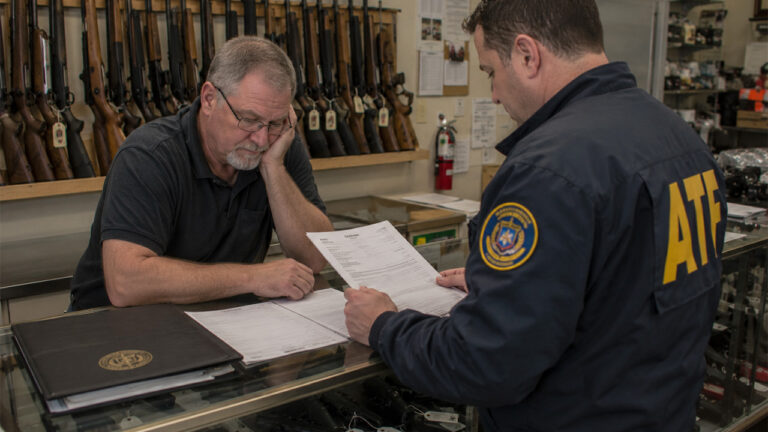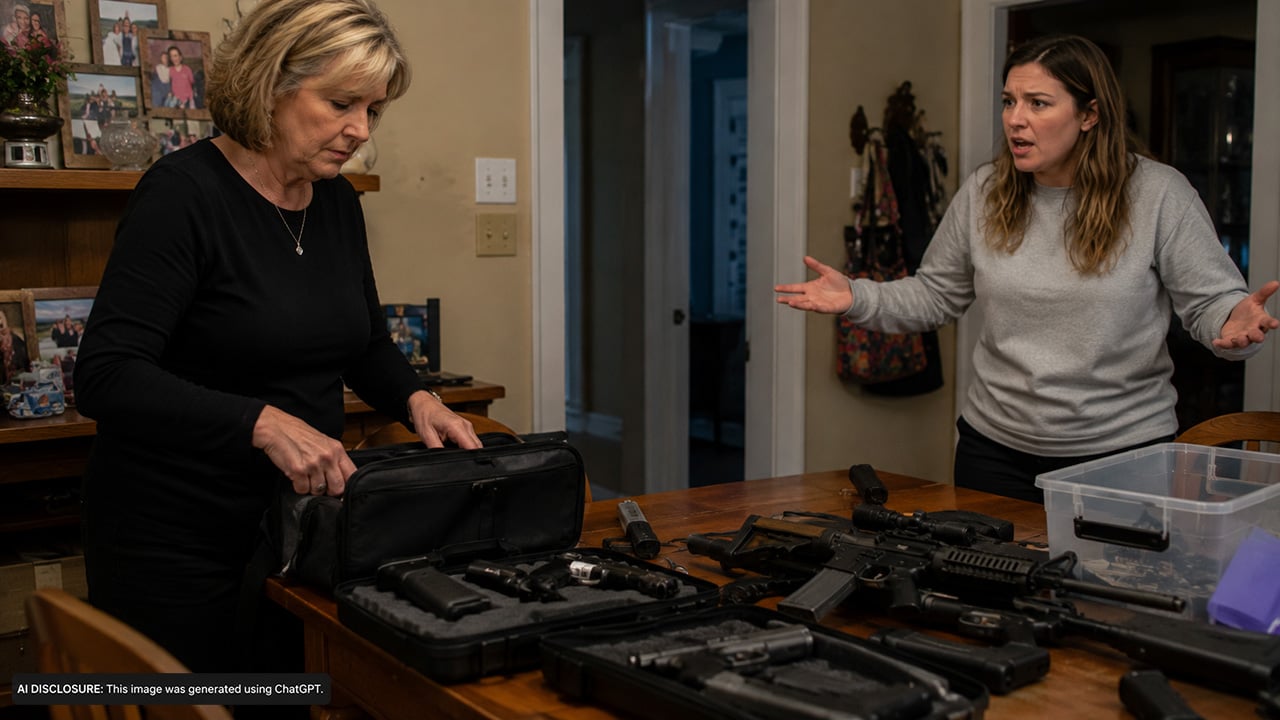
Photo credit: AI-generated image created using ChatGPT. Illustrative only
A messy separation can turn a hunting season upside down fast, especially when one spouse decides the other doesn’t get to touch his own gear. In Louisiana, one family is dealing with exactly that after a man moved out of the marital home during a divorce and suddenly lost access to a whole gun cabinet—along with a childhood baseball card collection.
In the original post, the writer says his father-in-law left the home and was “allowed” to take basics like clothes, some electronics, and toiletries. But his wife wouldn’t let him take the gun cabinet or his sports cards. The explanation, according to the post, was that she’d “conjured up some excuse that he is a danger,” despite not filing anything with police or pursuing a legal “red flag” type order.
It went from “you can’t have them” to “you can’t even find them”
Plenty of couples argue about who gets what when the split happens. This one escalated when the wife reportedly moved the entire gun cabinet off the property to a friend’s house and then refused to tell him—or even their kids—where the guns are.
That’s a major shift. Denying access is one thing. Removing firearms from the home and hiding their location is another, because now nobody can verify where they are, how they’re stored, or who has access to them. For a hunter, it also feels personal. The poster even suspected that keeping him from hunting “probably gives her some twisted satisfaction.”
Receipts, background checks, and the ownership question
The poster said every firearm in the cabinet was purchased by the father-in-law, with him passing the background checks on each one. He clarified in an edit that he used “registered” incorrectly, but that there are receipts and purchase records, and she “was not part of any of the sales or transactions.” In other words, he’s not talking about a couple of old hand-me-downs—he’s talking about more than a dozen guns he bought himself.
That matters in the real world, because the way gun folks talk about “my guns” and the way courts talk about marital property aren’t always the same thing. A gun can be purchased by one spouse and still get wrapped up in divorce property disputes depending on timing, shared funds, and state law. But even if a court later decides who owns what, physically moving and withholding firearms can create a whole new set of problems.
The safety claim doesn’t automatically give someone authority
The wife’s stated justification, according to the post, is that he’s “a danger.” Sometimes that’s a legitimate fear. Sometimes it’s a tactic. Either way, there’s a big difference between calling law enforcement, seeking a protective order, or using whatever legal process applies in your state—and just declaring yourself the gatekeeper of someone else’s gun safe.
Gun owners understand this better than most: if a person is truly a danger, you don’t handle it with rumor and a private stash job. You handle it through the system so there’s a paper trail, clear restrictions, and lawful transfer or seizure procedures. Otherwise, you’ve got guns floating around off-site at an unknown “friend’s house,” with unknown storage conditions and unknown access. That’s not safety. That’s uncertainty.
Why this kind of move can create real liability for everyone involved
The poster’s concern wasn’t just emotional—it was practical. He worried about legal liability because the guns were “no longer in his control” and because a third party may now possess them. That’s not paranoia. If something bad happens with a firearm, the first questions are always: whose gun is it, how did it get there, and who had access?
Even without getting into legal weeds, hunters and gun owners know what responsible storage looks like: secure container, limited access, and clear accountability. When a cabinet gets relocated and nobody will say where it is, you lose that accountability. If that “friend” has kids in the house, if the cabinet isn’t anchored, if the combo is shared, or if the guns get handled by someone not supposed to handle them, the risk multiplies.
There’s also the basic reporting issue. The poster asked if the father-in-law should report them stolen. That’s a serious step, and it’s not something to toss around casually. But when firearms are removed from your possession without your consent and you’re being denied information about where they are, a lot of gun owners are going to see it as theft—or at minimum, an unlawful taking—until proven otherwise.
The family divide: “not a big deal” versus “this could be felonies”
What made this situation feel especially real is the split inside the family itself. The poster said his wife and her sisters think it “isn’t a big deal,” while he feels it’s “even much bigger” than he’s making it. That’s a common disconnect in gun households: people who don’t hunt (or don’t own guns) sometimes treat firearms like they’re just another household item, like a couch or a blender.
But a dozen-plus firearms aren’t a blender. They’re regulated items that can land the wrong person in life-changing trouble. And in rural America, they’re also how you put meat in the freezer, protect livestock, and spend time outdoors with friends and family. Taking them, hiding them, and cutting off access doesn’t just sour a divorce—it changes day-to-day life.
The poster even mentioned another item being withheld: a childhood baseball card collection. That detail makes the whole thing feel less like “public safety” and more like leverage. When you mix sentimental property disputes with firearms, emotions run hot and people make dumb decisions.
Common-sense steps gun owners think about in situations like this
The smartest thing in a dispute like this is to slow down and get things documented. The post suggests the father-in-law has receipts and records of purchase, which is a good start. Beyond that, most experienced gun owners would be thinking about a written inventory—make, model, serial number, and photos—because if guns truly go missing, you’ll want a clean list for law enforcement and insurance.
Second, avoid the “I’ll just go get my stuff” approach. Showing up angry at the marital home or the mystery “friend’s house” is how arguments turn into criminal charges or worse. Firearms plus a domestic dispute is one of the quickest ways to make your life harder, even if you’re in the right.
Third, get the right local professional involved. Divorce attorneys deal with property. Criminal attorneys deal with theft and unlawful possession. And sometimes you need both lanes working at once. However this shakes out, the goal should be simple: get the guns secured in a known, lawful location, with access and possession sorted out through proper channels—not family power plays.
If you’re a hunter reading this, it’s also a reminder to keep your own house in order. Keep records. Keep an inventory. Store guns securely. And think ahead about what would happen if you had to leave the home for any reason—separation, evacuation, medical emergency—because “I’ll deal with it later” can turn into “I don’t even know where my guns are.”
When firearms become bargaining chips in a breakup, everybody loses. The best outcome here is that the guns get accounted for, secured properly, and handled through a process that keeps everyone safe—because hiding a cabinet at a buddy’s place and refusing to say where it is is the kind of move that can spiral fast.
Like The Avid Outdoorsman’s content? Subscribe to our newsletter so you never miss an article.
Here’s more from us: