Photo credit: Pixel Shot/Shutterstock.com
Some family dogs love everybody, but they’ve got a soft spot for the kids. They shadow them from room to room, lay outside their bedroom door, sit close during movie night, and show up the second a kid starts crying. It’s not always “protection” in the tough-guy sense. A lot of the time it’s loyalty, curiosity, and a dog’s natural instinct to stay close to the smaller members of the pack. Certain breeds are especially wired for this because they were built to work with people, watch over livestock, or stay tuned in to movement and behavior. When a kid is part of the routine, those dogs often treat them like a responsibility.
Of course, the “tiny bodyguard” vibe is only good if the dog is stable and the adults run the household. Protective instincts without training can turn into resource guarding, herding behavior, or reactivity. The goal is a dog that’s calm, trustworthy, and kid-safe, not a dog that tries to control the entire home. These breeds are known for bonding strongly with children and staying close, but supervision, training, and respect for the dog’s boundaries still matter. Here are 10 family dogs that often stick near kids like it’s their job.
Labrador Retriever
Labs are famous for being good family dogs, and part of that is how naturally they attach to kids. Many Labs follow children around simply because kids are fun, unpredictable, and usually drop snacks. But there’s more to it than that. Labs are social and tuned in, and they like being part of the group. If a kid is playing in the yard, a Lab is often right there, matching their energy, watching the action, and staying close even when the kid wanders from room to room.
The important thing with Labs is teaching manners early. A happy Lab can be a little too enthusiastic, especially around small kids, so you want to train calm greetings and reinforce gentle behavior. When you do that, you get a dog that’s playful and patient, and it often becomes the kid’s constant sidekick without any of the edge that can come with more intense guardian breeds.
Golden Retriever
Goldens have a reputation for being sweet, and they earn it in family homes. They tend to be gentle with kids, sensitive to emotion, and eager to keep the peace. A lot of Goldens act like unofficial babysitters in the sense that they’re always nearby when the kids are playing. They’ll lay on the floor while the kids build something, follow them down the hallway, and show up fast when the tone in the house shifts.
That closeness can be a huge comfort for kids, especially if the dog is calm and well-trained. Goldens usually do best when they’re included in the family rhythm instead of being left out. They’re not the dog that wants to be ignored all day. When they’re part of the routine, they often become a steady, gentle presence around kids that feels like a soft kind of protection.
Beagle
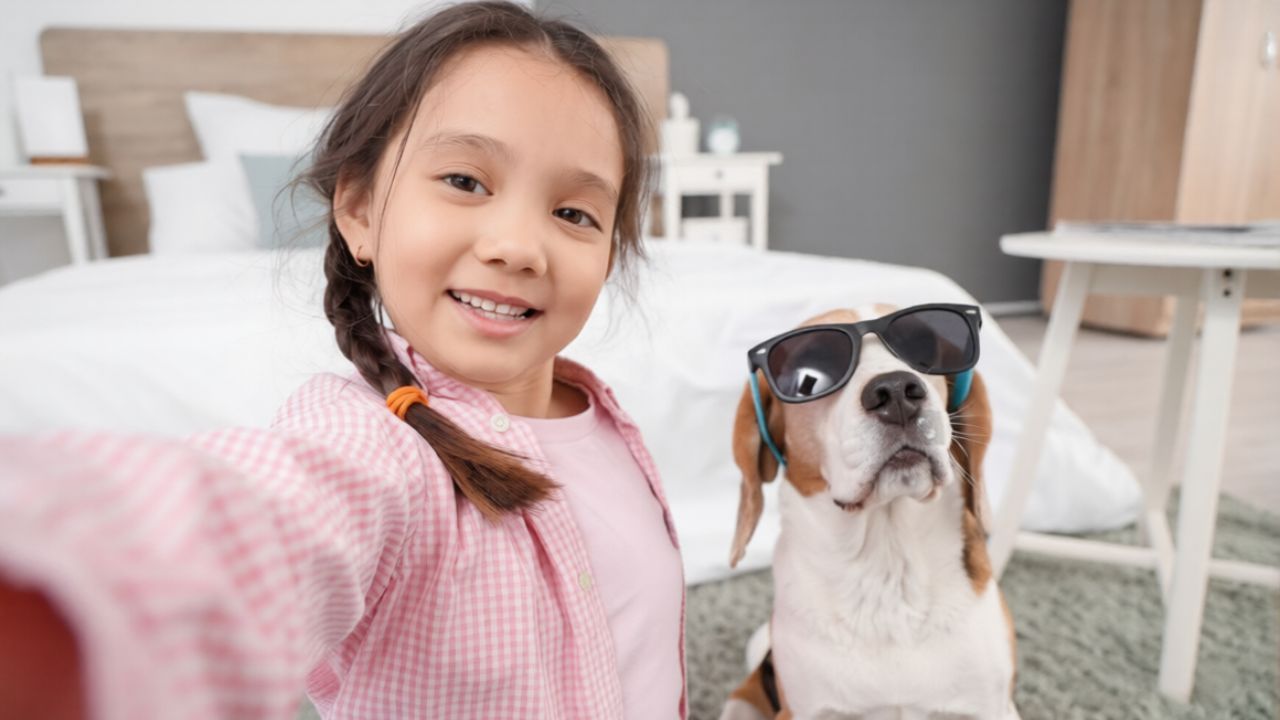
Beagles aren’t “guard dogs,” but they can be great kid shadows because they’re social, curious, and built for companionship. They tend to enjoy the chaos of family life, and they like being where the fun is. Many Beagles follow kids around because kids move, play, and make things interesting. They’re also sturdy enough to handle a more active household, which matters if you’ve got younger kids who aren’t always graceful.
The thing to watch with Beagles is their nose. A Beagle can go from “kid bodyguard” to “snack tracker” in about two seconds, so training around food and boundaries is important. But if you want a dog that stays close to the family, likes kids, and brings a cheerful vibe without being overly intense, Beagles can be a solid choice.
Boxer
Boxers are one of those dogs that seem to think they’re part kid themselves. They’re playful, affectionate, and often very bonded to their family, especially the children. A Boxer will commonly follow kids around the house, insert themselves into play, and stay close because they like being involved. They can also be naturally protective in a steady, family-first way, without being sharp if they’re well socialized.
Because Boxers are strong and energetic, they do best in homes that can give them exercise and structure. If you let them get bored, they can get too wild around little kids. But if you give them outlets and teach calm behavior, Boxers often become the goofy “protector” who’s always nearby, always watching, and always ready to play.
Collie
Rough and Smooth Collies have that gentle, watchful personality that fits families well. They’re often very aware of where the kids are, and they tend to follow them in a calm way instead of bouncing off the walls. Collies can be protective without being aggressive, and a lot of them feel responsible for keeping the household together. If kids are outside, many Collies will choose a spot where they can see them. If kids are inside, they’ll often hover nearby like quiet supervision.
Collies can be sensitive, so they tend to do best in homes where kids are taught to treat the dog kindly and give it space when needed. But for families who want a dog that’s gentle, loyal, and very tuned in, a Collie often becomes that “always close” companion that kids feel safe around.
Cavalier King Charles Spaniel
If you want “tiny bodyguard” energy in a smaller package, Cavaliers are great for it. They’re affectionate, friendly, and they tend to follow kids because they want closeness and connection. Cavaliers aren’t going to intimidate anyone, but they’ll absolutely stick by a child’s side, crawl into their lap, and show up whenever kids are on the floor playing. They’re typically gentle and patient, which makes them easier in homes with younger kids.
The big thing with Cavaliers is teaching kids to handle them carefully. They’re small and sweet, and kids can unintentionally be rough. If you set the rules early, Cavaliers often become that constant little buddy who trails a child around the house like a loyal shadow.
Australian Shepherd
Aussies are loyal, smart, and very aware of movement, which is why they often attach to kids. They notice where everyone is. They track activity. They want to be part of the action. In family homes, that can look like an Aussie following kids around and “checking in” constantly. They may also try to herd, especially if kids are running, squealing, or scattering in different directions.
That herding instinct is the key thing to manage. Aussies need training and structure so their “bodyguard” behavior doesn’t turn into nipping at heels or trying to control play. When you train them well and give them enough mental work, Aussies can be incredible family dogs who stay close to kids and seem to take their job seriously.
German Shepherd
German Shepherds can be excellent family protectors in the right home, and they often become deeply bonded to the kids as part of the family unit. A well-raised Shepherd will commonly position themselves where they can see the kids, follow them through the house, and stay alert to changes in the environment. They’re intelligent, responsive, and naturally inclined to watch over their people.
Because they’re powerful and protective, training and socialization are non-negotiable. You want a Shepherd that’s confident and stable, not a Shepherd that’s anxious or reactive. When they’re raised correctly, they can be one of the most devoted “kid-shadow” dogs out there. When they’re not, that same intensity can become a problem, so it’s a breed that needs honest commitment.
Newfoundland
Newfoundlands are gentle giants, and they’re famous for being good with children. They often stick close to kids in a calm, steady way, like they’re quietly supervising. They’re usually patient, tolerant, and protective without being edgy. A Newf doesn’t need to act tough. Their presence alone changes the feel of a room, and many families love how grounded they are.
They do best with space and a family that understands big-dog needs, including grooming and training. But if you want a dog that’s physically capable, emotionally gentle, and often very attached to the kids, Newfoundlands are one of the strongest “family bodyguard” choices you can make.
Great Pyrenees
Great Pyrenees were bred to guard, and that instinct often carries over into family life. Many Pyrs bond with children and treat them like part of what they’re meant to watch over. They’ll follow, position themselves between the kids and the outside world, and stay alert to anything unfamiliar. Their style is usually calm and steady, not frantic. They tend to conserve energy and act when they feel they need to.
The tradeoff is that a Pyr is an independent thinker. They aren’t a breed that obeys just to obey. They need consistent training, boundaries, and a family that understands guardian behavior, including barking and night-time alertness. But if you want a dog that genuinely takes “watching over the kids” seriously, a Great Pyrenees can feel like you hired a security guard that also likes belly rubs.
Like The Avid Outdoorsman’s content? Subscribe to our newsletter so you never miss an article.
Here’s more from us: