
Photo credit: KPhrom/Shutterstock.com
Dogs are built to hide weakness. That’s not a personality flaw, it’s survival wiring. In the wild, the animal that looks hurt becomes a target, so a lot of dogs still carry that instinct even when they live on a couch and sleep under a blanket. That’s why pain doesn’t always look like limping and crying. In a lot of cases, pain looks like a dog that’s “acting a little weird” in ways that are easy to dismiss—until you realize those changes have been building for weeks. The tough part is that you live with your dog every day, so small shifts can feel normal because they happen gradually.
The goal here isn’t to make you paranoid. It’s to help you recognize the quiet signals dogs use when something hurts. If you catch pain early, you can often prevent bigger injuries, avoid behavior issues that come from discomfort, and help your dog stay comfortable as they age. Pain shows up in patterns. One odd behavior for a day might be nothing. Several behaviors stacking together, or one behavior that keeps repeating, is when you stop guessing and start paying attention.
1) They get up slower and “warm up” after moving
This is one of the most common signs, especially with joint pain. Your dog may look stiff after naps, hesitate before standing, or take a few slow steps before moving normally. People write it off as “just getting older,” but stiffness is still pain. Dogs learn to manage it by moving slower, taking shorter steps, or stretching awkwardly. If your dog looks different at the start of a walk than they do ten minutes in, that’s a clue.
It’s even more noticeable on slick floors. A dog that used to pop up and run may now stand carefully, reposition feet, and move like they’re trying not to slip. That’s often discomfort plus lack of traction, and it adds up fast.
2) They lick one spot obsessively
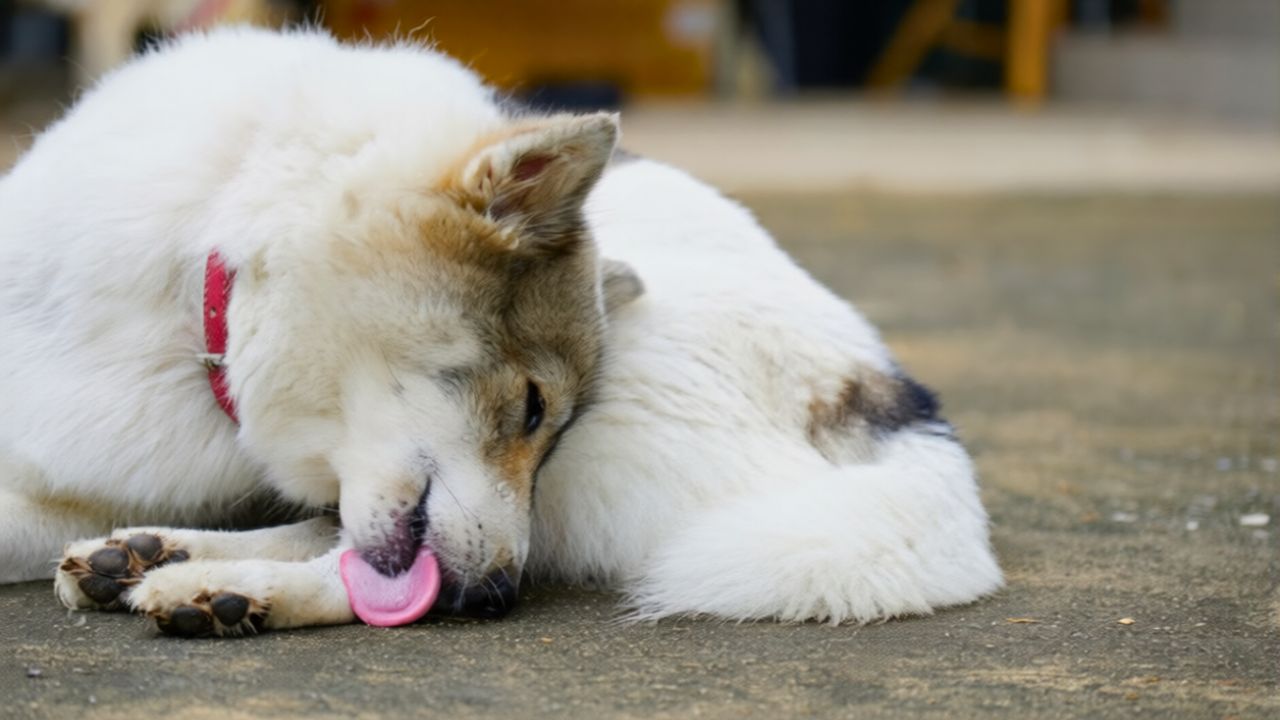
Dogs lick to soothe. If they keep licking a paw, a joint, a hip, or one specific area, it can be pain, irritation, or injury. Sometimes it’s allergies or a thorn. Other times it’s a sore knee, a strained shoulder, or arthritis flare-up. Dogs will lick because it feels like they’re “doing something” about the discomfort.
The risk is that licking creates a new problem on top of the original one. Hot spots and skin infections can start from a pain lick. So if the licking is repetitive and focused, don’t assume it’s “just grooming.”
3) They change how they sit or lie down
Pain changes posture. A dog with back pain may sit crooked, avoid tucking legs under, or stretch out in odd positions. A dog with hip pain may “bunny sit” with one leg kicked out. A dog with shoulder pain might keep weight off one front leg without fully limping. People miss it because the dog is still resting, just resting differently.
Also pay attention to how often they shift. A dog that can’t get comfortable might change positions constantly, move beds, or choose the floor instead of a soft bed because pressure on certain joints hurts.
4) They avoid stairs, jumping, or tight turns
This one can be subtle because dogs don’t always refuse outright. They may hesitate, look at you, or choose a different route. They might stop jumping into the car and wait to be lifted. They might still jump onto the couch but then struggle getting down. That’s not laziness. That’s a dog doing the math on what movement costs them.
Tight turns are another clue. If your dog takes wide turns or moves like they’re careful in corners, that can be joint pain or neurological discomfort. It’s the kind of thing you only notice once you start looking for it.
5) They stop doing favorite things that involve movement
A dog in pain often drops activities quietly. They stop chasing the ball as hard. They stop wrestling. They stop bringing toys. They still want attention, but they don’t want the physical effort. Owners sometimes interpret this as “calming down,” but if the change feels sudden or noticeable, it’s worth considering discomfort.
This can also show up as shorter walks, lagging behind, or wanting to turn around earlier than usual. Dogs don’t quit fun because they’re bored. They quit fun because it hurts.
6) They get irritable about being touched
Pain can turn a sweet dog into a dog that doesn’t want contact. You might notice them flinching, pulling away, moving away when you pet certain areas, or giving a warning look when you touch their hips, back, or paws. Some dogs will growl or snap, and owners label it as “behavior,” when the real issue is physical discomfort.
If your dog suddenly dislikes being picked up, being hugged, or being brushed, don’t start with discipline. Start with the question: what hurts?
7) They pant at rest or seem unable to relax
Panting isn’t always heat. Pain can trigger panting, especially in older dogs. If your dog is panting in a cool room while resting, or they seem restless and can’t settle, it can be discomfort. Dogs also pace when they’re hurting, especially at night when joints stiffen and the house is quiet.
If panting is new and persistent, don’t ignore it. It can be pain, anxiety, or something medical. Either way, it’s worth a vet call if it keeps happening.
8) They eat differently, chew differently, or act weird about food
Mouth pain can hide for a long time. A dog may still eat but do it slowly, drop kibble, chew on one side, or avoid crunchy treats. Some dogs become picky because chewing hurts. Others swallow food quickly because they don’t want to chew it. Bad breath, drooling, pawing at the mouth, or red gums also matter.
Dental pain is one of the biggest “quiet suffering” issues in dogs, and once it’s treated, owners often say, “I didn’t realize how miserable he was.” That’s because the dog never made a big show of it.
9) They act clingy or withdrawn in a way that’s new
Pain changes behavior. Some dogs become clingy because they want comfort and security. Others withdraw because they want to be left alone. Both patterns can happen with discomfort. The important part is “new.” If your independent dog suddenly wants to be glued to you, or your social dog starts hiding in another room, that’s information.
Pair that with other signs—stiffness, licking, appetite changes—and it becomes hard to argue it’s “just mood.”
10) They stop grooming or stop caring about normal routines
Dogs that don’t feel good often stop keeping up with themselves. You may notice a coat that looks dull, a dog that doesn’t groom paws the way they used to, or a dog that doesn’t get excited for routines like walks, treats, or greeting you. It’s not always dramatic, but it’s noticeable if you know your dog. Pain drains motivation. It makes dogs conserve energy and avoid extra movement.
Like The Avid Outdoorsman’s content? Subscribe to our newsletter so you never miss an article.
Here’s more from us:


