Photo credit: Julia Zavalishina/Shutterstock.com
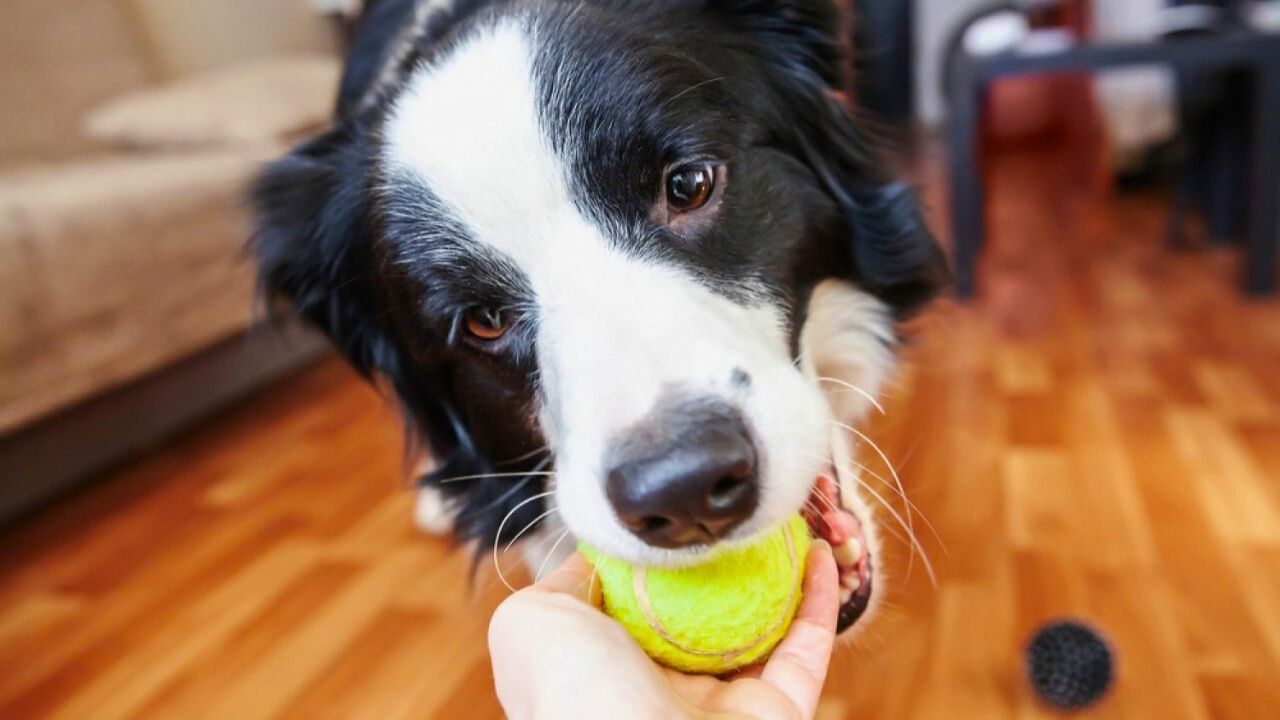
When your dog greets you at the door with a toy in their mouth, it’s more than just a cute habit. It’s actually a smart emotional outlet. Coming home is a big moment in your dog’s day. After hours apart, excitement builds fast, and that surge of energy needs somewhere to go. Picking up a toy gives them something to do with that excitement so it doesn’t spill out as jumping, barking, or mouthing your hands.
For many dogs, the toy acts like a pressure valve. Holding something helps them stay regulated while they process the reunion. Instead of bouncing off the walls, they channel that energy into carrying. It’s a calmer greeting than frantic behavior, even though it may look silly.
What they’re really trying to communicate
Bringing you a toy is often a social offering. In dog language, presenting an object can be a way of saying, “I’m glad you’re back,” or “Let’s interact.” Some dogs want play — a quick game of tug or chase. Others simply want acknowledgment. The toy is their way of inviting connection without demanding it.
Dogs also learn quickly that toys lead to positive responses. If you’ve ever laughed, praised them, or engaged in play when they brought one, that memory sticks. Over time, the toy becomes part of the greeting ritual because it consistently works.
In some cases, the behavior is also about displacement — managing overwhelming feelings with an action that feels safe. The toy keeps their mouth busy and prevents nipping, which is why you’ll often see it in dogs that are naturally high-energy or sensitive to excitement.
Why some dogs do it and others don’t
Not all dogs greet with toys, and that’s usually personality-driven. Dogs that are highly people-focused or prone to big emotional responses are more likely to develop this habit. It’s especially common in dogs that were rewarded early for playing during greetings.
It can also depend on what toys mean in your home. If toys are strongly associated with fun and attention, they become a natural communication tool. Dogs that see toys as high-value social items are more likely to use them as a greeting gesture.
When it’s helpful and when to guide it
Most of the time, bringing a toy is a great alternative to jumping or mouthing. It’s controlled and friendly. If you like the behavior, you can encourage it with calm praise or brief interaction. Just keep your energy steady so excitement doesn’t escalate into chaos.
If your dog becomes overly wound up — running in circles or pushing the toy aggressively — you can shape the greeting by waiting for four paws on the floor before responding. Reward calm holding rather than frantic waving.
The toy itself isn’t random. It’s your dog’s way of saying, “I missed you, and I want to connect.” By understanding it, you can turn that burst of emotion into a calm, positive moment instead of a noisy one.
Like The Avid Outdoorsman’s content? Subscribe to our newsletter so you never miss an article.
Here’s more from us: