Photo credit: Military Footage Archive – MFA/YouTube
The U.S. Army has fielded a lot of hardware, and plenty of it was “good enough.” The guns that earn the “best” label are the ones that kept working in ugly conditions, trained generations of soldiers, and solved real problems without creating new ones. They also tend to be the guns you still see referenced in manuals, matches, museums, and unit stories—because they set a standard.
If you’ve spent time around military shooters, you notice a pattern: the Army remembers the guns that were easy to keep running, easy to teach, and hard to wear out. Some were heavy, some kicked, and some were never pretty. But they did the job, and they did it for a long time.
Springfield Model 1903
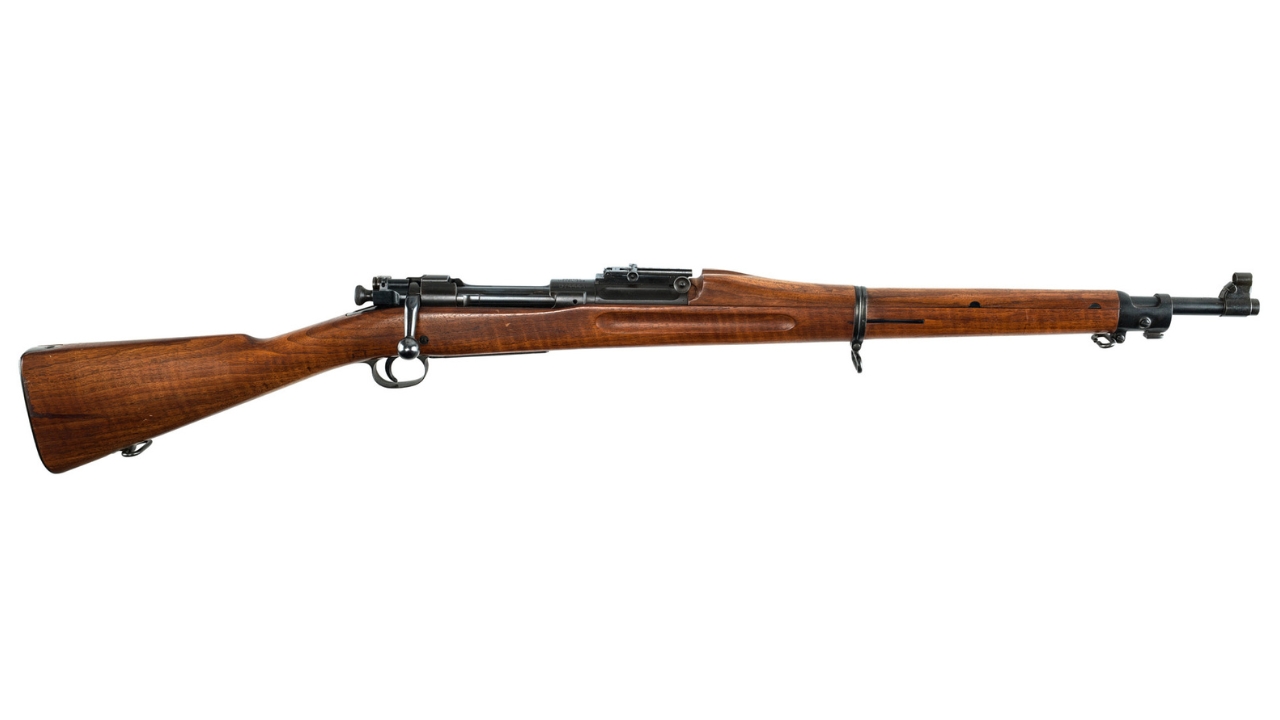
The 1903 Springfield earned its reputation the old-fashioned way: accuracy, solid build quality, and a design that held up under field conditions. It served as a primary service rifle in the early 1900s and stayed relevant even after newer rifles arrived because it could still put rounds where they needed to go.
You also can’t ignore what it did for American marksmanship culture. The 1903 became a foundation for training and competition, and it showed that a service rifle could be more than “minute of man.” If you’re judging Army guns by long-term impact, the 1903 is hard to argue with.
M1911 Pistol

If you want a sidearm the Army trusted through major wars and decades of rough handling, the M1911 is the easy pick. The design proved it could run dirty, run hot, and keep functioning when maintenance wasn’t a priority. Soldiers didn’t love it because it was fashionable—they loved it because it worked.
The other reason it belongs on this list is institutional familiarity. The M1911 shaped how generations of troops thought about sidearms: carry, controls, trigger feel, and what “serviceable” meant. Even after it left front-line duty, it stayed in the conversation because so many shooters had confidence in it.
Browning Automatic Rifle (M1918)

The BAR filled a role the Army needed badly: portable automatic fire that could move with infantry. It wasn’t light, and nobody would call it convenient, but it delivered controllable automatic fire in an era when that capability changed how squads fought.
What makes the BAR one of the best is how well it balanced firepower and practicality for its time. It could be carried, it could be fed, and it could keep running when the environment was hard on equipment. When you read accounts from the field, you see a lot of respect for a gun that gave a squad teeth without falling apart.
M1 Garand

The M1 Garand is one of those guns you can recognize by sound and silhouette, and it earned that fame. Semi-automatic fire in a standard-issue rifle gave U.S. soldiers a real edge, and the Garand delivered that advantage with reliability that held up across climates and continents.
If you’ve ever handled one, you notice it feels like a service rifle should: substantial, balanced, and built to survive abuse. It also trained a generation to shoot quickly and accurately with iron sights. The Garand didn’t merely serve—it set expectations for what a general-issue rifle could do when you didn’t have time to baby it.
M1 Carbine

The M1 Carbine was never meant to replace the Garand, and that’s part of why it succeeded. It gave support troops and officers a lighter, handier gun that was easier to carry all day, easier to manage, and quicker to bring into action than a full-size rifle.
The “best” part of the Carbine is that it solved a real logistics and handling problem without demanding specialized care. It served across WWII, Korea, and beyond, and it did it with a reputation for being user-friendly and dependable when maintained with basic discipline. For the role it was built for, it hit the target.
Thompson Submachine Gun

The Thompson’s story is bigger than its gangster-era reputation. In U.S. Army service, it delivered close-range firepower that was valuable in raids, urban fighting, and dense terrain where a long rifle was more burden than benefit. It was heavy, but it shot smoothly and hit hard for a subgun.
The Thompson also taught lessons about what soldiers liked and disliked in a submachine gun: controllability, magazine handling, and durability. It wasn’t cheap, and it wasn’t light, yet it built confidence in the hands of troops who needed fast, repeatable hits at short range. That kind of trust matters.
M3 “Grease Gun”
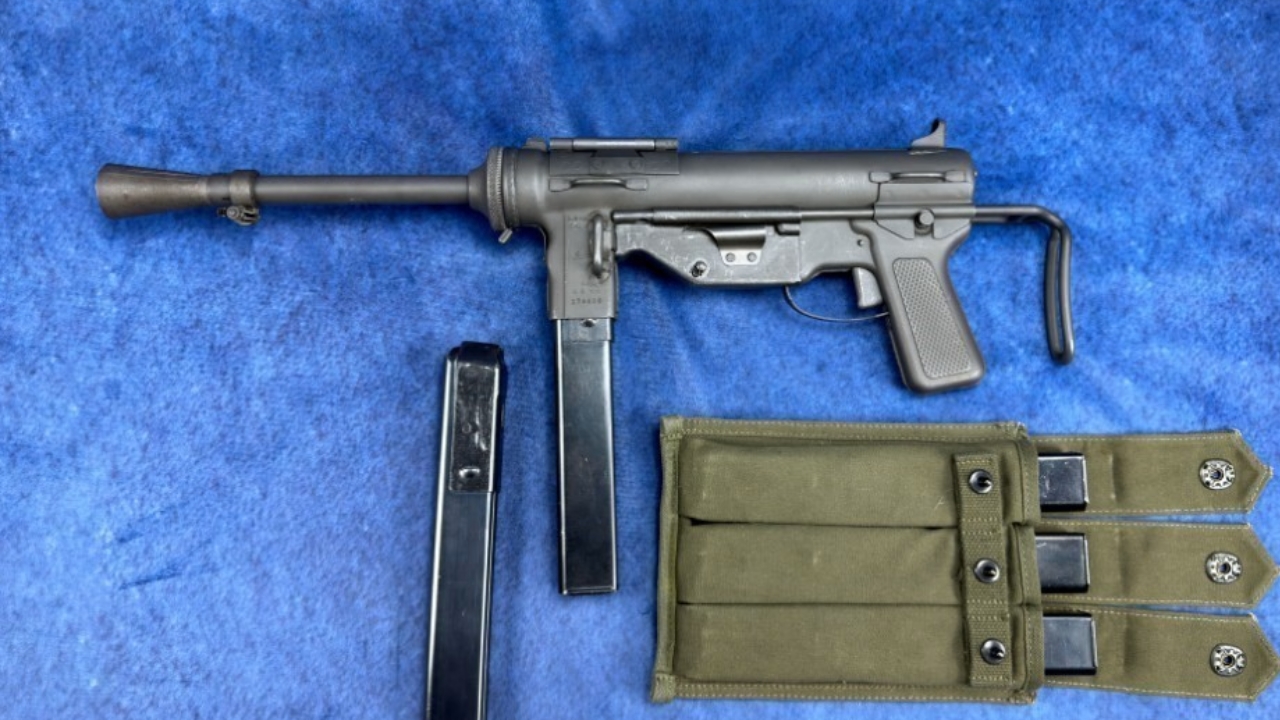
The M3 didn’t try to be fancy. It was built to be produced fast, issued widely, and kept running with minimal drama. That approach mattered in wartime, and the M3 delivered a compact submachine gun that troops could understand quickly and maintain without a full workshop.
What puts the M3 on a “best” list is how well it matched the Army’s real-world needs. It was a practical answer to cost and production pressures, and it still provided dependable close-range capability. When your standard is “works in the mud, works in the cold, works after being bounced around,” the Grease Gun holds its ground.
Browning M1919 Machine Gun

Crew-served guns win wars by doing the unglamorous work: sustained fire, beaten zones, and keeping heads down. The M1919 did that job for decades. It’s one of the defining American machine guns of the 20th century, and the Army leaned on it in multiple conflicts because it delivered steady performance.
The M1919’s strength was consistency. It could be mounted, fed, and maintained in a way units understood, and it could keep firing in conditions that punished lesser guns. It also set a baseline for what a general-purpose machine gun role should look like before the Army moved fully into newer systems.
Browning M2HB

Vickers Tactical/YouTube
If you’re talking about Army service weapons with unmatched staying power, the M2HB belongs near the top. It has served for generations because it does what it’s asked to do: deliver heavy fire, reach, and authority against targets that smaller calibers can’t handle.
The M2’s “best” trait is that it keeps showing up in new contexts—vehicles, fixed positions, and remote mounts—without losing relevance. It’s heavy and it’s not friendly to carry, but it was never supposed to be. When you need a machine gun that soldiers trust to keep working and keep shooting, the M2 has earned that trust repeatedly.
M14 Rifle

The M14 has a complicated legacy, but it still earns a place on this list because it did several jobs well and remained useful long after it stopped being the primary service rifle. It offered reach and power in a platform that could still be handled like a traditional rifle, and it became a natural fit for marksman roles.
What you see over and over is that the M14 stayed in service in specialized ways—often because it gave units capability without reinventing the wheel. It’s not a perfect rifle, and it wasn’t the ideal long-term standard issue. But as an Army tool that kept filling needs across decades, it proved its value.
M16A1

The M16A1 is where the Army’s modern rifle era truly settled into place. Early problems get talked about constantly, but the A1 era is where the platform matured into a reliable service rifle with a lighter carrying weight and controllable recoil for fast, accurate shooting.
The M16A1 also shaped training, doctrine, and expectations for individual weapons. It wasn’t only about caliber—it was about soldier load, sustained fire, and practical accuracy under stress. If you look at how long the core design has stayed relevant, you’re looking at a rifle that changed the Army’s relationship with the standard infantry weapon.
M4 Carbine

The M4 became the Army’s day-to-day workhorse because it fits how soldiers actually move and fight. It’s easier to handle in vehicles, in buildings, and in tight terrain, and it still gives you rifle-level performance in a package that’s more forgiving to carry for long hours.
Part of why the M4 belongs on a “best” list is familiarity and support. The Army built a massive ecosystem around it—parts, training, optics, and maintenance knowledge. That matters in the real world. You don’t want a gun that needs special treatment to stay running. The M4 became widely trusted because it could be issued broadly and kept in service with predictable upkeep.
M249 SAW

The M249 gave squads a lighter belt-fed option that could move with the pace of infantry and keep a steady volume of fire on tap. It became a defining light machine gun in U.S. Army service, and a lot of soldiers learned what “suppressive fire” felt like behind a SAW.
The reason it makes this list is how it expanded what a small unit could do without turning every fight into a crew-served operation. The M249 isn’t perfect, and it has quirks that armorers know well, but it gave squads a real capability boost. When you judge “best” by battlefield utility and how widely it was relied upon, the SAW checks the box.
M240 Machine Gun

The M240 has a reputation that comes from one thing: it keeps running. In Army service—mounted or carried—it earned respect because it can handle sustained use without turning into a maintenance problem every time the tempo rises.
It also fits the Army’s practical needs. It can be used in multiple roles, supported by a deep supply chain, and trusted across units that don’t share the same habits or maintenance standards. That kind of reliability is what soldiers remember. The M240 isn’t light, and nobody pretends it is. But if you want a machine gun that tends to work when conditions are ugly, this is one the Army has leaned on hard.
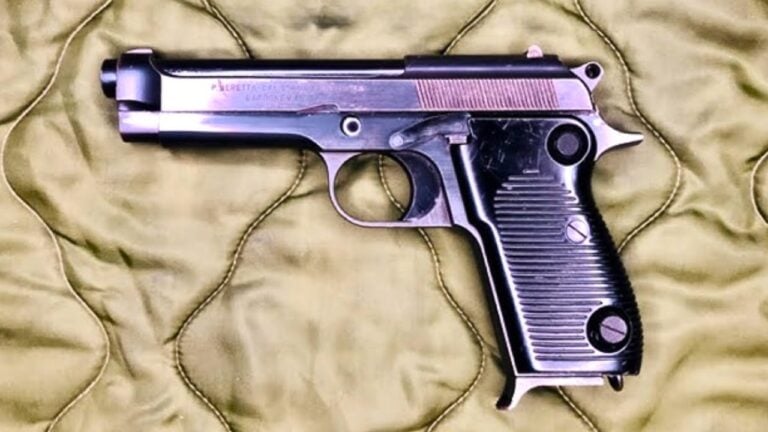
Beretta M9

The M9 served as the Army’s standard sidearm for decades, and it did that because it delivered consistent service performance with manageable recoil and an easy learning curve for a wide range of shooters. It was a straightforward duty pistol that could be issued at scale and kept running with routine care.
What earns it a place here is longevity and institutional trust. The M9 became the baseline pistol for an era, and it shaped how soldiers handled a double-action/single-action sidearm with a decocker/safety system. Like any service pistol, it wasn’t loved by everyone, but it was widely used, widely understood, and dependable enough that the Army kept it in the system for a very long time.
Like The Avid Outdoorsman’s content? Subscribe to our newsletter so you never miss an article.
Here’s more from us: