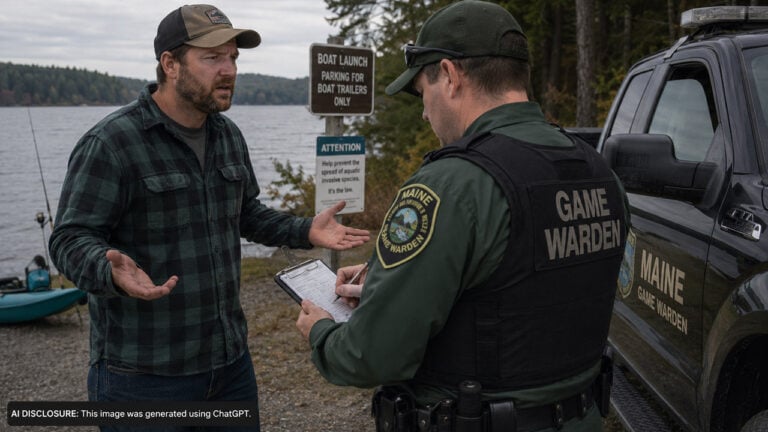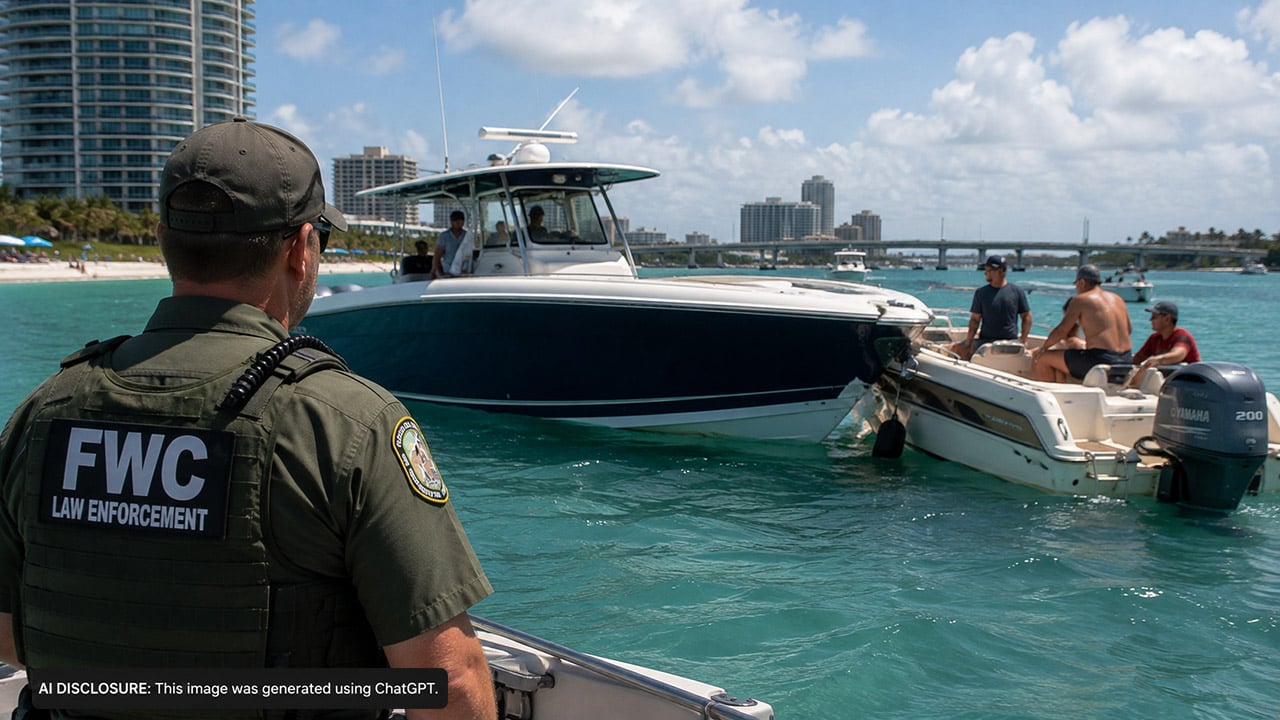
Photo credit: AI-generated image created using ChatGPT. Illustrative only
Haulover Sandbar is one of those places that can go from laid-back to chaotic in a hurry, especially after dark. And when big boats mix with smaller ones in tight water, the margin for error gets razor thin.
That’s the backdrop for a late-night crash that left three people seriously hurt and landed a Georgia man in jail. Details shared in the source post describe Florida Fish and Wildlife Conservation Commission officers investigating a collision near the sandbar that happened around 1 a.m. Saturday.
A big Donzi, a smaller Angler, and a bad meeting in the dark
According to FWC, 42-year-old Daniel Lawson was operating a 39-foot Donzi with multiple passengers on board when it collided with a 20-foot Angler carrying three people. On the water, that size difference matters—momentum, visibility, and reaction time all stack up fast when a larger vessel is running in close quarters.
FWC said the people on the smaller boat took the worst of it. One juvenile and two adult females were seriously injured and transported to an area hospital for treatment. When you hear “seriously injured” in a boating crash, you’re not talking about a bruised shin from a cooler lid—those are the calls that bring a lot of response in a hurry.
FWC arrested the operator and filed reckless boating charges
FWC identified Lawson as the operator of the Donzi and said he’s facing several charges, including reckless boating. The agency did not lay out every detail of what led to that charge in the material provided, but reckless boating is a serious line to cross.
Most outdoorsmen understand the idea without needing a statute read to them: if you’re operating in a way that shows a clear disregard for safety—speeding where you shouldn’t, not keeping a proper lookout, running too close, or ignoring basic navigation rules—sooner or later you’re going to put someone in the hospital. On water, there’s no shoulder to pull onto, and there’s not much to absorb impact when things go wrong.
The rescue response was immediate and visible from shore
A nearby resident, Joseph Levy, described looking out late at night and seeing a helicopter circling low—something he said usually doesn’t happen that late. He also saw what appeared to be a Miami-Dade Fire Rescue boat alongside one of the damaged vessels.
Levy’s description paints the kind of scene nobody wants to be part of: rotating aircraft overhead, rescue boats working in the dark, and a damaged boat “half in the water.” That’s the moment where every decision earlier in the night gets measured against one thing—did everybody make it home.
Seeing a boat “half in the water” isn’t normal around the sandbar
Levy also pointed out something locals recognize right away: around areas like Haulover, boats end up in odd places for reasons that aren’t always dramatic. Low tide can beach a boat and leave it stuck until water levels come back up.
But he said you “hardly ever see collisions.” That’s the part that should stick with anyone who runs coastal Florida—these aren’t isolated ponds or empty lakes where you can open it up and not see another soul. Sandbars draw crowds, and crowds draw risk. Mix in nighttime operation, and it gets unforgiving.
What this kind of crash should remind every boater heading to a sandbar
FWC is still investigating, and the final findings will be up to the investigators. But the basic outline is enough to underline a few practical truths that apply whether you’re running a bay boat, a center console, or something big and fast.
First, late-night running is its own animal. Navigation lights, glare, wakes, and dark silhouettes can turn “plenty of room” into “nowhere to go” in seconds. Second, size doesn’t make you safer when you’re the one doing the hitting. A 39-foot boat carries a lot of mass, and if it meets a 20-footer wrong, the smaller boat and its passengers are going to pay for it.
Third, places like Haulover aren’t just a destination—they’re a traffic problem. People anchor up, drift around, idle through channels, and do all of it with varying experience levels. If you’re running through that environment, the standard has to be higher: slower, sharper lookout, and no “I’ve got this” attitude.
Three people reportedly ended up seriously injured in this collision. That’s the real cost, no matter what charges get filed or how the case turns out. If you take your family out on the water, or you fish weekends with buddies, it’s worth treating every crowded sandbar trip like it could turn into a rescue scene—because sometimes it does.
Like The Avid Outdoorsman’s content? Subscribe to our newsletter so you never miss an article.
Here’s more from us: