Photo credit: AI-generated image created using ChatGPT. Illustrative only
In a lot of rural places, folks still believe that if you do the right thing—call 911, document the damage, get medical treatment, hand over evidence—then the system will do its part. A New York woman says she did all of that after repeated domestic violence incidents, including serious injuries and a firearm theft, and still watched the case go nowhere.
In the original post, she describes a string of escalating episodes: property damage, an assault that left her with broken bones and surgeries, and an incident where her personal shotgun was stolen and used as leverage to threaten her into coming back. She says police took the gun into evidence, yet her abuser wasn’t charged and was instead taken to a psych ward and released hours later.
A pattern of violence that kept escalating
The woman says the violence didn’t happen once and stop—it built, especially any time someone witnessed it or it was reported. She describes multiple calls involving violence and firearms, along with police responses that she felt consistently protected her abuser rather than separating him from her or moving the case forward.
One of the earlier events she mentions is her vehicle’s windshield being smashed. Later, she says her phone was broken on scene—smashed so she couldn’t call 911 before the assault—and then she was body-slammed hard enough that she “screamed” that her foot was broken as soon as it happened. To anyone who’s spent time around hard country living, that’s not a small scuffle. That’s the kind of injury that changes your whole year, sometimes your whole life.
The assault and the injury that didn’t get treated like a felony
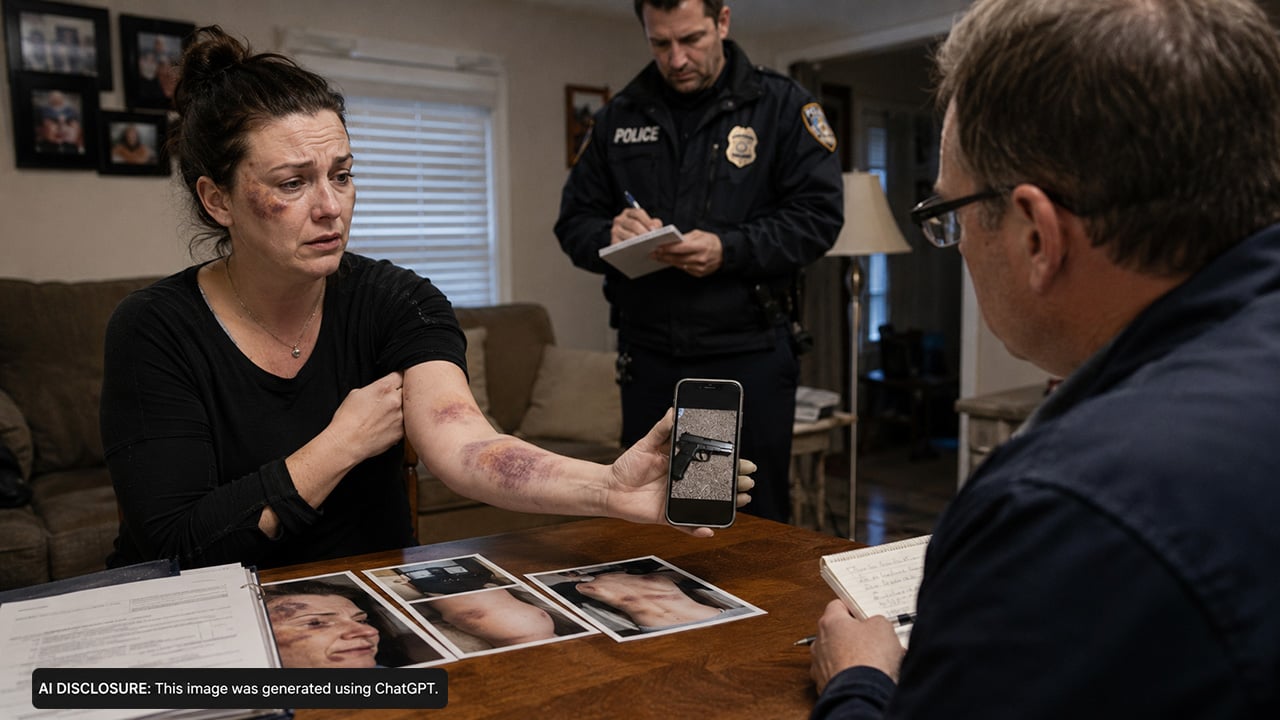
Her account is specific about the medical side. She says her leg/foot was broken or torn in three places, required two surgeries, and she never fully recovered. She also says she lost her career because of it. She was taken by ambulance and had confirmation of broken bones within hours.
But she claims police dismissed the assault as “family trouble,” reported that she refused to say what happened, and didn’t forward the case for follow-up with hospital results—even though she says the broken bones were documented quickly and she had evidence, including a photo of her broken phone listed as hers in the incident paperwork. That gap—serious injury on paper, but no meaningful push to investigate—sits at the center of her frustration.
When a stolen shotgun became a tool for control
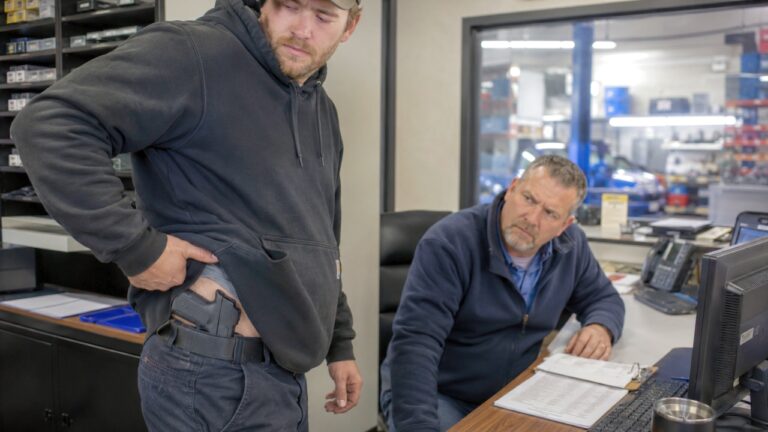
For gun owners, the firearm part of this story hits different. The woman says that after she left and was hiding at a hotel on crutches, her abuser stole her personal shotgun. According to her post, the gun had been removed from their house for safety and locked up, but he got it anyway.
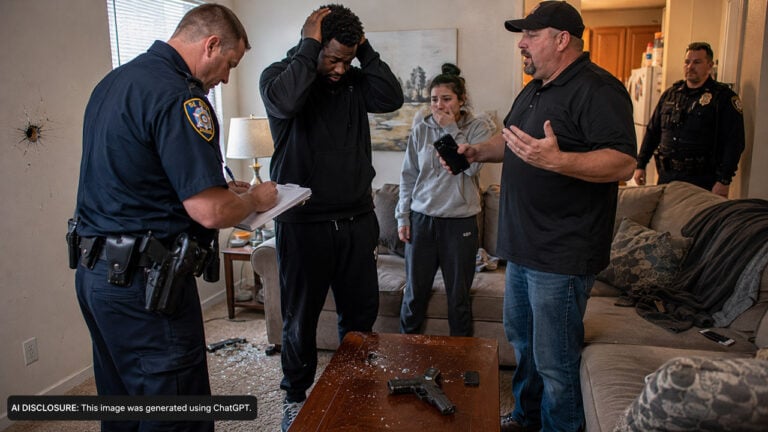
She says he then used the shotgun to threaten and manipulate her, sending pictures of himself loading it “step by step” and saying he would kill himself with her gun if she didn’t answer and come back. Police responded and took the gun into custody, placing it in an evidence locker. But she says he wasn’t charged, and was allowed to go to a psych ward and then get out hours later.
From a practical standpoint, this is why so many people stress layered safety: not just “locked up,” but secured in a way that an unstable person in the home can’t access—because once a firearm is part of the coercion, it isn’t just a property crime anymore. It’s leverage.
She says law enforcement closed ranks—and other help dried up
After the incidents, she says she tried to push the case forward and ran into a wall. She describes a recorded 2.5-hour meeting with investigators and a chief that she felt was full of “abuse tactics,” even while going over reports that she says contained evidence of multiple felony-level crimes.
She also says she approached State Police and was told that if what she said was true, there were “much bigger problems” and it would have to be reported “far higher up” than the State Police. But after they confirmed the details, she claims they stopped responding and wouldn’t call back.
Then came another hard twist: she says once domestic violence centers learned police complications were involved, they “abandon[ed]” her as a patient despite her medical records and evidence. Whether that’s fear of taking on a politically messy situation, limited resources, or something else, the end result she describes is isolation—exactly what an abuser counts on.
The practical fallout: housing, benefits, and staying alive
Her story isn’t told like a courtroom argument. It’s told like someone watching their life shrink. She says she’s still in danger, has nowhere to live soon, and can’t get agencies to provide services she needs.
She also describes being in New York’s domestic violence address confidentiality program, which substitutes an address in the state capital and, in her understanding, is supposed to be accepted by agencies unless they get specific permission to demand a physical location. In her telling, agencies aren’t honoring it. Counties argue she isn’t their financial responsibility, and she says she’s being denied public assistance and “straightforwardly abandoned.”
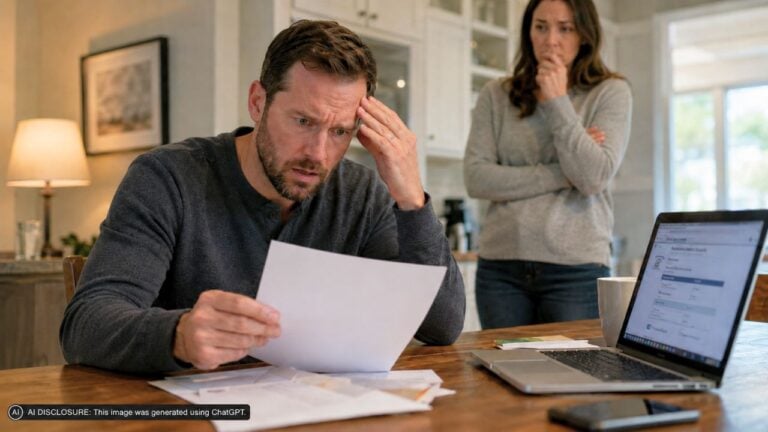
If you’ve ever tried to navigate bureaucracy from a stable home with a working phone and a full tank of gas, you know how frustrating it can be. Now add injuries, threats, and constant safety planning. That’s the kind of grind that breaks people down.
What people tend to focus on in cases like this
Even without seeing the full back-and-forth, the pressure points are plain. When a local agency won’t move a domestic violence case, people usually zero in on documentation, escalation paths, and outside oversight. The woman says she has “recordings, pictures, videos, medical records,” and that can matter—because when someone claims you refused to talk or there’s “no proof,” a paper trail is sometimes the only thing that cuts through.
Another point folks latch onto is the firearm: it was allegedly stolen, photographed while being loaded, and then ended up in an evidence locker. That’s a tangible item with a custody chain, and in a lot of places it’s the kind of detail that should trigger clear next steps. Her allegation is that it didn’t.
Finally, there’s the misconduct angle. She says she can’t find attorneys willing to take it because once “police misconduct” is involved, nobody wants to touch it. That reluctance is something many people in small towns recognize—whether it’s fair or not, challenging local power structures can get expensive and complicated fast.
For outdoorsmen and gun owners, the takeaway isn’t about politics. It’s about reality. When violence, threats, and firearms collide—and the system doesn’t respond the way you’d expect—the most important thing is staying alive, staying separated, and keeping a clean trail of evidence and requests for help. This woman’s account reads like someone who tried to do that, and is still fighting to get someone, anyone, to take it seriously.
Like The Avid Outdoorsman’s content? Subscribe to our newsletter so you never miss an article.
Here’s more from us: