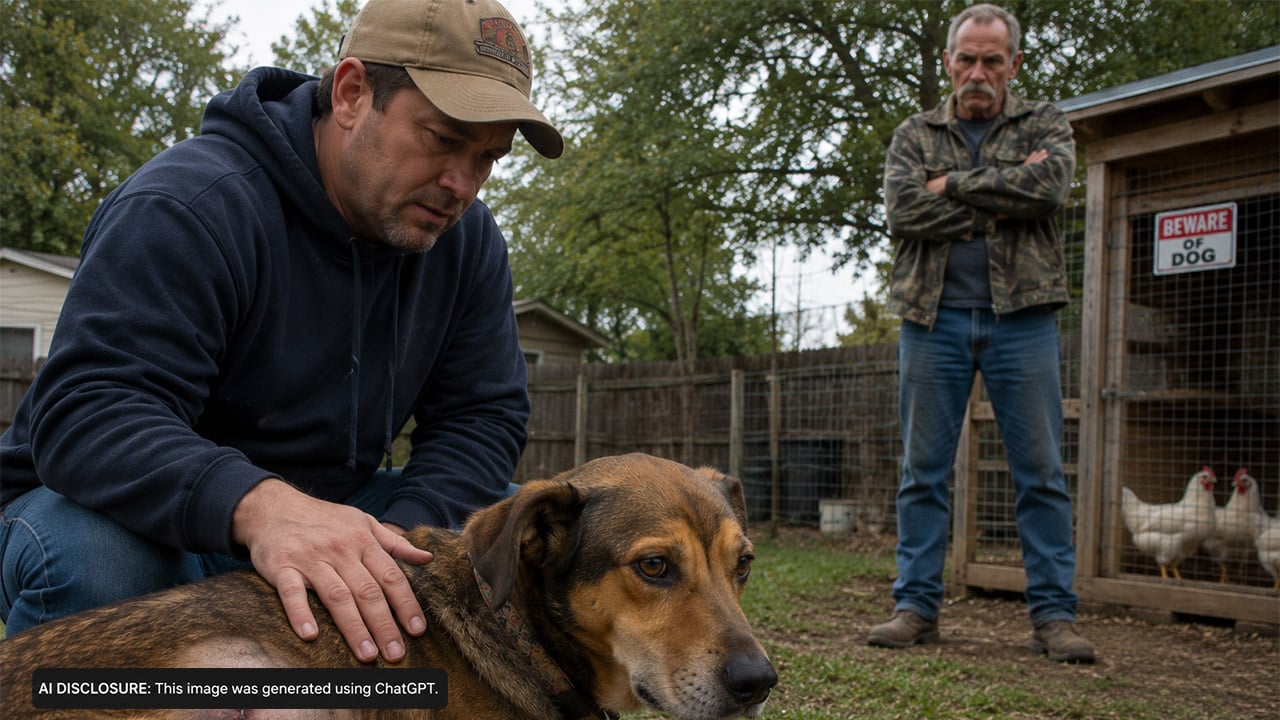
Photo credit: AI-generated image created using ChatGPT. Illustrative only
Out in the country, the line between “my place” and “your place” can get fuzzy fast—especially when animals are involved. One day it’s a dog nosing around a fence line, the next it’s a gunshot and a family scrambling to keep a pet alive.
In the original post, a woman named Karen says her neighbor shot her daughter’s dog with a .22 pistol because the dog was close to his chicken coop. The dog survived the initial shooting, but the medical fallout has reportedly turned into a long, expensive fight.
A dog near a chicken coop turned into a gunshot
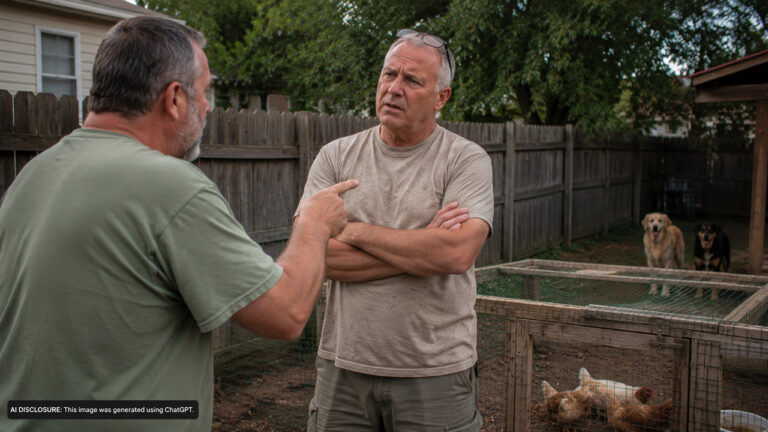
If you’ve kept chickens for any length of time, you understand the protective streak that comes with it. Predators hit fast, and once a coop gets raided, people get serious about defending it. But Karen’s account describes a different kind of situation: not a coyote in the act, not a fox in the run—her daughter’s dog being shot for being near the coop.
That’s the part that makes this story feel like a hard rural reality check. Dogs roam. Neighbors get tired of it. And when somebody decides a firearm is the answer, the consequences don’t stop at the property line.
The .22 pistol shot didn’t kill the dog—but it left a mess inside
Small calibers get treated like they’re “no big deal” because the recoil is light and the report is mild compared to centerfire rifles. But a .22 is still a bullet, and at close range it can do ugly things—especially if it hits bone and starts fragmenting.
According to Karen, the bullet entered the dog’s rear end, fractured bone, and left shrapnel behind. She says the shrapnel caused ongoing issues in and around the wound area, turning it from a traumatic injury into a medical situation that wouldn’t simply heal up with time.
Vets reportedly found infection and gave a grim choice
The post says the dog’s wound became infected with E. coli and staph—two things you never want to hear associated with a deep injury. Once infection gets into damaged tissue and around bone, you’re no longer talking about “a wound that needs stitches.” You’re talking about a fight that can spiral into chronic pain, ongoing drainage, and systemic illness.
Karen says the veterinary team laid out a stark decision: live roughly six months without surgery, or attempt major surgery to give the dog a chance to survive. A CT scan reportedly showed the need to remove the bullet and shrapnel, scrape infected bone, clean out the affected area, and then try to beat back what’s left with antibiotics.
The financial damage stacked up fast
Anyone who’s ever sat in an emergency vet parking lot knows the math gets brutal in a hurry. Karen says the ER visit the day of the shooting ran about $2,000. Follow-up vet appointments added another $400, and she describes “lots of medications that didn’t work.”
Then came the CT scan at $2,700, and a surgery estimate around $5,500—something she expects could climb higher. That’s not a routine bill for most families. It’s the kind of number that forces hard decisions, even when the pet is loved like family.
How neighbor disputes like this usually go wrong in rural country
This isn’t the first time a dog-versus-livestock conflict has ended badly, and it won’t be the last. In rural areas, people often operate on handshake expectations: keep your animals on your land, I’ll keep mine on mine. When that breaks down, the next steps matter.
On one side, chicken owners worry about losses and repeat incidents. On the other, dog owners may believe their animal was merely wandering, not actively harming anything. But once shots are fired, the fight changes shape. It becomes about safety, judgment, and whether somebody was justified—or reckless.
Even if a person believes they’re protecting animals or property, discharging a firearm in a neighborhood setting is not something to take lightly. Safe backstops, the angle of fire, what’s beyond the target—those aren’t optional details. A .22 round can travel a long way if it skips, and rural roads, barns, and homes aren’t as far apart as folks like to pretend when tempers are hot.
The options the family is leaning on now
Karen’s post is centered on raising money to cover the dog’s surgery and care. She says she “can’t lose another person or animal” right now, which tells you this family is already carrying weight before the vet bills ever arrived.
Her stated plan is straightforward: surgery to remove bullet fragments and treat the infected bone, followed by antibiotics in hopes the dog can recover. She also shared a GoFundMe link in the post for anyone willing to help with the costs.
For readers who live the rural life, the practical lesson here isn’t complicated. If you own chickens, harden the coop and run—good fencing, covered runs, buried wire to deter digging, motion lights, and cameras. If you own dogs, don’t rely on “she usually stays close.” Use a tie-out, kennel, leash, or a real fence if you’ve got neighbors and livestock nearby. Most of these blowups start with the same two words: “I thought.”
At the end of the day, everybody’s got a right to protect their animals. But using a handgun on a neighbor’s dog—especially if the dog isn’t actively attacking—can set off a chain reaction that’s hard to undo. In this case, Karen says it’s left one dog fighting for her life, and a family staring down a surgery bill just to keep her breathing.
Like The Avid Outdoorsman’s content? Subscribe to our newsletter so you never miss an article.
Here’s more from us: