Photo credit: AI-generated image created using ChatGPT. Illustrative only
Most folks who carry a handgun every day spend their time thinking about the obvious stuff: printing, holster fit, where you can and can’t legally go, and how to keep your head on straight in public. What a lot of gun owners don’t plan for is what happens when a family argument gets framed as a mental-health crisis and the system starts moving faster than the truth can keep up.
That’s the position one young Indiana college student says he found himself in, after an ugly night at home ended with police, an involuntary hospital hold, and his handgun leaving the house in an evidence-style handoff. His account is laid out in the original post, and the details read like a cautionary tale for anyone who keeps a firearm in a tense household.
How a family blowup turned into a “suicide hotline” call
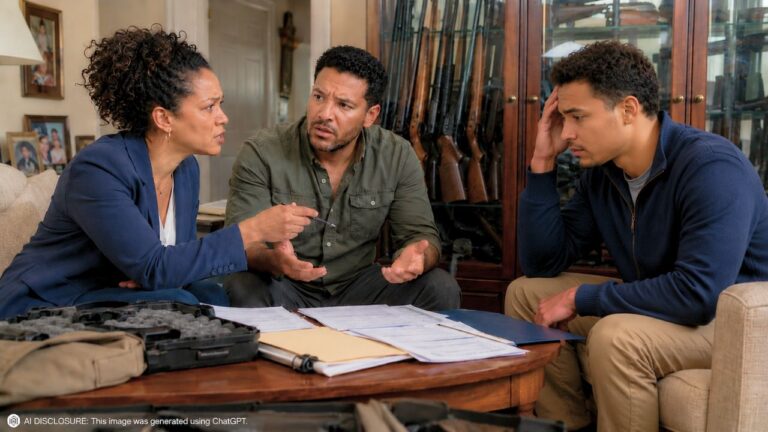
According to the student, he’s in his early 20s, lives at home, and is licensed to carry. He also says his parents are strongly anti-gun, but that they’d been “accepting” of his handgun and carry license after he made them aware of it before moving back in.
The trouble started after an argument. He decided to pack a bag and leave for a while to stay with his girlfriend, mainly to get away from the home environment. While packing, his parents saw him load and chamber the handgun as he prepared to carry it, then he put it into his bag before heading out to his vehicle.
Outside the garage—where he says he could get phone signal—he called his girlfriend to confirm he could come over. During that time, his parents pulled out of the garage and told him they didn’t feel safe inside the house. He says he tried to calm things down and told them he never threatened them or himself; he was simply getting ready to leave.
His parents wouldn’t return unless he gave them the gun. He refused. Then, while he was on the phone trying to talk them down, he says one of them called the suicide hotline, and a hotline worker called him several times.
Why the presence of a gun changed everything
Anyone who’s spent time around firearms knows the reality: the moment the word “gun” gets inserted into a heated situation, the response hardens. This student says he knew that too, which is why he didn’t want to engage with the hotline caller. He states he answered two calls but told the caller he’d rather not speak and that it was a family argument. He also says he was trying to avoid the situation escalating to police involvement.
But it did escalate. He says that while he was still on the phone with his parents, he saw police arriving down the road. From there, his focus shifted to compliance and keeping the situation from going sideways.
He says one officer called him, he told them he was not armed, answered questions, walked down the driveway and road, and allowed himself to be handcuffed. He reports being frisked and questioned about whether he made threats toward himself or his parents. He says he told police “no,” and when asked whether he’d said or done anything that could be construed as a threat, he replied “maybe,” but that he never intended it that way.
According to his account, an officer told him that was enough to take him to the hospital and hold him overnight until a psychologist could see him.
The involuntary hold and the firearm handoff
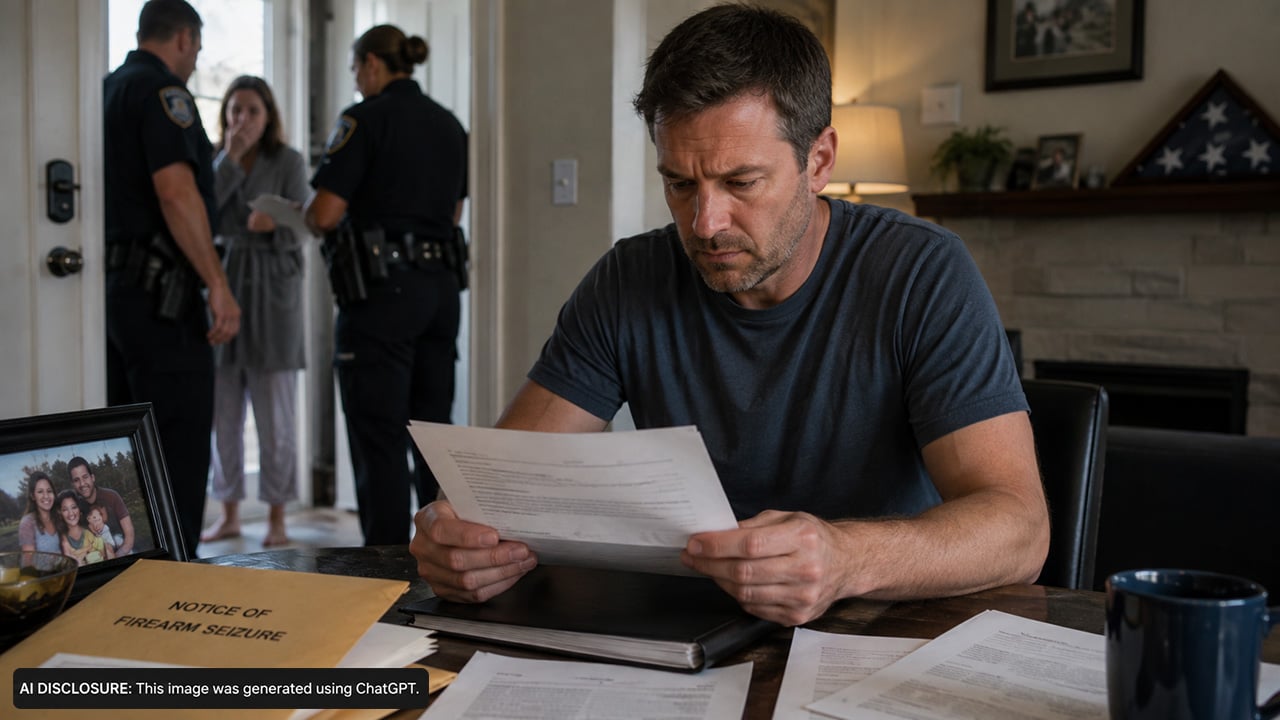
Here’s where the practical consequences really hit. The student says police asked if he owned a gun. He answered yes. They then asked if they could take it.
He initially said no, but he says another officer told him he would “simply have to go pick it back up at the sheriff’s department once” he was released from the hospital. Based on that assurance, he consented to them taking it.
He also says he sat in the police car for 45+ minutes while officers spoke to his parents before transporting him. He describes himself as polite and cooperative because he believed he’d done nothing wrong and assumed the process would sort itself out.
He was released the next morning after seeing a psychologist. After that, he went to stay with his girlfriend for about a week. Then the next problem landed: he received a summons to appear in court, and he says the prosecutor doesn’t want him to have the gun back and may move to suspend his carry license.
What makes this kind of situation so hard to fight
Out in the country, we’re used to solving problems face-to-face. But once a situation gets routed through emergency mental-health channels and law enforcement, the “common sense” version of events can get lost behind paperwork and policies.
In the student’s telling, he wasn’t threatening anyone, his parents weren’t even home while the hotline call was being made, and police arrived before his parents returned. He says he told his parents over the phone that he didn’t have the gun on his person and wasn’t threatening anyone, but that they told the hotline he “have a gun” and was threatening himself and them.
Now he’s worried he won’t have a defense for getting the firearm returned because he feels like nobody has asked for his side in a meaningful way. That’s a gut-punch feeling, especially for a lawful carrier who thought cooperation would be rewarded with a quick reset.
Another reality gun owners need to understand: even if you’re cleared quickly by a clinician, the administrative and legal wheels can keep turning. The hospital clearing you doesn’t automatically mean the prosecutor is satisfied, and “we’ll give it right back” isn’t a promise anyone should bank on without seeing the actual process in writing.
The practical lessons for gun owners living in tense households
This story is specific to one family and one night, but the takeaways apply anywhere. If you live with people who are uncomfortable with firearms—or who may use the presence of a gun as leverage in an argument—your margin for error is thin.
First, think hard about storage and handling during conflict. “Loading and chambering” in front of someone who’s already upset and anti-gun is like tossing a match into dry grass, even if you’re doing nothing illegal. It may be normal gun handling to you, but to them it can look like an escalation.
Second, understand that consent matters when it comes to seizures and recovery. The student says he agreed to police taking the gun based on being told he could pick it up after release. If that turned out to be inaccurate, he’s now learning the painful difference between an officer’s casual assurance and what the local process actually requires.
Third, don’t try to “talk your way around” a hotline call once it’s in motion. In his account, he tried to avoid engaging because he knew police would likely come if a gun was mentioned. But when the call has already been made, the better move is often to stay calm, be factual, and avoid statements that can be interpreted broadly—especially answers like “maybe” when asked about threats. In the real world, ambiguous language gets written down in the worst possible way.
Finally, if your carry license and firearm ownership are on the line, treat it as serious as a suspended driver’s license in hunting season. You can’t “explain it later” once the court dates start stacking up.
What the student says he’s doing next
He states he has an upcoming court date to try to get his gun back and retain his carry license, and he’s worried his parents will stick to their story. He also asks whether he needs a lawyer and how to go about proving the report was false.
He’s also clearly bothered by how quickly things moved—from a family argument, to police, to an overnight hold—without him feeling like his account was weighed fairly. Whether that’s how the system was required to operate in that moment or whether it was avoidable, it’s the kind of experience that leaves a lawful gun owner feeling cornered.
If there’s one grounded reminder to end on, it’s this: a firearm can protect you from bad guys, but it can also become the focal point that turns a domestic dispute into a legal and administrative mess. If you’re carrying under someone else’s roof, plan for the human problems as much as the hardware—and don’t assume the system will “sort it out” just because you kept your cool.
Like The Avid Outdoorsman’s content? Be sure to follow us.
Here’s more from us: