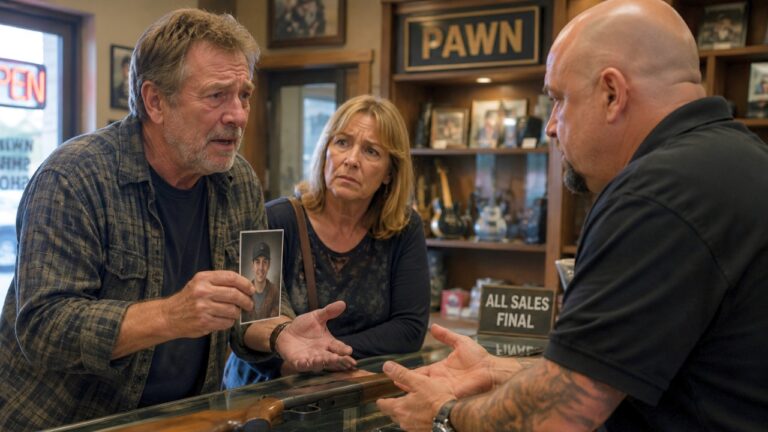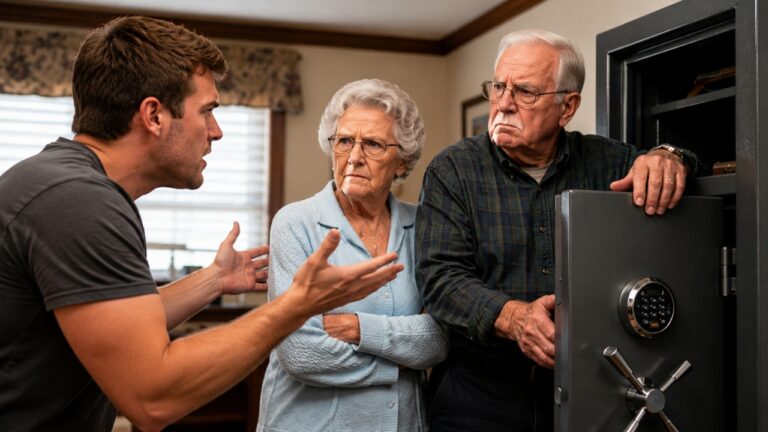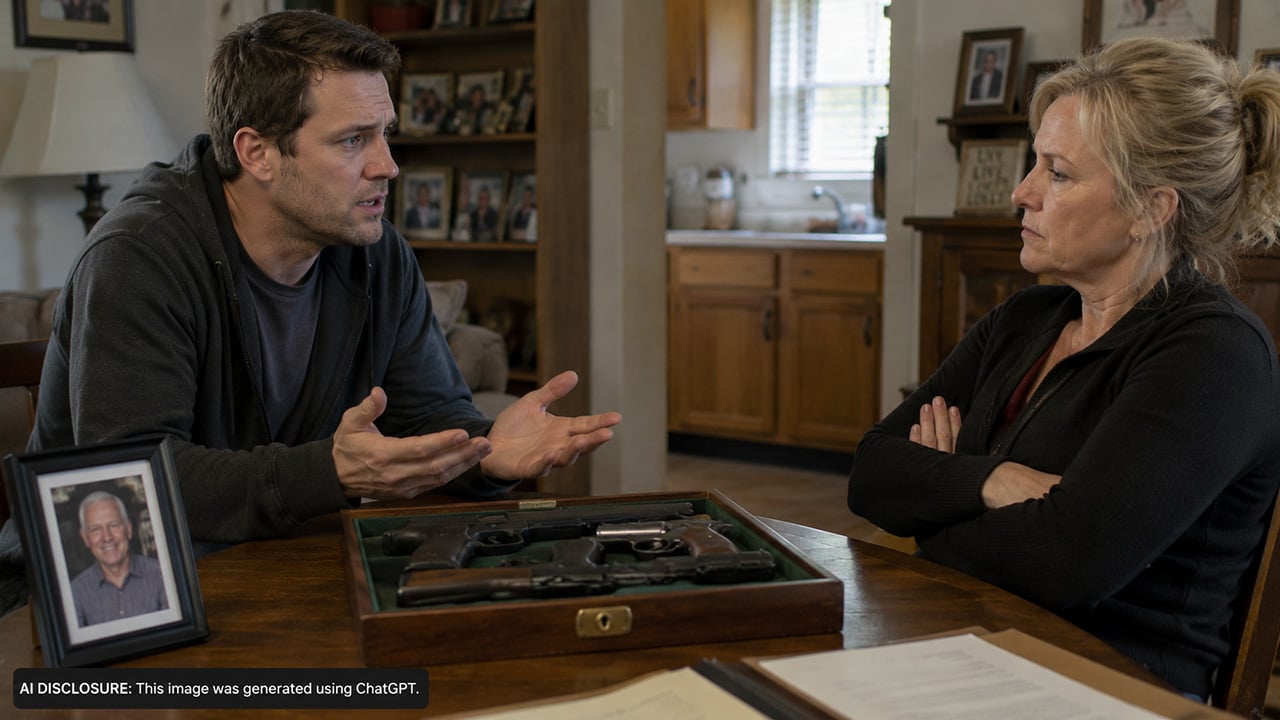
Photo credit: AI-generated image created using ChatGPT. Illustrative only
When a family member dies unexpectedly, you expect grief, paperwork, and a few hard days sorting out what’s next. What you don’t expect is finding out the guns that should stay in the family are sitting somewhere else—locked up in someone else’s safe, or worse, already moved to a new address.
That’s the situation one California man laid out in the original post: his dad passed away suddenly, and several firearms he believes he’s legally supposed to inherit never made it home. Instead, they were left at an ex-girlfriend’s place, and now she allegedly won’t hand them over.
The guns were left at the ex’s house before his dad died
According to the post, the father told his son about two months before he died that he’d left multiple firearms—handguns, rifles, shotguns, and a gun safe—at his ex-girlfriend’s place. After the death, it took the son a couple months to handle the rest of the estate and then circle back to the firearms, which is a pretty normal timeline when you’re juggling funeral costs, bank accounts, and everything else that comes with losing a parent.
When he finally reached out to retrieve them and start the transfer process, he says he had “good information” that the ex had recently moved the firearms and safe to a new location—her new boyfriend’s place. That detail matters, because once firearms start getting moved around between people who aren’t the lawful owner, the risk goes up fast: stolen-gun reports, bad storage, illegal possession issues, or guns quietly disappearing one by one.
A story about surrendering guns didn’t match what law enforcement said
The son contacted the ex-girlfriend to arrange pickup. He says she told him the guns were surrendered to law enforcement “years ago” when his dad had a restraining order. That kind of claim can sound plausible on the surface—people do get firearms removed during certain court orders—but it’s also the kind of story that gets used when someone wants a conversation to end.
He didn’t stop there. He called agencies in the area to verify, and he says none of them had any record of firearms in his dad’s name being held. Based on that, he wrote that he’s “95% confident” she still has the guns, moved them, and/or handed them to the new boyfriend.
For gun owners, this is the part that should feel familiar: you can do everything right, and you still hit a wall because the proof you need—serial numbers, a property list, transfer records—isn’t in your hands.
California paperwork made it harder to even identify what was missing
The poster said he attempted to contact the DOJ to get a list of serial numbers tied to his dad, but he was rejected. He added that law enforcement told him to try it, only for him to learn the DOJ would release serial-number information only to law enforcement.
That’s a big deal for any estate situation involving firearms. You can’t accurately report stolen guns without serial numbers, and you can’t confidently prove what you’re looking for if you don’t have a list of what existed. All he knows is there are at least “6+” firearms, including guns that belonged to his dad and his grandpa, with one described as an antique from WWII.
It’s also a reminder that “registered in his name” can mean different things depending on the firearm type and the state’s record system. In practical terms, what matters is documentation that supports ownership and inheritance—and the ability to give law enforcement enough specific information to take a report seriously.
Why this becomes more than a property dispute
A lot of folks hear “family inheritance argument” and assume it’s civil, not criminal. But the minute firearms are involved, the stakes change. If the guns are being stored by someone who can’t legally possess them, or if they’re being transferred to a third party (like a new boyfriend) without the proper process, it can create legal exposure for everyone in the chain.
There’s also the safety side. Guns moved in a hurry tend to end up in closets, vehicles, garages—places with poor security and more temptation. And if the firearms ever get stolen again from that new location, those serial numbers are what tie them to a future recovery. Without them, you’re hoping someone recognizes a description like “old WWII gun,” which is about as thin as it gets.
The poster said he can legally own guns in California and is the only person in his family who can inherit them. That’s important because it eliminates a lot of the usual family fighting over “who gets what,” and narrows the issue down to one question: where are the guns, and who has them right now?
The steps he’s considering—and the practical way to approach them
His next plan was to file a police report with his local sheriff and explain the situation, including the suspected location of the guns and contact/address information for the ex-girlfriend and her new boyfriend. He also asked what to include in the report to encourage a follow-up and whether there’s a way to “flag” the firearms if someone tries to sell them or use them.
If you’re in a similar position, the common-sense approach is to treat this like both an estate issue and a potential stolen-property issue—without trying to play detective yourself. The report should be as factual and organized as possible: what your dad told you (and when), when he died, when you requested the firearms, what you were told in response, and why you believe the firearms exist and were moved. The more you can support the timeline with texts, emails, or witnesses, the better. And if there’s any paperwork from the estate showing you’re the lawful inheritor, that’s the kind of thing that helps keep the conversation from being dismissed as a “he said, she said.”
He also asked if he has a chance of law enforcement caring. The blunt truth is that follow-up often depends on whether the report contains enough detail to identify specific guns, a clear allegation of unlawful possession or theft, and a credible path to recovery. “Several guns, no serial numbers, might be at a boyfriend’s house” is harder to run down than “six specific firearms, one is a WWII-era rifle with these markings, last known location is X, here’s documentation I’m the heir.”
Avoiding the biggest mistake: trying to handle it face-to-face
The temptation in a situation like this is to drive over, knock on a door, and try to “just get Dad’s stuff back.” That’s also how arguments turn into threats, and how somebody ends up calling 911 saying there’s a man at the door demanding guns. If there’s even a whiff of restraining-order history in the background—as the ex referenced—showing up in person is a bad play.
Guns are emotional, and family guns are even more so. But your dad’s old range rifle isn’t worth a confrontation that spirals into criminal accusations or worse. Keeping it procedural—report, documentation, and lawful recovery routes—isn’t just the safe way, it’s the way that holds up if this turns into a longer fight.
For outdoorsmen who’ve inherited grandpa’s shotgun or dad’s deer rifle, this story is a hard reminder: write things down while folks are still alive. Snap photos, record serial numbers, keep a simple inventory, and make sure the executor knows where the guns are supposed to go. Because once they leave the house and land in someone else’s control, getting them back can turn into a grind.
Like The Avid Outdoorsman’s content? Subscribe to our newsletter so you never miss an article.
Here’s more from us: