Photo credit: AI-generated image created using ChatGPT. Illustrative only
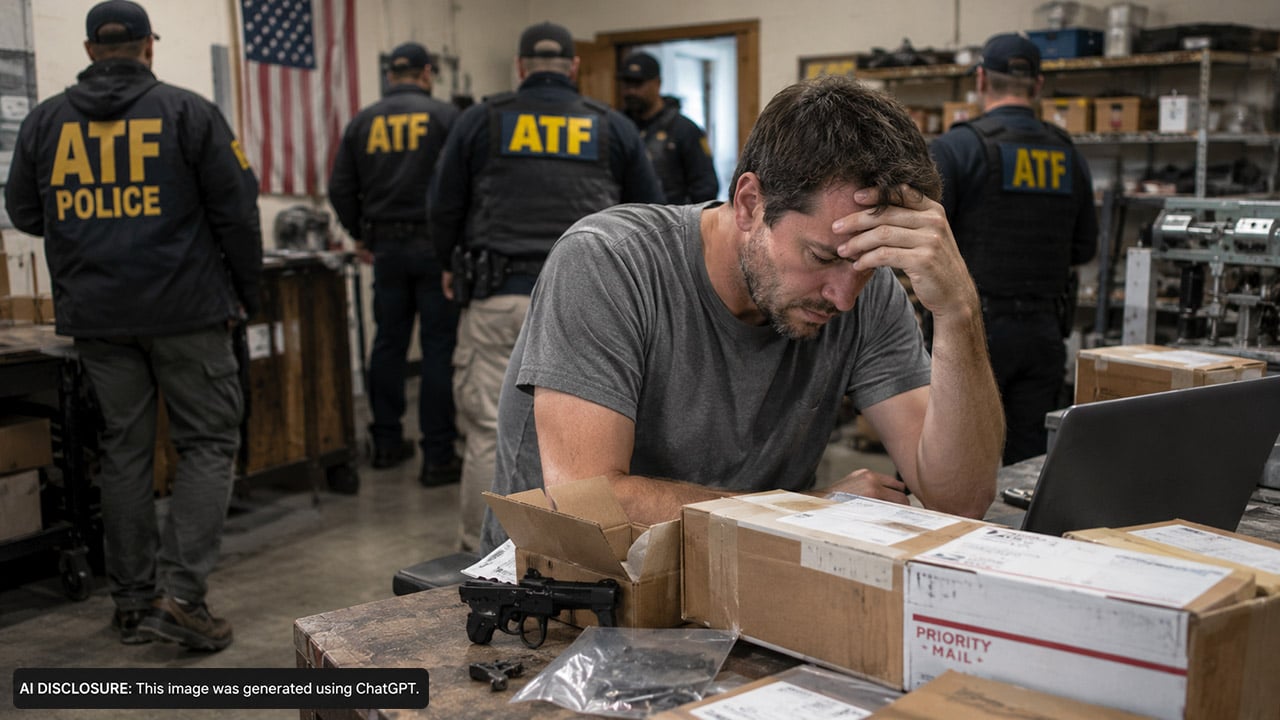
The timing is what makes this one hard to ignore. A small trigger maker was gearing up to make a fresh batch of forced-reset triggers available online, and instead, federal agents showed up and shut the whole thing down.
The account comes from the original post detailing what happened at tommytriggers.com, a company known for a 3-position forced-reset trigger. The poster says the raid happened the same afternoon the latest batch was expected to go live, and that the manufacturer later updated his website with a blunt explanation of what was taken and what he’d been ordered to stop doing.
A restock that never happened
In the outdoor world, whether it’s tags, ammo, or a hard-to-find part, you know the drill: you mark the time, set aside the money, and try to beat the rush. The poster said he was at his local gun shop around 3:00 p.m. waiting for the restock so he could do a cash purchase.
But the drop never came. About 30 minutes later, he tried calling the business and got a disconnected number—something he said was unusual because “tommy always answers the phone.” A few hours after that, the company website was updated with an explanation that put the missing restock in a whole different light.
What the company says ATF agents took
In the message posted on the company website (quoted in the source material), the owner said agents confiscated his phones and triggers and served him with a cease and desist. The site message also stated that the stocked triggers intended for sale were “kindly taken by the ATF this afternoon thus no triggers in stock.”
Most importantly, the website message claimed the ATF told him the triggers were machine guns, and that he was ordered to stop manufacturing and selling the FRT-15-3MD triggers “till such time if the courts find that it is not a machine gun.” The message added that email was the only way to get in touch because his phone had been taken.
The forced-reset trigger at the center of it
The manufacturer is described as the maker of “the only 3-position FRT trigger,” and the website statement specifically referenced the FRT-15-3MD. Forced-reset triggers have been one of those lightning-rod items in the gun world—parts marketed as still requiring a trigger press per shot, but designed to mechanically force the trigger forward to speed up follow-up shots.
In the company’s own words (as posted on the website), the ATF’s position communicated during the raid was simple: they considered the triggers to be machine guns. That one classification is the difference between a niche aftermarket part and something that can put a business—and customers—under a very different kind of scrutiny.
A new product was mentioned in the middle of the shutdown
Buried in the same website message was a detail that matters for understanding the day’s timing. The owner said he needed to get busy making more standard triggers and also referenced “our newest forced reset trigger the FRT-10-3MD.” In other words, the company wasn’t just trying to keep one product alive—it sounded like they were actively working on another.
That matters because it explains why the raid didn’t just stop shipments for a week. It potentially froze the whole direction of the business. When your equipment, inventory, and phones are removed on the day you planned to sell, you’re not just losing sales—you’re losing your ability to communicate, document, and pivot in real time.
The approval question, and why it stood out to readers
The website statement also said the owner hadn’t been able to ship the trigger to the ATF for approval because he was “rudely interrupted” that day, but that it would go out Tuesday. Whether that shipment would have changed anything is unknown from the source material, but it helps explain why people reading the post focused on process and timing.
Gun owners are used to the idea that classifications and determinations can make or break a product. So when a maker says he was trying to send something in for approval but got hit with a raid first, it’s going to raise eyebrows—especially among folks who don’t have any patience left for rules that feel like they change depending on who you are and when you get noticed.
Customer data and why that’s a real-world concern
The poster also raised a practical worry that goes beyond the manufacturer: customer information. He wrote that because the ATF took the owner’s phone, they were “almost certainly taking, or now have access to customer data.” That’s speculation, but it’s the kind of thing that lands heavy with regular gun owners who’ve ordered parts online and don’t like the idea of a purchase history turning into a list.
For everyday hunters and shooters, the takeaway isn’t internet drama—it’s the reminder that buying niche parts can carry consequences you didn’t plan for. Not because you intended anything illegal, but because enforcement and classification decisions can move fast, and they don’t always wait for a courtroom to sort it out first.
Whatever a person thinks about forced-reset triggers, this is a sharp example of how quickly a product line can go from “in stock soon” to “stop making them” in a single afternoon. If you’re watching this space, the practical move is simple: stay current on your local and federal rules, keep your paperwork and receipts squared away, and don’t assume today’s status will be tomorrow’s—especially with parts that sit right on the edge of how the law gets interpreted.
Like The Avid Outdoorsman’s content? Subscribe to our newsletter so you never miss an article.
Here’s more from us: