Photo credit: AI-generated image created using ChatGPT. Illustrative only
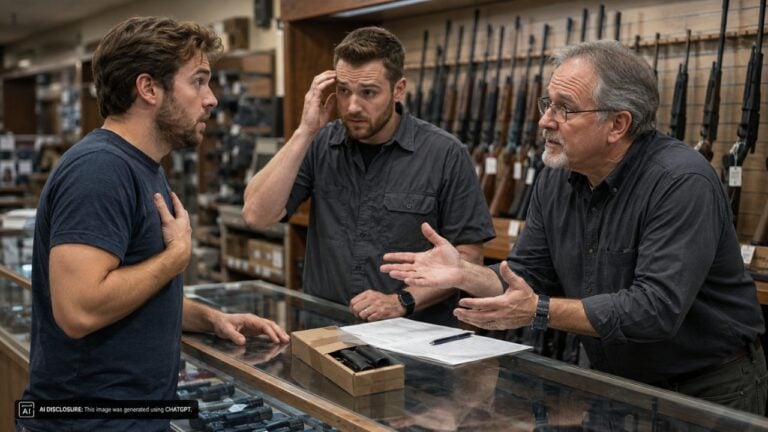
An 18-year-old Maryland gun buyer thought she’d be walking out of her local shop with a new shotgun after doing everything by the book. The gun had arrived at the FFL, she came in, looked it over, filled out the paperwork, and expected the usual short wait for a background check to clear.
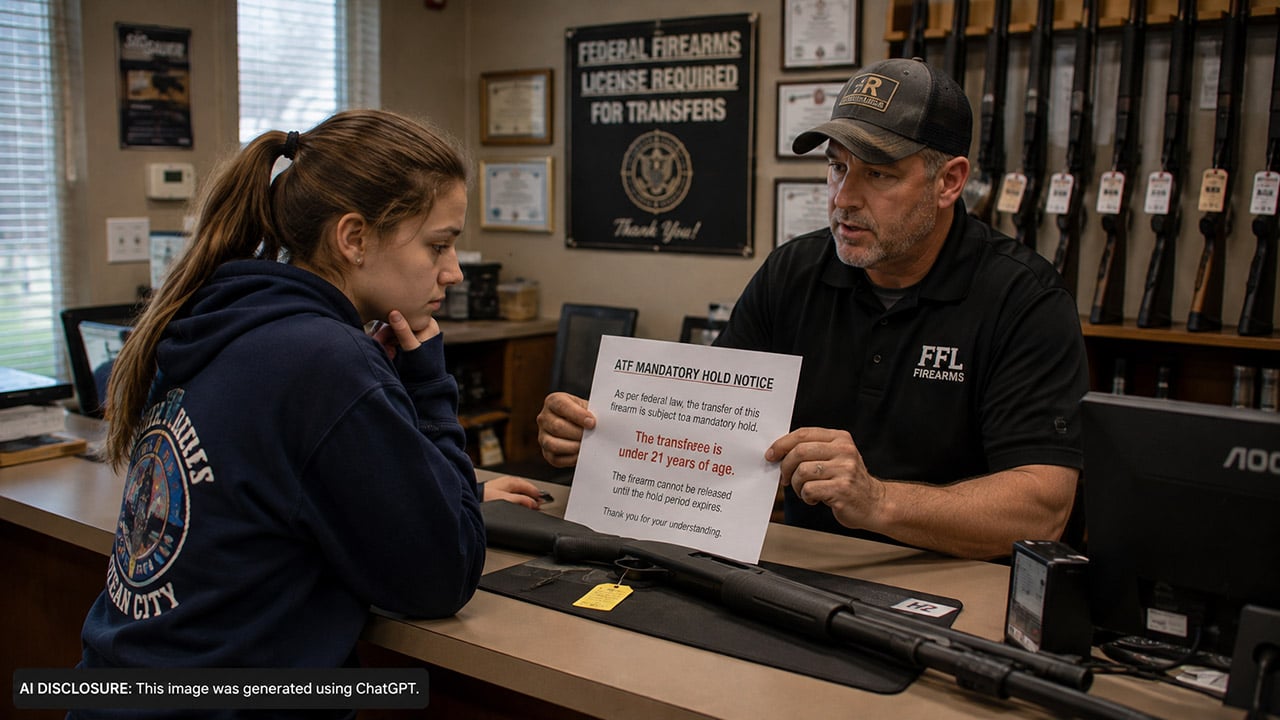
Instead, she was told she’d been placed on a mandatory hold because she was under 21—then told the hold had been extended even longer. In the original post, she asked if that kind of delay is normal, and whether something else—like the clerk noticing old self-harm scars—could be driving the decision.
A straightforward shotgun purchase turned into weeks of waiting
Her timeline was pretty clean. She said she bought a shotgun from Palmetto State Armory on May 24 and had it shipped to an FFL for transfer. The firearm arrived on June 1, and she went to the store on June 5 to pick it up, inspect it, and complete the paperwork.
That’s when the counter staff told her she couldn’t take it home yet. She said she was instructed to call back on June 11 because of an “ATF hold” tied to being under 21. When she called on the 11th, she was told the hold had been extended until June 23.
Why the age issue matters—especially for younger buyers
The buyer is 18, which in most places is old enough to purchase a long gun from an FFL, assuming state law allows it and the person isn’t prohibited. But the part that can catch new gun owners off guard is that “old enough to buy” doesn’t always mean “instant approval,” especially when a check gets delayed for any reason.
In her case, the shop framed it specifically as a hold connected to her being under 21. That’s what made it feel odd to her. From the buyer’s perspective, she’d done nothing that should trigger extra scrutiny: no criminal history, no disqualifying court orders, and no involuntary mental health commitment.
She worried the hold wasn’t really about paperwork
The post gets more personal from there. She explained that she’s a small-framed person—97 pounds—buying a 7.5-pound AR-style shotgun. She also mentioned visible scars on her arms from self-harm at age 13, and she was careful to clarify they were not from a suicide attempt.
That combination—her size, the modern tactical look of the shotgun, and visible scars—made her wonder if the delay was less about the background check system and more about human judgment at the counter. She laid out three possibilities: the employee saw the scars and got hesitant, the shop was being truthful and she was overthinking it, or the shop had somehow mishandled the gun and was stalling.
What an FFL can control, and what they can’t
Every experienced gun buyer eventually learns there are two different things going on during a transfer. One is the government background check process, which can come back quickly, come back delayed, or sometimes not come back with a clear “proceed” in the time window people expect. The other is the shop’s own discretion.
Even if a buyer is legally allowed to own the gun, the dealer still has the right to refuse a transfer. The buyer acknowledged that in her post, noting the shop could decide not to hand it over and could send it back to the seller. What she didn’t say she’d received was a clear explanation that the store was refusing the sale—only that there was a hold and then an extension.
Practically speaking, that’s where confusion starts. A true administrative delay tends to feel like a bureaucratic problem: “We’re waiting on a status.” A discretionary refusal tends to sound like a people problem: “We’re not comfortable completing this transfer.” The buyer said she wasn’t getting that second message—just dates getting pushed out.
Real-world consequences: plans, money, and trust
To a lot of folks, a couple extra weeks doesn’t sound like the end of the world—until you’re the one who’s paid for the gun, you’re trying to plan training time, and you’re watching the calendar slide. If the shotgun was intended for home defense, a new shooter course, or just getting set up before a season, delays can mess with the whole plan.
There’s also the basic trust issue. When a first-time buyer is told, “Call on this date,” then later told, “Now it’s this later date,” it can feel like something is being hidden—even if it’s just a clunky process and poor communication. Add in the buyer’s worry that she’s being judged for old scars, and you’ve got a situation that can sour a new shooter’s confidence fast.
Her “scam” concern shows how quickly that mistrust can grow. She openly wondered if the shop had sold her gun to someone else and was waiting for another shipment to cover it. There’s nothing in her post confirming that happened, but it’s the kind of suspicion that comes from not being given a clear, consistent explanation.
A grounded way to look at it from the customer side
If you’ve been around gun shops long enough, you’ve seen transfers that go smooth as glass and others that get bogged down for reasons that don’t feel fair. The buyer’s post reads like someone who’s trying hard to understand the process, not someone looking for a loophole.
On the practical side, when you’re in a similar spot, the key is separating “delayed” from “denied,” and separating “government delay” from “store discretion.” Dates matter, too. A buyer should be able to ask, politely and clearly, what exactly the shop is waiting on—an approval response, a required waiting period, or an internal decision—and whether the transfer will be completed if the status changes.
And regardless of how it shakes out, it’s worth remembering that dealers are businesses operating in a high-liability environment. Some are great at customer communication; some are not. When a first-time buyer gets vague answers, it’s easy to take it personally—even when the problem is just a messy system and a shop that isn’t explaining it well.
For this Maryland teen, the hard part wasn’t filling out the paperwork or meeting the legal requirements. It was learning that being 18 can still come with extra waiting, and that unclear communication at the counter can turn a simple shotgun pickup into weeks of second-guessing.
Like The Avid Outdoorsman’s content? Subscribe to our newsletter so you never miss an article.
Here’s more from us: