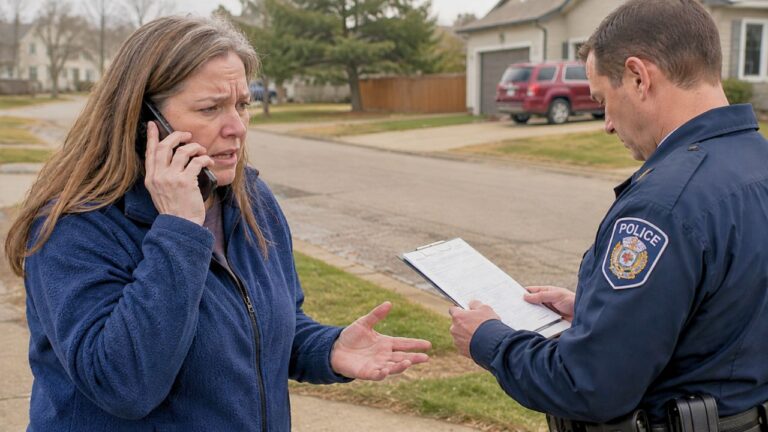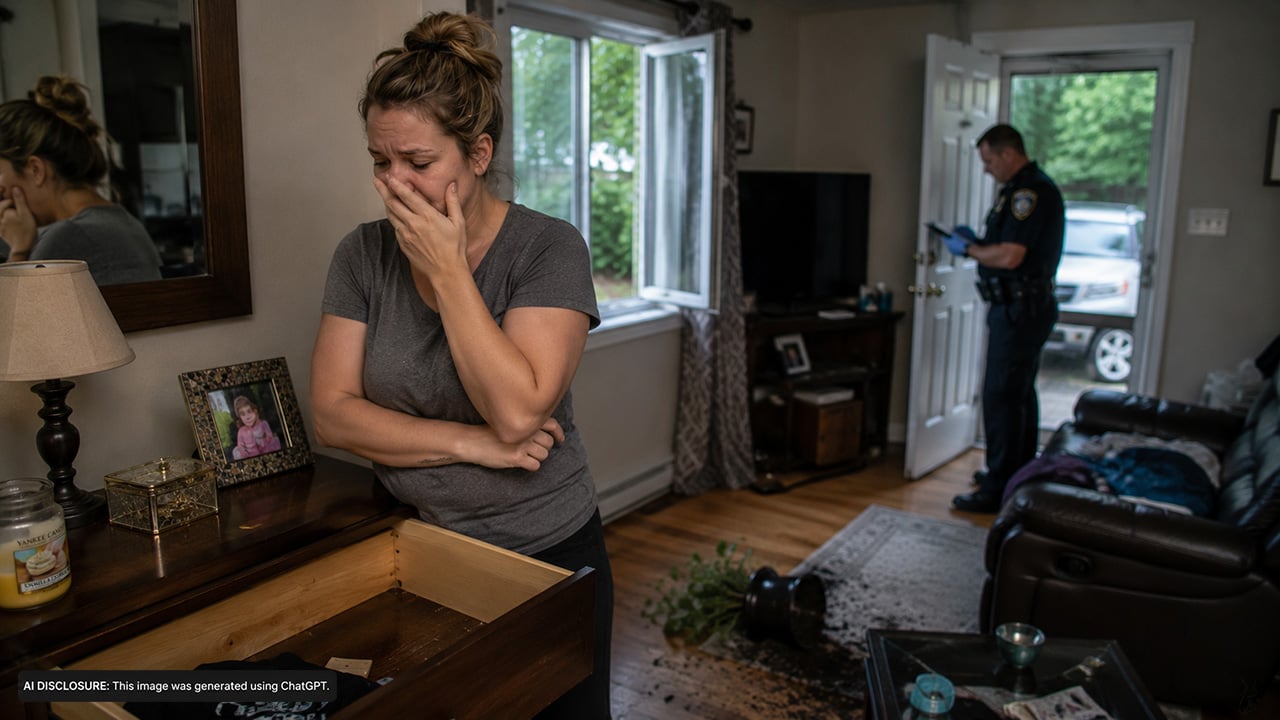
Photo credit: AI-generated image created using ChatGPT. Illustrative only
When somebody’s in your house at 3 a.m., you don’t rise and shine — you snap awake, heart hammering, trying to make the next right decision. That’s where a Maryland woman says she found herself after hearing her belongings being shoved around while she was home alone.
In the original post, she described grabbing a family heirloom firearm to protect herself, scaring off the intruder, and calling police. But instead of that being the end of it, she says the responding officer walked out with her gun — and later the department told her there was no record it had ever been taken.
A break-in, a close call, and a gun left in plain sight
According to her account, she recognized the sounds immediately because she’d been burglarized as a teenager. With her boyfriend out of town and nobody else living with them, she grabbed her gun and stepped out of her bedroom.
She doesn’t know if the intruder heard her door open or saw the gun, but she says he bolted right away. After she calmed down enough to make the call, she waited for police — and when she saw the cruiser pull up, she set the firearm on the couch across the room from the front door.
She admitted that wasn’t the smartest move and that she wasn’t thinking clearly. Folks who’ve been through that kind of adrenaline dump understand the problem: you’re still in “threat mode,” and your brain is moving faster than your routine.
The report started normal, then the tone flipped
She says the officer was friendly at first, took the report, and called for someone to check for fingerprints. Everything sounded like a standard response until she explained that the intruder ran off after she confronted him with the gun.
That’s when she says the officer got hostile and started demanding a bill of sale. The firearm, she explained, is a family heirloom, so she didn’t have paperwork showing a purchase. She says she did show documents she believed proved it was legal and registered, but the officer told her the registration “didn’t prove anything” and kept pressing for a bill of sale.
From her perspective, it felt like she was being treated like a suspect in her own living room. She says the officer questioned why she had a gun “like that” and insisted it was too much for her to use, even after she explained it had been passed down from her great-grandfather and came from an outdoorsy family.
“Confiscated” under suspicion — and then it vanished on paper
She says the officer told her that without a bill of sale, he would confiscate the gun under suspicion it was stolen, and that he would “look into it.” With other officers arriving and her attention split, she says he walked out with the firearm while she was talking.
This is the part that should make any gun owner’s stomach tighten: she says she never received a receipt or paperwork showing it was taken. She also says her copy of the police report doesn’t mention the firearm being seized.
She waited, thinking it would come back once the report was wrapped up and the investigation went nowhere. A month passed after they “didn’t find anything,” and she says she still hadn’t heard a word — so she went to the station with her copy of the report to ask directly.
That’s when she says she got the answer nobody wants: the station told her there was no record at all of her gun being confiscated, and she would have “definitely gotten a receipt” if anything had been removed from her house. She says the person she spoke with insisted she must be confused.
Why a family heirloom makes it more than “just a gun”
The firearm wasn’t described as a basic modern home-defense tool she picked up last year. She identified it as a pre-WWII Parker Bros. double-barrel field rifle, with a few distinctive nicks that make it recognizable and, in her view, not ideal for resale. Still, she believed it could look valuable at a glance to the right person.
That matters because heirloom guns carry two kinds of value. There’s market value — collector interest, condition, scarcity — and there’s family value, the kind you can’t replace with a check. When something like that disappears into an evidence room mix-up (or worse), it’s not just frustrating. It’s personal.
It also puts the owner in a tough spot: you’re trying to advocate for yourself, but you’re doing it with the same agency that holds the paperwork, controls access to officers, and decides what “exists” inside their system.
What outdoorsmen can learn from this kind of headache
This story reads like a hard lesson in documentation and procedure, especially when a firearm leaves your control. Whether you’re dealing with a break-in, a domestic call, a traffic stop, or a simple misunderstanding, guns can get separated from their owners fast — and “we’ll sort it out later” isn’t a plan.
The biggest practical point is the receipt. If an officer takes a firearm — for safekeeping, as evidence, or as a seizure — you want something in writing that day that identifies the gun. Serial number, make, model, and the reason it was taken. Without that, you’re arguing a memory against a system.
Second is identification. A lot of folks have older shotguns and rifles that have lived in the family so long nobody remembers where the original paperwork went. That’s common in hunting families. But it means you should keep what you can: clear photos, the serial number, any appraisal, and any record that ties the gun to you (even if it’s just your own organized file). It won’t stop a bad situation, but it can help you prove what you’re talking about when things go sideways.
Third is mindset after a scare. She acknowledged she wasn’t thinking straight — and that’s real. But after police arrive, the goal is to slow everything down: safe handling, clear communication, and making sure every step is documented. That’s not about being difficult. That’s about protecting yourself and your property.
Her suspicion, and the wall she hit trying to follow up
With no receipt and no mention in the report, she started to suspect the officer took the antique for himself. She also wanted to talk to the other officers who arrived, believing they may have seen the first officer leave with the firearm, but she says she was told she couldn’t speak to them.
It’s easy for outsiders to say, “I’d never let that happen.” But in the moment, after an intruder just ran out of your home, you’re rattled. You’re also inclined to trust the badge standing in your living room. A lot of good folks comply first and try to sort out details later — and sometimes later is where the real trouble starts.
Her situation also highlights something gun owners don’t always consider until they’re in it: even when you feel like the “good guy,” the interaction can pivot fast if the responding officer decides your gun is the main problem in the room.
At the end of the day, this is the kind of mess nobody should have to navigate after already dealing with a break-in. But if you keep firearms in the home — especially older, collectible, or family guns — it’s worth taking the time now to document what you own, store it responsibly, and make sure that if a gun ever leaves your possession, it leaves a paper trail with it.
Like The Avid Outdoorsman’s content? Be sure to follow us.
Here’s more from us: