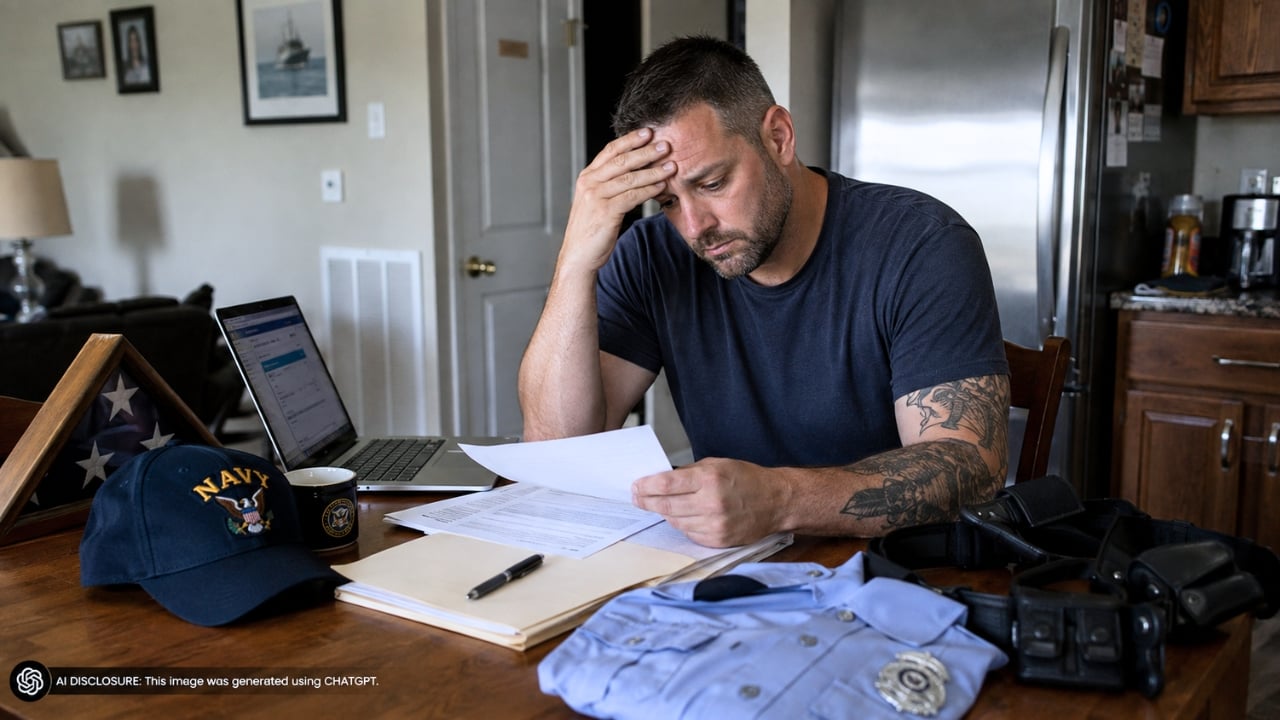
Photo credit: AI-generated image created using ChatGPT. Illustrative only
A Navy veteran thought putting 3,000 miles between himself and a bad breakup would buy him some breathing room. He left Washington State, headed back to Virginia, and started looking for work in the only lane he’s really known—armed security.
Then reality caught up with him: a Washington no-contact order didn’t stay behind when he crossed state lines. In the original post, he explained that the order includes a firearms provision, and that single line is now blocking him from jobs tied to a weapon—jobs he’s been trained to do for most of his adult life.
He built his whole resume around being armed
For 12 years, he worked Navy security in roles where carrying a firearm wasn’t optional—it was the job. That kind of experience usually translates cleanly into civilian armed security, protective work, or other positions where a sidearm is part of the uniform and the liability policy assumes you’re qualified.
But civilian employers don’t care how many years you stood watch or how squared-away you were in uniform if paperwork says you can’t touch a gun. Most won’t even let you start the hiring process. The poster put it plainly: with that “nonsensical thing attached,” he can’t even “strike for employment” in his field because of the weapons language.
A no-contact order doesn’t stop at the state line
A lot of folks assume a protective order is a local problem. County order, county rules, county consequences. But he already understood the rough truth: “yes I know it follows across state lines.” That’s the part that surprises people when they relocate and try to reset.
Even without digging into the exact statute language, the practical effect is simple for gun owners and outdoorsmen: an order issued in one state can still hammer your rights and your options somewhere else. If the order says no firearms, you don’t get to treat that like Washington-only fine print once you’re living in Virginia.
The firearms provision is what’s doing the damage
This isn’t just about not being able to call or text an ex. The poster’s real concern is the weapons restriction tied to the order. That one provision has a way of spilling into everything: employment, training, licensing, even the ability to handle guns for routine life stuff.
For an outdoorsman, it’s also the kind of thing that can turn hunting season into a non-starter and make a simple range trip off-limits. Even if you’re the type who only keeps a deer rifle and a home-defense handgun, a firearm prohibition doesn’t care what you intended to do with it. It’s a hard stop.
He wanted to know if he could modify just that piece
Back in Virginia, he asked a very specific, very practical question: is there a chance to modify only the weapons provision so he can apply for armed work again? Not to erase the whole no-contact order, not to restart the relationship, just to remove the part that bars him from the tool his career is built around.
That’s a common instinct. Folks look at these orders like a menu: keep the no-contact rule, ditch the gun part, and let a man make a living. But courts don’t always treat them that way. The firearms language is often there because the court believes it’s tied directly to safety, and judges tend to be conservative about loosening anything that could later be blamed for harm.
Switching careers might be the fastest fix, but it’s a hard one
The poster’s other question was the one no one wants to face: “Or am I just barking up the wrong tree and need to switch careers here now?” That’s the gut punch, because changing careers isn’t like swapping brands of boots. Twelve years in an armed role is a deep groove.
Plenty of veterans can pivot into unarmed security, access control, dispatch, logistics, training administration, or facility management—jobs where experience still matters but a weapon isn’t part of the job description. The problem is those positions can pay less, and they don’t always scratch the same itch for someone who’s spent years doing serious security work.
What practical-minded readers tend to focus on in situations like this
When a no-contact order and firearms restrictions collide with a person’s livelihood, the outdoor community usually zeroes in on two things: paperwork and timelines. First, what exactly does the order say—does it forbid possession, purchase, carry, or all of the above? Second, how long does it last, and what does the issuing court require to change it?
The other big focus is staying clean while it’s in effect. That means no “technicalities,” no handling a buddy’s gun at deer camp, no “it’s in my truck but it’s not mine” games, and no casual contact that could be interpreted as a violation. Whether you think the order is fair or not, violations can turn a bad situation into a permanent one—especially when firearms are involved.
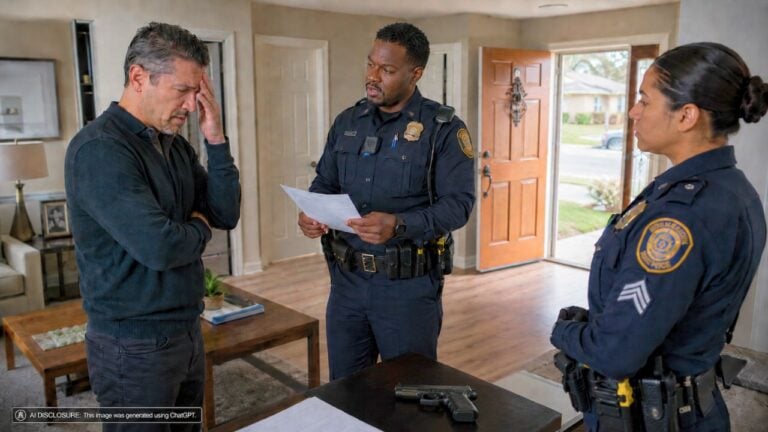
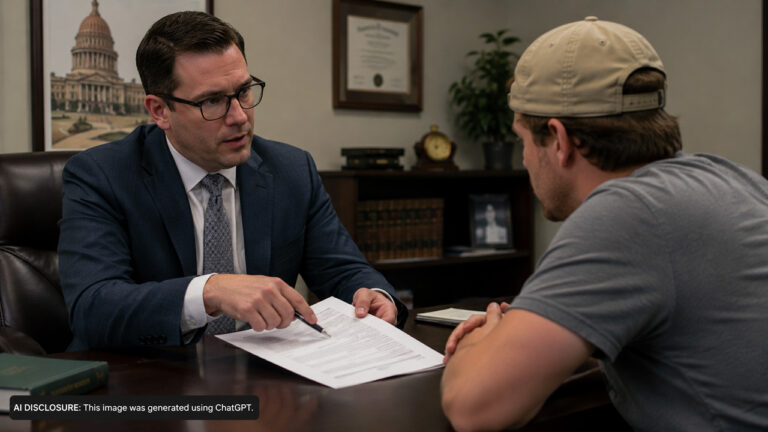
For someone in his shoes, the most grounded path usually looks like this: get the exact order language, talk to a qualified attorney in the issuing state (because that court controls the order), and figure out whether modification is realistic or whether the smarter play is building a parallel career track until the order expires or can be lifted.
It’s a rough lesson, especially for a veteran who did 12 years in an armed profession and just wanted to come home and start over. But no-contact orders have teeth, and when they include gun restrictions, they don’t just follow you—they shape what kind of life you’re allowed to rebuild on the other end.
Like The Avid Outdoorsman’s content? Subscribe to our newsletter so you never miss an article.
Here’s more from us: