Photo credit: AI-generated image created using ChatGPT. Illustrative only
Most folks who live a little ways out of town understand barking dogs. They’re part alarm system, part “no trespassing” sign, and part nuisance—sometimes all in the same hour. But one North Carolina family says their neighbor’s response isn’t a complaint or a phone call. It’s gunfire.
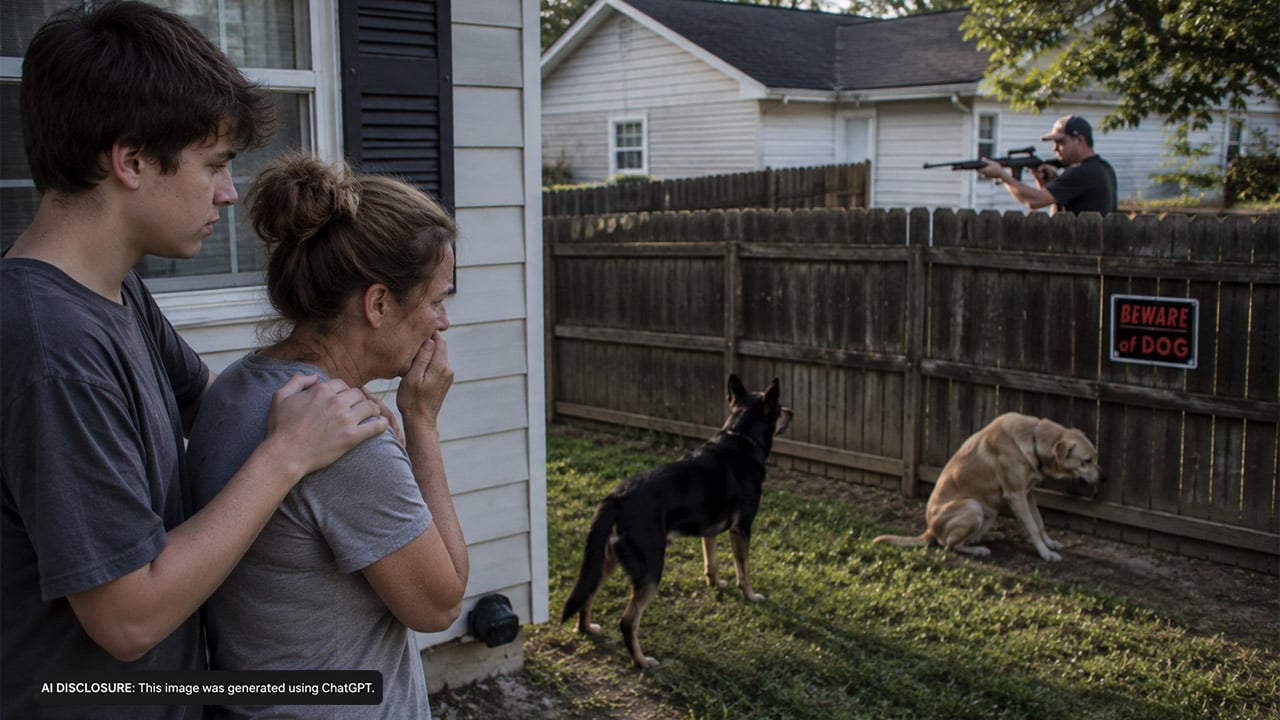
In the original post, a 17-year-old described a pattern that sounds less like a one-time blowup and more like a routine: when the family’s guard dogs bark at someone entering the yard or driveway area, the neighbor allegedly fires his gun repeatedly—anywhere from seven to 16 shots—and yells at them to quiet the dogs.
A daily pattern that went from aggravating to unsafe
The teenager said they regularly babysit younger siblings, and the repeated shooting has made home feel like an unsafe place to be. That’s the part that will land with anyone who’s spent time around firearms: shots fired in anger aren’t “just noise,” even if nobody gets hit. When a gun is being used as a noisemaker, it’s still a gun being discharged, and somebody’s always responsible for where those rounds end up.
The post framed the dogs as guard dogs doing what they’re supposed to do—barking when people enter the family’s yard and driveway area. That’s normal rural living. The problem, as described, is that the neighbor treats barking like a personal attack and answers it with rounds downrange.
When the dogs stopped barking, the shots kept coming
One detail that sticks out is what happened when the teen finally yelled back. They said the dogs had already stopped barking, but after they told the neighbor to mind his own business, he fired about five more times anyway. In other words, the shots weren’t aimed at quieting barking in that moment—they were, at least from the family’s perspective, fired out of spite.
That matters because it shifts the story away from a simple neighbor dispute and toward intimidation. Plenty of us have dealt with noisy dogs, loud trucks, and loud neighbors. But firing multiple shots as a “message” is a whole different kind of escalation, especially with kids at home and a property line not far away.
Brandishing and threats changed the stakes
The teen also added a sidenote that would make any responsible gun owner’s hair stand up: they said the neighbor sometimes comes to their house brandishing guns, and has pointed a gun directly at one of their dogs while threatening to shoot it. That’s no longer about noise, and it’s not a misunderstanding about rural etiquette.
There’s a big difference between shooting on your own property in a safe direction with a proper backstop and using a firearm to threaten people or animals. Even if the neighbor never fires a round toward the dogs, pointing a gun during a confrontation is the kind of decision that turns a bad relationship into a dangerous one fast.
The teen said that if the neighbor comes into their yard again while they’re home alone, they plan to call police. That’s a sensible instinct. If someone is stepping onto your property while holding a firearm and acting erratically, you don’t “handle it yourself.” You create distance, get witnesses if you can, and bring in authorities.
The frustrating part: a small town with limited response
In an edit, the teen said their parents had already spoken with police, but their town has a very small population and only one police officer. They also said the officer had prior problems with the neighbor “throwing temper tantrums” before. That’s the kind of thing rural folks recognize: everyone knows everyone, and there may not be many resources—or much appetite—for long, drawn-out neighbor disputes.
Still, the family said the officer told them they “definitely have a case” because the neighbor is using intimidation tactics with a gun. That’s an important distinction. Even in places where firearms are common and shooting on private land is routine, intimidation is not the same thing as target practice.
What people pushed: document everything and prioritize safety
The teen thanked others for advice and said they’d be keeping video when they can. That’s about as practical as it gets. In rural conflicts, the person who can calmly show a pattern—dates, times, footage, the direction of shots, and the neighbor’s behavior—usually has a clearer path forward than the person who only has a story and a lot of fear.
If you’ve ever dealt with a property-line problem, you know the playbook: you keep your head, you keep records, and you don’t get baited into a shouting match that turns into “he said, she said.” Video matters because it captures the number of shots, the timing, the yelling, and whether the neighbor is on his own side of the line or not.
Just as important, you don’t “go talk to him” when he’s already shown he’ll bring a gun into the conversation. Distance and witnesses are your friends. If there’s a next incident, the goal is not winning an argument—it’s getting everyone inside and safe, and getting the right kind of report started.
A familiar rural lesson: guns and tempers don’t mix
Most outdoorsmen are protective of the right to own and use firearms, and for good reason. But that right comes with the basic expectation that you don’t use a gun like a remote control for the neighborhood. Firing off rounds every time a dog barks isn’t “country living.” It’s reckless, and it creates risk for anybody within earshot and downrange.
This family’s situation is also a reminder that “won’t intervene” can sometimes really mean “can’t do much without proof” or “needs a clear, documentable incident.” The teen’s plan to record what’s happening—and to call police if the neighbor enters their yard while armed—is the kind of grounded step that keeps the focus where it belongs: on safety and accountability, not escalation.
In the meantime, the best move for any family in a similar spot is the boring one: stay calm, stay inside when things flare up, document the pattern, and let professionals sort it out. A hothead with a gun next door is not a problem you solve by meeting him at the fence line.
Like The Avid Outdoorsman’s content? Be sure to follow us.
Here’s more from us: