Photo credit: AI-generated image created using ChatGPT. Illustrative only
A Texas tenant says he did what most folks would hope they’d have the nerve and sense to do when trouble shows up in the parking lot: he called the cops, and when shots came his way, he fired back to defend himself. But after the dust settled, he claims his apartment management sent him an eviction notice anyway—citing a lease clause about discharging a firearm on the property. The account comes from the original post.
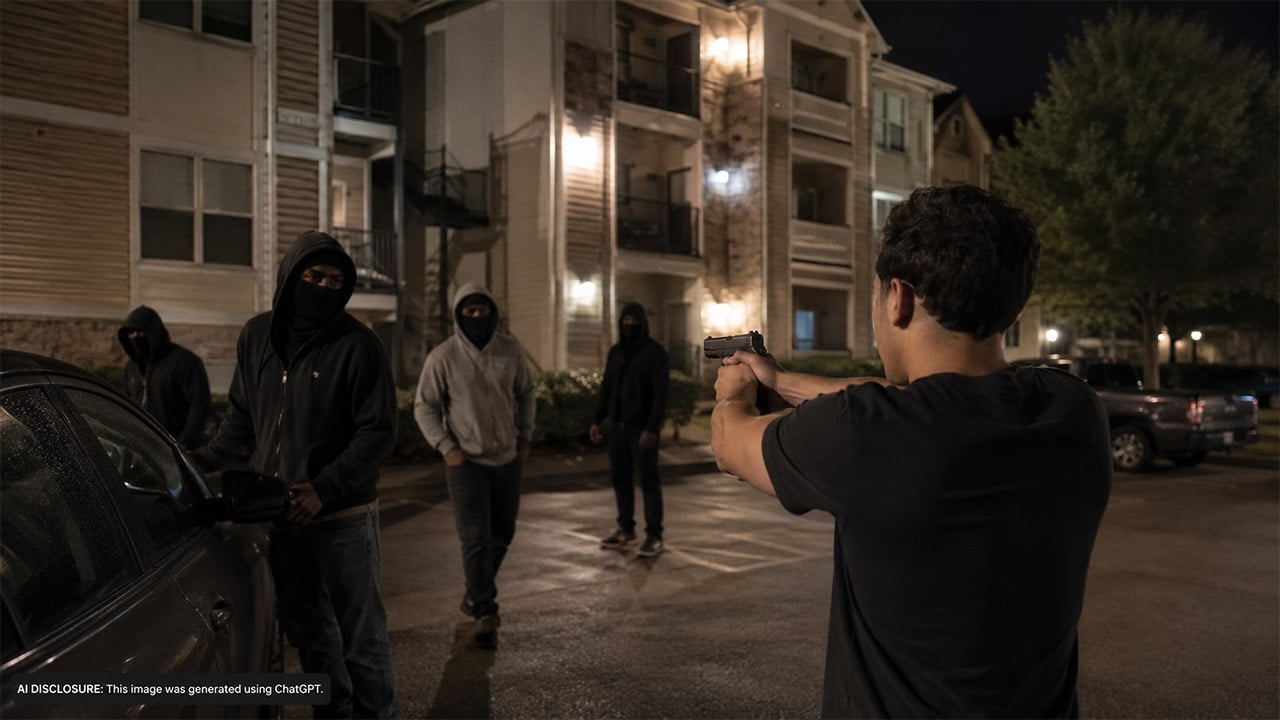
In his telling, four men were trying to break into his vehicle. He went outside, contacted police, and the group ran—on foot—toward multiple vehicles. Then, he says, one of them fired at him and he returned fire. Nobody was hurt and nothing was damaged, and he says a detective later gave him the “all clear,” with suspects arrested later that week and video capturing the incident.
A parking-lot break-in turned into a gunfight fast
The tenant describes a situation that escalated in seconds, the way these things often do. It started as a vehicle break-in attempt, the kind of crime apartment residents in Texas know can happen quick and quiet—until it’s not quiet at all.
According to the tenant, the men fled when he called police, and the shooting happened during that scramble. He says the other side fired first, and he shot back. He also notes that a neighbor’s car was recovered, which suggests this wasn’t just a “check door handles” crew—it may have been a group actively working the lot.
The eviction notice leaned on one lease paragraph
The notice he says he received by email cites a lease section covering criminal conduct and weapons. In that same section, it includes language prohibiting “discharging a firearm in the apartment community,” along with restrictions on displaying or possessing weapons in common areas “in a way that may alarm others,” except when allowed by law.
That’s the friction point for a lot of gun owners: state law may recognize self-defense, but a lease can still have strict rules about firearms on the property. Management companies often treat any discharge as an automatic liability event, even when the resident believes they were fully justified.
Self-defense “all clear” doesn’t always stop a civil eviction
One of the most important details in the tenant’s account is that he says no criminal charges were filed or even considered against him, and that a detective told him he was good to go. That matters for peace of mind—and it matters for a criminal case.
But it doesn’t necessarily shut the door on an eviction attempt. Eviction court is usually about the lease and possession of the unit, not whether someone “deserved” to stay in a moral sense. Even when law enforcement believes a shooting was justified, a landlord may still argue a lease violation occurred if the lease bans discharge outright.
Texas also tends to move fast on eviction timelines. If the notice says “a couple weeks,” that’s a short runway to figure out whether to fight, negotiate extra time, or plan a clean exit.
He says the complex has long-running security problems
In the same breath as describing the shooting, the tenant points a finger back at the property. He claims the gates have been broken for years, working no more than a couple weeks at a time, and that there have been constant issues. In his view, that failure is part of why the criminals were there in the first place.
Whether that becomes a winning argument is another question. Bad gates and sloppy security don’t automatically give a tenant permission to fire a gun on the property, even in a defensive situation. But it can matter in negotiations and in how a judge views credibility and reasonableness—especially if management is trying to paint the tenant as the problem while ignoring known vulnerabilities.
He also mentions he has a daughter to protect, which is the hard reality behind all the legal back-and-forth. For most parents, the idea of staying in a place where an attempted break-in turned into shots fired—then getting treated like the liability—doesn’t sit right.
The practical options: fight, negotiate time, or move on clean
The tenant says he’s looking for legal help quickly and is weighing whether he has a “sure win” or if a judge could still side with the management company. That’s the right mindset: eviction court can be unpredictable, and lease language matters.
From a practical outdoorsman’s angle, there are a few common-sense moves in a situation like this. First, document everything: the eviction notice, the lease clause they’re citing, any police report or case number, and any written “all clear” you can get (or at least the detective’s name and contact info). Second, save that video in multiple places, because video has a way of disappearing when phones break or accounts get locked.
Third, consider what your goal really is. He says he mostly wants more time to move if it’s going to be a tough fight, but management “refuse to budge.” Sometimes the best win is negotiating a longer move-out date and a neutral rental reference, especially when you’re trying to keep your kid stable and avoid an eviction judgment on your record.
He also floats the idea of going after the complex for lease violations on their end, and even a broader action with neighbors. That may or may not be realistic, but the underlying idea is sound: if you’re going to fight, fight with paperwork, photos, maintenance requests, and a timeline showing ongoing security issues—not just frustration.
What gun owners can learn from this kind of mess
This is one of those stories that makes you think past the moment of danger and into the aftershocks. Even if you do everything right in the moment—call police, avoid confrontation, defend yourself when you have no choice—you can still get hit with administrative punishment from a landlord who sees only “gunfire on premises.”
If you carry or keep a firearm for defense and you live in an apartment, read the weapons section of your lease like you’d read a hunting lease or a ranch access agreement. Look for language about common areas, parking lots, and discharge. A lot of leases aren’t written with nuance; they’re written to reduce liability, and they can be enforced quickly when management feels exposed.
Also, think about the reality of backstops and proximity. Apartment parking lots are tight. Even a justified shot can put other residents at risk, which is exactly what management will lean on. In the moment, you may not get to choose where the threat happens—but after the fact, the paperwork will act like you did.
Based on the tenant’s account, he’s now stuck choosing between standing on principle and keeping his family’s housing stable. That’s a rough spot, and it’s why having legal counsel early—and having your documentation lined up like you’re building a case for a game warden or a property dispute—can make the difference between a controlled exit and a long, expensive fight.
Like The Avid Outdoorsman’s content? Be sure to follow us.
Here’s more from us: