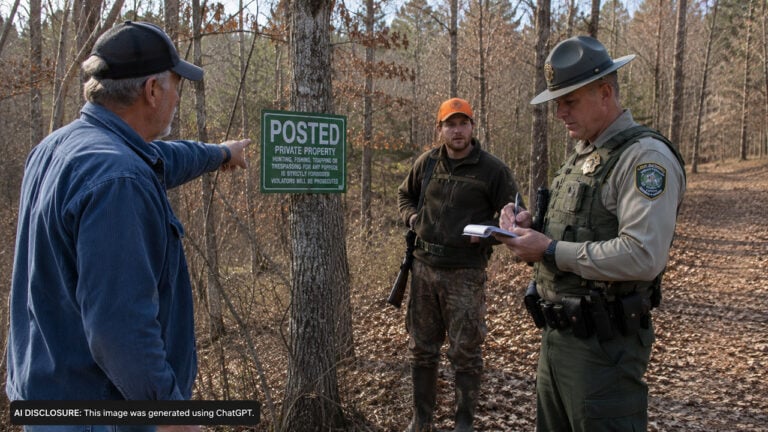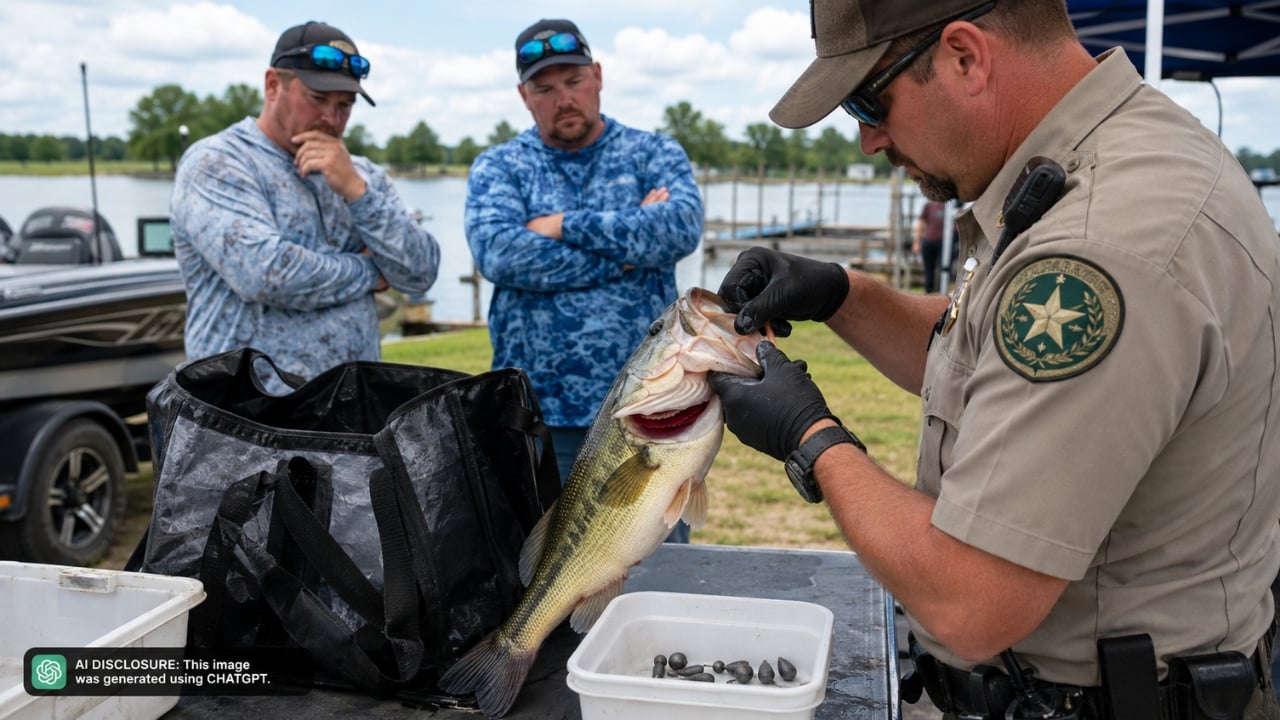
Photo credit: AI-generated image created using ChatGPT. Illustrative only
A bass tournament is supposed to be a straight-up test of decisions and execution: finding fish, managing a pattern, keeping them alive, and then letting the scale tell the truth. That’s why this one out of Wood County, Texas, lands like a gut punch for anybody who’s ever fished competitively—or just taken pride in doing it right.
Texas Parks and Wildlife says a Lake Fork tournament entry submitted by Curtis Lee Daniels was found to have three fishing weights in the fish’s stomach, each weighing 0.75 ounces. The details were shared in the source post, which points back to reporting by KLTV.
Lake Fork, big money, and a fish that didn’t add up
Lake Fork is the kind of place where big bass and big payouts can collide in a hurry. According to an affidavit cited in the report, the overall prize for the tournament was $11,500—enough money to make somebody’s month, and enough to tempt the wrong person into making a stupid decision.
TPWD says Daniels entered a largemouth bass that later turned out to have three 0.75-ounce weights in its stomach. Three-quarters of an ounce doesn’t sound like much until you do the math: three of them totals 2.25 ounces—over an eighth of a pound. In a tight tournament, that can be the difference between cashing a check and going home empty.
What wardens say they found—and why it matters
The detail that makes this more than a “maybe” is what the wardens allegedly found beyond the fish itself. TPWD said the weights were in the fish’s stomach, and wardens also located the same weights in Daniels’ boat, according to the affidavit obtained by KLTV.
In the outdoors world, that kind of physical evidence is hard to talk your way around. A bad call on the water is one thing. An altered weigh-in fish changes the whole event: it impacts other anglers’ standings, the payout, and the credibility of everyone involved—especially the folks who ran the tournament and the anglers who did things the right way.
The legal side: a tournament law charge with real teeth
This wasn’t treated like a slap-on-the-wrist wildlife ticket. TPWD said Daniels was arrested Sunday and held at the Wood County Jail on a $20,000 bond. The charge listed in the report was violating a fishing tournament law, described as a third-degree felony.
That’s the part a lot of people outside the fishing world don’t realize: tournament cheating can bring serious consequences. TPWD’s website, as referenced in the report, notes potential penalties including up to 10 years in prison and $10,000 in fines, along with possible license revocation and civil restitution. Even if you set the prison time aside, losing your license and being on the hook financially can follow you for years.
How these things usually get spotted at a weigh-in
The reporting doesn’t lay out the moment-by-moment of how the fish was checked, but most tournament anglers know how this typically plays out. A fish that “feels wrong” can get attention fast—especially if it’s heavier than expected for its length or has an unnatural bulge that doesn’t match a normal belly full of shad.
And in any well-run event, there are a lot of eyes around that stage: other competitors, officials, and sometimes local wardens. Folks may not agree on much in a tournament crowd, but they agree on this—if you’re going to win, win clean.
What everyday anglers took away from it
The reaction around stories like this is usually pretty consistent, and it’s the same response you hear at boat ramps and bait shops: disbelief first, then anger. Not because everyone thinks tournament fishing is perfect, but because tampering with a fish crosses a line most outdoorsmen don’t even joke about.
The other common point people focus on is the ripple effect. When a payout is involved, the harm isn’t theoretical. Somebody who fished clean may have lost money, points, or a shot at a bigger opportunity. And the tournament scene—already under pressure to keep sponsors and entries—takes a reputation hit every time something like this happens.
The hard truth: there were a dozen better options than cheating
Lake Fork doesn’t owe anybody a check, and neither does a tournament trail. If the bite is tough, you grind it out, change baits, change water, or accept you got beat. That’s fishing. A bad day humbles everybody eventually, and most of us have weighed in a limit that didn’t match what we hoped for.
But when someone allegedly decides to “help” a fish on the scale, they’re not just gambling with embarrassment—they’re gambling with jail time, their ability to buy a license, and their standing in the outdoors community. In a rural world, reputation travels faster than any press release.
At this point, TPWD has laid out what they say they found: weights in the fish, matching weights in the boat, and an arrest tied to a felony tournament-law allegation. However this ends up shaking out in court, the lesson for the rest of us is pretty simple: the scale is supposed to measure your fishing, not your willingness to cheat.
Like The Avid Outdoorsman’s content? Subscribe to our newsletter so you never miss an article.
Here’s more from us: